


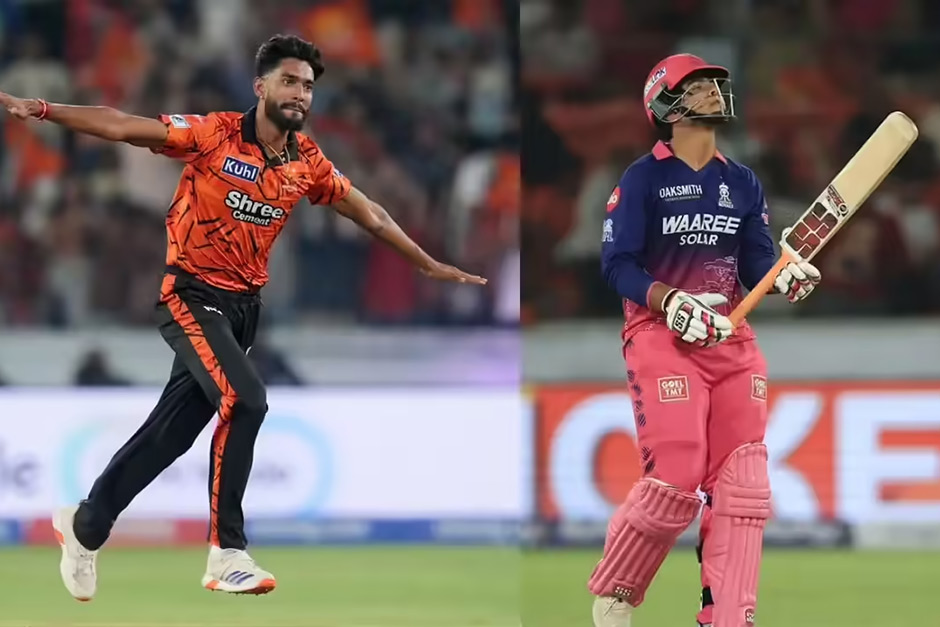
In the high-stakes world of Indian domestic cricket, where rivalries simmer and individual performances often dictate narratives, a recent revelation from seasoned bowler Praful Hinge has sent ripples across the cricketing fraternity. Hinge, known for his relentless pace and strategic acumen, made a candid admission that sheds light on the intense psychological battles players endure: “I wanted Vaibhav Sooryavanshi’s wicket on the first ball.”
The statement, delivered during a recent interview on a popular sports podcast, instantly became a talking point, offering a rare glimpse into the mind of a professional athlete. It underscores not just a bowler’s intent but also the sheer determination and pre-meditation that goes into dismantling an opponent’s batting lineup, especially when facing a formidable force like Sooryavanshi.
The Boldness of Intent: Decoding Hinge’s Revelation
Hinge’s declaration wasn’t merely a throwaway line; it was a carefully articulated insight into his game plan against one of the domestic circuit’s most prolific run-scorers. Vaibhav Sooryavanshi, a top-order batsman renowned for his elegant stroke play and ability to anchor innings, poses a significant threat to any bowling attack. For Hinge, a prominent figure in the Ranji Trophy for the Vidarbha side, to specifically target Sooryavanshi’s first ball speaks volumes about the perceived danger the batsman represents.
“I remember that match clearly,” Hinge recounted, referring to a crucial Ranji Trophy encounter earlier this season. “We knew Vaibhav was their lynchpin. Getting him early, especially before he could settle, would not just be a wicket but a massive psychological blow to their team. So, yes, I stood at the top of my mark, ball in hand, and thought, ‘This first ball is for Vaibhav.’ I wanted to create doubt, to set a tone.”
This level of focused intent is a hallmark of elite athletes, turning every delivery into a mini-battle. While Hinge didn’t explicitly state whether he achieved his desired outcome on that particular first ball, the sheer audacity of the goal highlights the strategic depth often unseen by spectators. It’s a testament to the mental preparation that goes into professional cricket, where every movement, every delivery, and every run is meticulously calculated.
The Praful Hinge-Vaibhav Sooryavanshi Rivalry: A Modern Classic
The revelation also brings into sharper focus what has quietly become one of the most compelling individual rivalries in Indian domestic cricket. Hinge, with his ability to swing the new ball and exploit weaknesses, and Sooryavanshi, known for his rock-solid technique and temperament, have locked horns countless times. Their encounters are often pivotal moments in matches, drawing immense attention from purists and fans alike.
For years, Sooryavanshi has been a consistent performer for Maharashtra, piling on runs against various attacks. However, Hinge has often been the bowler who has managed to trouble him most, making their head-to-head statistics a fascinating study. This underlying competition adds weight to Hinge’s candid admission. It wasn’t a casual desire but a deeply ingrained strategic target born from repeated encounters and a mutual respect for each other’s abilities.
Such rivalries are the lifeblood of competitive sport, pushing players to elevate their game. Hinge’s statement confirms that the battle between bat and ball is as much a mental chess match as it is a physical contest, with bowlers often visualizing dismissals even before their run-up begins. It reflects the intense pressure to perform and the hunger to outwit an equally skilled opponent.
Beyond the Boundary: The Impact of Candid Confessions
Hinge’s openness serves as a refreshing reminder of the raw emotions and strategic depth embedded in cricket. In an era where player interviews can often be guarded and cliché-ridden, his willingness to share such a specific, high-stakes intention offers valuable insight. It enriches the fan experience, allowing them to appreciate the intricacies of a bowler’s craft and the mental fortitude required at the highest level.
The revelation not only elevates the perceived rivalry between Hinge and Sooryavanshi but also sets a new benchmark for candour in Indian sports commentary. It prompts discussions about the psychological warfare in cricket, the pressure on key players, and the unspoken intentions that drive professional athletes. As the domestic season progresses, fans will undoubtedly watch their next encounter with renewed interest, wondering what strategic fireworks Praful Hinge might have planned for Vaibhav Sooryavanshi’s first ball.
This candid admission from Praful Hinge reaffirms that behind every delivery and every run, there’s a story of intent, strategy, and an unwavering desire to dominate the game.

