


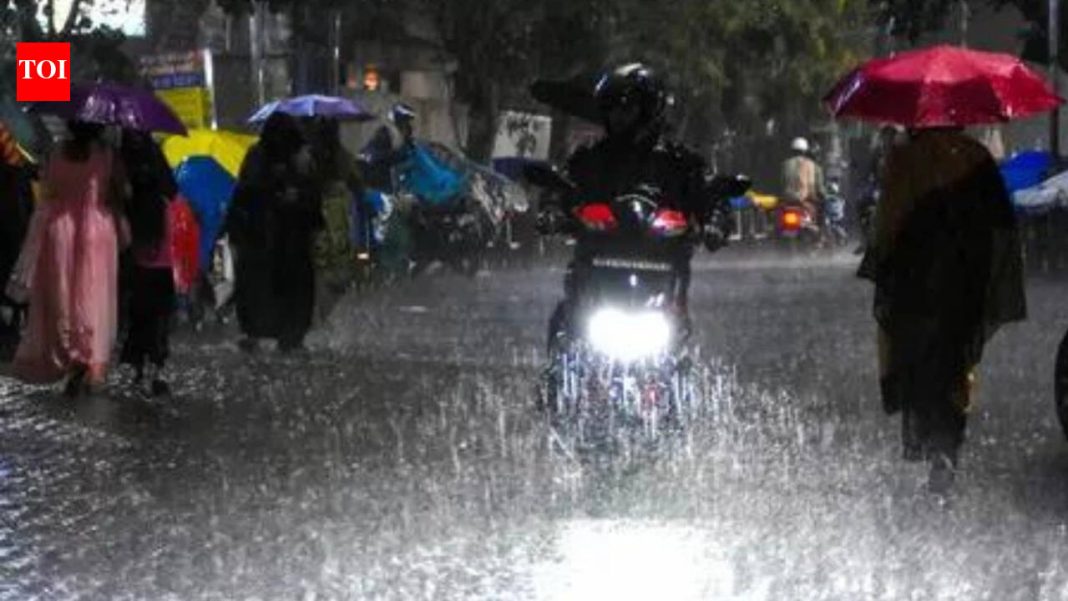
India, a nation where the rhythm of life is intrinsically tied to the skies, braces for a challenging monsoon season. The India Meteorological Department (IMD) has issued a revised forecast, significantly downgrading its outlook for the Southwest Monsoon, now indicating a substantial 60% chance of a deficient monsoon. This development sends ripples of concern across the agricultural sector, policymakers, and indeed, every household in the country dependent on rain-fed ecosystems.
The Downgraded Outlook: What Led to the Shift?
The IMD’s initial forecast, released earlier this year, had projected a “normal” monsoon, offering a sense of relief after concerns about the developing El Niño phenomenon. However, recent atmospheric and oceanic observations have compelled a revision. The updated forecast now pegs the probability of rainfall falling below 90% of the Long Period Average (LPA) – officially classified as deficient – at 60%. This is a sharp increase from the earlier assessment, which had placed the probability of deficient rainfall at a much lower percentage.
The primary driver behind this concerning downgrade is the strengthening El Niño conditions in the equatorial Pacific Ocean. El Niño, characterized by warmer-than-average sea surface temperatures, typically disrupts global weather patterns, often leading to reduced monsoon rainfall in India. Alongside El Niño, other complex climatic factors, including the behavior of the Indian Ocean Dipole (IOD) and Madden-Julian Oscillation (MJO), are being closely monitored. While a positive IOD can sometimes counteract El Niño’s adverse effects, its strength and timing remain uncertain. The IMD’s assessment indicates a higher likelihood of these global phenomena conspiring to weaken the monsoon’s grip over the subcontinent, particularly during the crucial latter half of the season, which is vital for the ripening of Kharif crops.
Potential Ramifications for India’s Economy and Agriculture
A deficient monsoon is more than just a weather statistic; it’s a profound challenge for India. The country’s agriculture sector, which contributes significantly to the GDP and employs a vast majority of its rural population, remains heavily reliant on the seasonal rains. Kharif crops like rice, pulses, oilseeds, and cotton are particularly vulnerable. A shortfall in rainfall can lead to reduced yields, increased input costs for irrigation, and ultimately, lower farmer incomes, potentially pushing many into financial distress and exacerbating rural poverty.
The economic ramifications extend beyond the farms. Food inflation is a significant concern. Scarcity of agricultural produce due to poor rains can drive up prices of essential commodities, impacting household budgets across urban and rural areas. This, in turn, can dampen consumer demand, affect industrial output that relies on agricultural raw materials, and potentially drag down overall economic growth. Furthermore, water scarcity could become a serious issue, affecting drinking water supplies, industrial operations, and even hydroelectric power generation, adding strain to the energy sector and potentially leading to power shortages.
“The 60% probability of a deficient monsoon is a serious alarm bell for the Indian economy,” states Dr. Rina Das, an agricultural economist based in Delhi. “Policymakers must swiftly activate contingency plans, focusing on water management, crop diversification advice for farmers, and strengthening the public distribution system to mitigate potential food security risks. The impact on rural livelihoods and inflationary pressures could be substantial if not managed proactively and efficiently across all states.”
Government Preparedness and Mitigation Strategies
In anticipation of such a scenario, the Indian government, often working closely with state administrations, typically initiates various preparedness measures. These include developing contingency crop plans for different agro-climatic zones, promoting drought-resistant crop varieties, and advising farmers on water-saving irrigation techniques like drip irrigation. Efforts are usually intensified to ensure the availability of fodder for livestock and to manage water resources judiciously through reservoir releases and groundwater recharge initiatives, though the latter often takes time to yield results.
Furthermore, strategies to manage food supply chains and control potential price spikes become crucial. This might involve strategic releases from buffer stocks maintained by the Food Corporation of India, monitoring market prices closely to curb hoarding, and implementing timely trade policies to ensure adequate availability of essential commodities. While the IMD’s forecast provides a crucial early warning, the actual impact will depend on the spatial and temporal distribution of rainfall throughout the season. The coming months will be critical, demanding vigilance, adaptive strategies, and robust coordination from all stakeholders to cushion the potential blow of a deficient monsoon.
As the monsoon season progresses, every shower, every cloud formation, will be watched with bated breath across India. The IMD’s downgraded forecast serves as a stark reminder of the country’s profound dependence on the monsoon and the urgent need for robust strategies to navigate the uncertainties of a changing climate and safeguard the nation’s well-being.

