


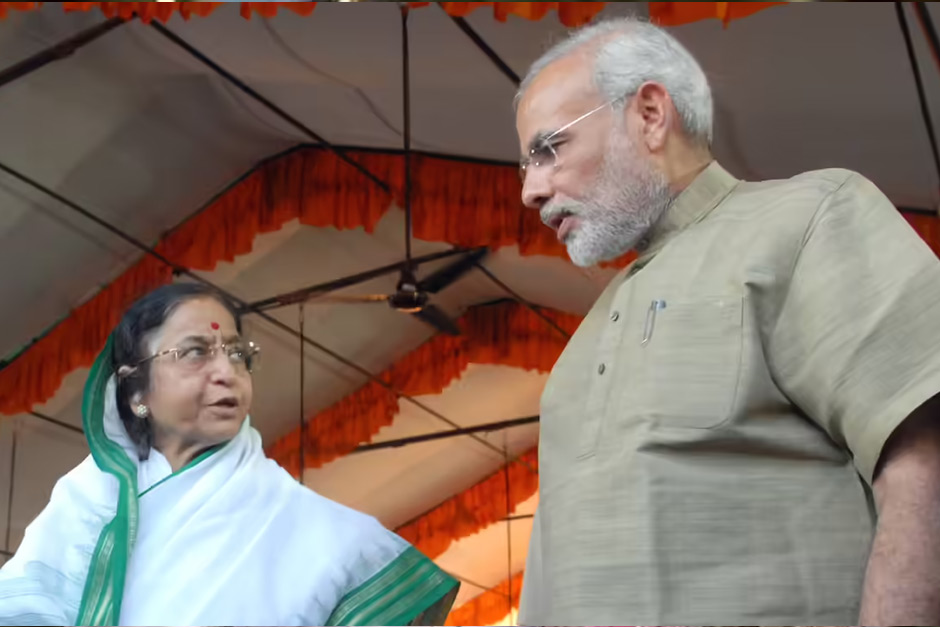
In a significant development that underscores the widespread anticipation and support for women’s increased political participation, former President of India, Pratibha Patil, has written to Prime Minister Narendra Modi, expressing her strong endorsement for the Women’s Reservation Bill. Terming it a “truly transformative step,” Patil’s letter adds considerable weight to the legislation, which aims to reserve one-third of seats for women in the Lok Sabha and state legislative assemblies. Her support comes at a crucial juncture, reflecting a unified national sentiment towards enhancing gender equity in India’s democratic institutions.
A Historic Endorsement from a Pioneering Figure
Pratibha Patil’s endorsement carries immense symbolic and practical value. As India’s first woman President, her journey itself has been a testament to the capabilities and leadership potential of women in the highest echelons of power. Her letter to Prime Minister Modi commended the government for successfully ushering in the Nari Shakti Vandan Adhiniyam, acknowledging it as a landmark achievement that has been a long-standing demand across the political spectrum and civil society. Patil emphasized the importance of women’s active involvement in governance, stating, “This is a truly transformative step that will significantly enhance women’s participation in policy-making and nation-building.” This powerful statement from a former Head of State highlights the profound impact the bill is expected to have on India’s democratic fabric and future trajectory.
Her experience at the zenith of Indian polity provides a unique perspective on the challenges and triumphs associated with women in leadership. Patil’s support underscores the belief that reserved seats will not merely be a token gesture but a fundamental mechanism to bring diverse perspectives, empathy, and efficiency to legislative processes. The letter resonated with many who see it as a validation of the necessity of such a law for a truly inclusive democracy.
The Journey and Implications of the Nari Shakti Vandan Adhiniyam
The Women’s Reservation Bill, officially known as the Nari Shakti Vandan Adhiniyam, has had a protracted journey spanning nearly three decades. First introduced in the mid-1990s, the legislation faced numerous hurdles before finally being passed by both houses of Parliament in September 2023. While its immediate implementation is contingent on the next census and subsequent delimitation exercise, its passage marks a watershed moment in India’s political history. The bill mandates a 33% reservation for women, including a sub-quota for Scheduled Castes and Scheduled Tribes within this reservation, ensuring that representation is diverse and inclusive.
The core implication of this bill is the potential for a radical shift in the gender composition of India’s legislative bodies. Currently, women’s representation in the Lok Sabha hovers around 15%, significantly lower than the global average. In state assemblies, this figure is often even lower. The reservation aims to rectify this historical imbalance, ensuring that women’s voices are heard proportionally in discussions and decisions that directly affect their lives and the nation’s future. Critics have often pointed to the lack of female representation as a major impediment to addressing gender-specific issues effectively and to bringing a more holistic development approach.
Beyond numbers, the bill is expected to foster a more equitable political environment, inspire future generations of women to enter public service, and potentially lead to more gender-sensitive policies. While the timeline for its full implementation remains a subject of ongoing discussion, the passage of the bill itself, backed by prominent figures like Pratibha Patil, signals a strong political will to empower women at the grassroots and national levels.
Building Consensus for an Inclusive Future
Pratibha Patil’s letter serves as a potent reminder of the broad consensus that exists regarding the necessity of the Women’s Reservation Bill. While political debates often focus on the modalities and timing of implementation, the fundamental principle of ensuring adequate representation for women in Parliament and state assemblies enjoys widespread cross-party support. This collective backing is crucial for the successful integration of women into legislative roles and for transforming India’s democratic landscape.
The “transformative step” mentioned by Patil reflects not just the reservation itself but the underlying shift in societal attitudes towards women’s leadership. It represents an India that is increasingly ready to dismantle systemic barriers and embrace a truly inclusive form of governance. As the nation awaits the practical implementation of this landmark legislation, endorsements from respected figures like former President Patil reinforce the belief that the Nari Shakti Vandan Adhiniyam is a pivotal stride towards a more balanced, representative, and progressive India.
The road ahead will involve meticulous planning for delimitation and census operations, but the foundation for a more gender-equitable political system has been firmly laid. With powerful voices advocating for its success, the bill stands as a beacon of hope for women’s empowerment and a stronger, more inclusive democracy.

