


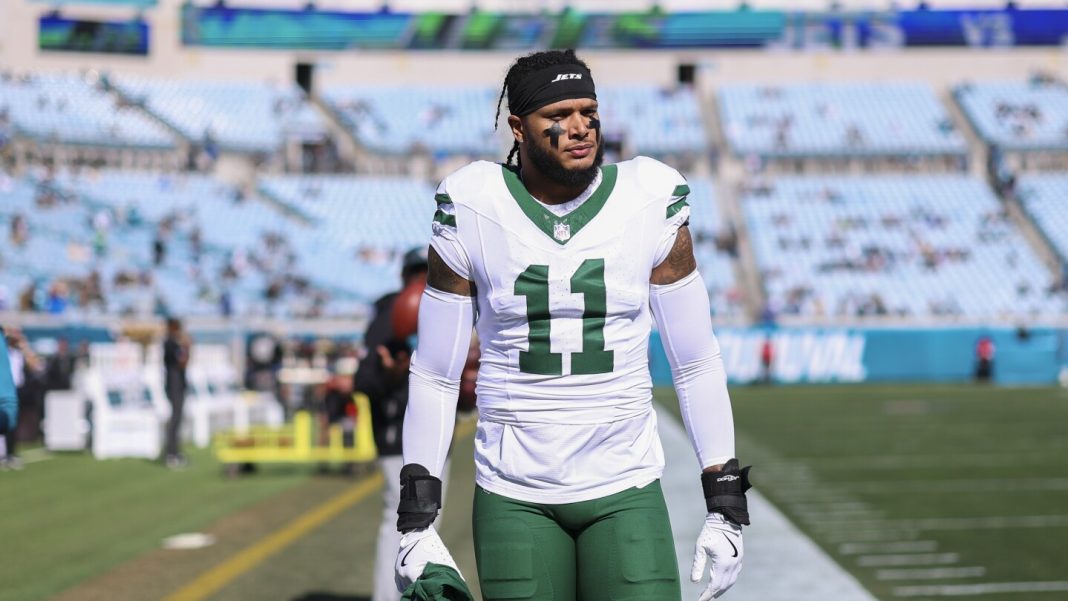
The NFL rumor mill is always churning, but sometimes a move drops that truly sends ripples across the league. The reported trade sending New York Jets pass rusher Jermaine Johnson to the Tennessee Titans in exchange for massive defensive tackle T’Vondre Sweat is precisely that kind of transaction. It’s a deal that sees two promising, high-upside defensive linemen switch conferences, immediately altering the defensive blueprints for both franchises. On the surface, it’s a direct exchange of talent, but digging deeper reveals strategic shifts and calculated risks that could define seasons to come.
For the Jets: Bolstering the Interior, Sacrificing Edge Speed
For Gang Green, acquiring T’Vondre Sweat is a bold move signaling a clear defensive priority. The Jets already boast a formidable pass rush with players like Quinnen Williams and Haason Reddick (if previous deals are considered), but their run defense, while often solid, has occasionally shown vulnerabilities. Sweat, a behemoth in the trenches, instantly provides an anchor at nose tackle. His ability to eat up double teams, clog running lanes, and generate push up the middle could be transformative for their defensive front. He’s a true run-stuffing specialist who demands attention, potentially freeing up linebackers and allowing their edge rushers more one-on-one opportunities.
However, the cost is significant. Jermaine Johnson, a former first-round pick, had been steadily developing into a crucial piece of the Jets’ pass-rushing rotation. His blend of power and athleticism off the edge was a valuable asset, and many expected him to continue his upward trajectory. Trading him means the Jets are betting heavily on their existing edge talent and the belief that Sweat’s impact on the interior will outweigh Johnson’s lost production on the outside. It’s a move that prioritizes stopping the run and collapsing the pocket from within, a philosophical shift that could either solidify their defense or leave them searching for consistent outside pressure.
For the Titans: Adding Dynamic Edge Rush, Bidding Farewell to a Mountain
The Tennessee Titans, on the other hand, are making a statement with the acquisition of Jermaine Johnson. Historically, the Titans have relied on stout interior play, and Sweat was poised to be a cornerstone of that philosophy. But in today’s NFL, consistent pass rush is paramount, and Johnson provides exactly that. Pairing him with Jeffery Simmons could create a formidable one-two punch that pressures opposing quarterbacks from both the interior and the edge. Johnson’s versatility to rush from various alignments, coupled with his high motor, makes him an immediate upgrade to their defensive line rotation.
The decision to part with T’Vondre Sweat, especially after drafting him relatively high, speaks volumes. While incredibly talented, there were always questions surrounding his long-term conditioning and consistency. The Titans appear to be prioritizing proven production and immediate impact in the pass-rushing department over the potential dominant, albeit riskier, run-stuffing presence of Sweat. It’s a move that aligns with a more aggressive, disruptive defensive identity, aiming to get after the quarterback more effectively and consistently. They are trusting their ability to find alternative solutions for interior run defense, while seizing the opportunity to add a high-quality edge rusher.
The Bigger Picture: Strategic Gambles and Defensive Philosophies
This trade isn’t merely about swapping players; it’s about contrasting defensive philosophies and strategic gambles. The Jets are seemingly doubling down on the “run defense first” approach, believing that suffocating opposing ground games and internal pressure will lead to overall defensive dominance. The Titans are clearly prioritizing the disruption of the quarterback, recognizing the premium placed on edge rush in the modern league. “This isn’t just a player swap; it’s a philosophical statement,” as one former NFL defensive coordinator, speaking anonymously, put it. “The Jets are betting on stopping the run at the line, while the Titans are doubling down on disrupting the quarterback from the edge. Both are valid strategies, but they require different personnel and present different risks.”
Both teams are taking a calculated risk. The Jets gamble on Sweat’s consistency and health, and on their ability to generate enough pressure without Johnson. The Titans wager that Johnson’s pass-rushing prowess will be more impactful than Sweat’s interior dominance, and that they can fill the void he leaves. Only time will tell which strategic gamble pays off, but one thing is certain: this trade has significantly reshaped the defensive landscapes for both the New York Jets and the Tennessee Titans.

