


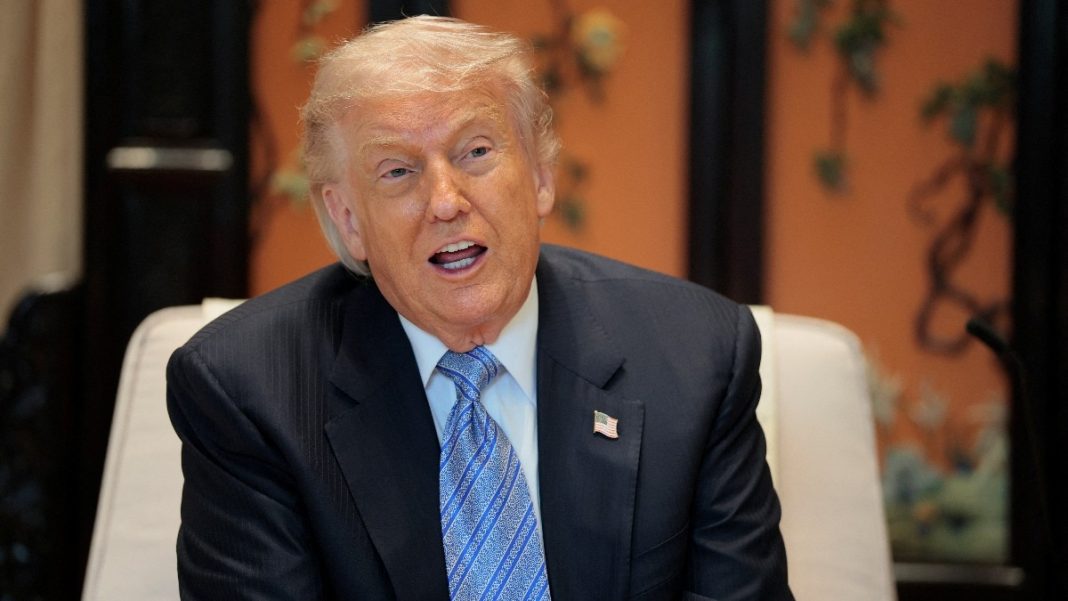
In a fresh salvo aimed at the American judiciary, former US President Donald Trump has once again ignited public debate with strong accusations of unfair treatment. His recent remarks, specifically regarding a ‘Kennedy Center ruling’, underscore a consistent theme in his post-presidency rhetoric: that he is a target of a biased legal system. For an Indian audience observing global political dynamics, Trump’s persistent challenges to judicial decisions offer a compelling case study in the tensions that can arise between political power and the rule of law.
Trump’s Latest Grievance: The Kennedy Center Ruling
The former President’s latest grievance revolves around what he termed a ‘Kennedy Center ruling’, though specific details of a definitive judicial ruling directly against him concerning the Kennedy Center have not been widely detailed in mainstream reports. Nevertheless, Trump’s statement, “No president treated so unfairly by courts as I,” unequivocally articulates his perception of deep-seated bias. He claims this ruling, whatever its precise nature, is just another instance in a long line of judicial decisions he believes are unjustly aimed at him.
The John F. Kennedy Center for the Performing Arts is a prominent cultural institution in Washington D.C., often involved in national cultural events and honours. Trump’s relationship with such institutions during his presidency was notably strained, marked by his non-attendance at certain awards ceremonies and frequent criticisms from the arts community. While the specific legal decision Trump refers to remains somewhat ambiguous in public discourse, his use of it highlights his broader feeling of being alienated and unfairly scrutinised by established institutions, including the judiciary.
A Consistent Narrative of Judicial Bias
Trump’s recent declaration is far from an isolated incident. Throughout his tenure in the White House and in the years following, he has frequently criticised judges, prosecutors, and the legal system, often labelling their actions as politically motivated “witch hunts” or part of a “deep state” conspiracy against him. This narrative has become a cornerstone of his public image and political campaigns, resonating strongly with his base supporters.
From challenges to his administration’s policies on immigration and environmental regulations to the numerous lawsuits he has faced concerning his business practices and attempts to overturn the 2020 election results, Trump has been embroiled in more legal battles than perhaps any other former US President. Each unfavourable outcome, in his view, adds further proof to his assertion of institutional bias. For instance, the Supreme Court’s decisions, even those with conservative majorities, have not always sided with him, leading to occasional expressions of disappointment and accusations of weakness.
His sentiment is encapsulated in his strong assertion: “No president has ever been treated so unfairly by courts as I have been. It’s a disgrace.” This statement underscores his belief that the judicial system, designed to be an impartial arbiter of justice, has instead become a tool of political opposition against him. Such claims, coming from a former head of state, carry significant weight and contribute to a broader erosion of trust in governmental institutions, a phenomenon observed in various democracies globally, including India.
Implications for Trust in Institutions
For an Indian audience, accustomed to robust debates surrounding judicial independence and executive overreach, Trump’s continuous critique of the judiciary offers a pertinent reflection point. The health of a democracy is often measured by the public’s confidence in its independent institutions, particularly the courts. When a prominent political figure, especially a former leader, repeatedly assails the integrity and fairness of the judicial system, it inevitably fuels public scepticism.
Trump’s rhetoric contributes to a charged political environment where legal processes are often viewed through a partisan lens rather than as objective applications of the law. This dynamic raises crucial questions about the long-term impact on democratic norms and the delicate balance of power between the executive, legislative, and judicial branches. As nations worldwide grapple with the challenges of political polarisation and the spread of misinformation, the former President’s uncompromising stance on judicial fairness continues to draw global attention, prompting discussions about the resilience of democratic checks and balances.
Ultimately, while the specifics of the ‘Kennedy Center ruling’ may remain secondary, Trump’s pronouncements highlight a critical juncture in American politics, where the perception of justice itself is fiercely contested, sparking conversations that resonate far beyond U.S. borders.

