


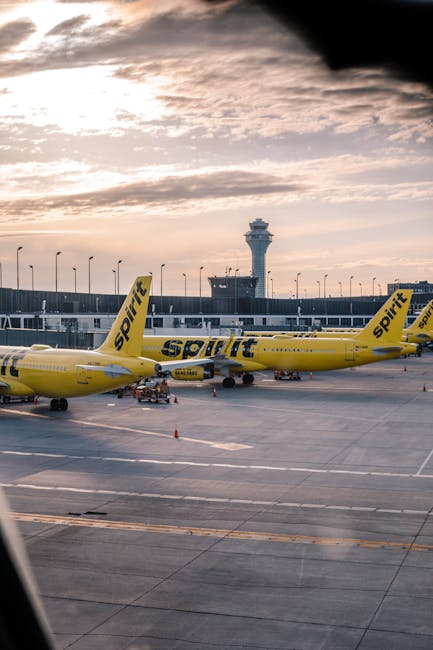
Remember that unsettling period when the world seemed to hold its breath, and industries, especially travel, faced unprecedented turbulence? Airlines, the very engines of global connection, found themselves grounded, scrambling for survival. The Trump administration stepped in with a massive lifeline for the sector, yet amidst the grand gestures and critical negotiations, one particular story stands out for its quiet unraveling: the curious case of Spirit Airlines and the rescue that seemed to slip through its grasp.
The Frugal Flyer and the Government Lifeline
Spirit Airlines has always marched to the beat of its own drum. Known for its ultra-low fares and a business model that meticulously unbundles every service, it carved a niche by appealing to the most budget-conscious travelers. When the skies went dark, every airline, from the giants to the disruptors, felt the seismic shock. The CARES Act provided a multi-billion dollar package aimed at keeping the aviation industry afloat, protecting jobs, and maintaining vital infrastructure.
While many major carriers received significant direct payroll support and loan opportunities, the path for Spirit seemed less clear, more fraught with unspoken complexities. It wasn’t that the administration ignored Spirit entirely; rather, the specific nature of the assistance, and Spirit’s own unique position, created a challenging dynamic. Imagine a bustling soup kitchen designed for everyone, but then a very specific dietary need emerges – the general offering might not quite fit, even with the best intentions.
More Than Just a Check: The Strings Attached
Government aid, especially during a crisis of that magnitude, rarely comes without considerable strings attached. The Treasury Department, tasked with distributing these funds, was keen on ensuring taxpayer money was used responsibly. This often meant taking equity stakes, demanding warrants, and imposing restrictions on executive compensation, stock buybacks, and dividends. For some airlines, these conditions were a bitter pill necessary for survival.
For Spirit, with its lean operations and a sharp focus on investor returns (when times were good), navigating these terms was tricky. The administration, at times, sought to play hardball, reflecting a broader philosophy of avoiding outright “corporate welfare.” This wasn’t just about financial metrics; it was about public perception and setting precedents for future interventions. The negotiations were likely less about an outright denial and more about a mismatch of expectations and the practicalities of a bespoke agreement.
As Dr. Evelyn Reed, an aviation policy expert, succinctly put it, “It wasn’t just about cutting a check; it was about the precedent, the public perception, and whether Spirit truly fit the criteria for a deep, bespoke intervention over broader industry support.” The administration had to weigh the immediate crisis against long-term market dynamics and the perception of fairness across the entire economic spectrum.
Finding Their Own Flight Path
In the end, the expected direct, deeply impactful federal rescue for Spirit, in the vein of some other major players, largely fell apart or simply didn’t materialize in the same way. This doesn’t mean Spirit was left entirely adrift. Like many businesses during that turbulent period, they adapted. They made tough decisions, raised capital from other sources, adjusted their routes, and tightened their belts even further. Their distinct, low-cost model, which might have made government intervention complicated, also afforded them a certain agility in cutting costs and attracting passengers when demand eventually began its slow recovery.
The story of Spirit’s near-miss with a federal rescue is a fascinating subplot in the broader narrative of how governments grapple with economic crises. It highlights the intricate dance between public policy, market forces, and the unique characteristics of individual companies. Ultimately, Spirit navigated the storm, not with the deep embrace of a direct government lifeline, but by relying on its inherent resilience and the relentless pursuit of its ultra-low-cost strategy.

