


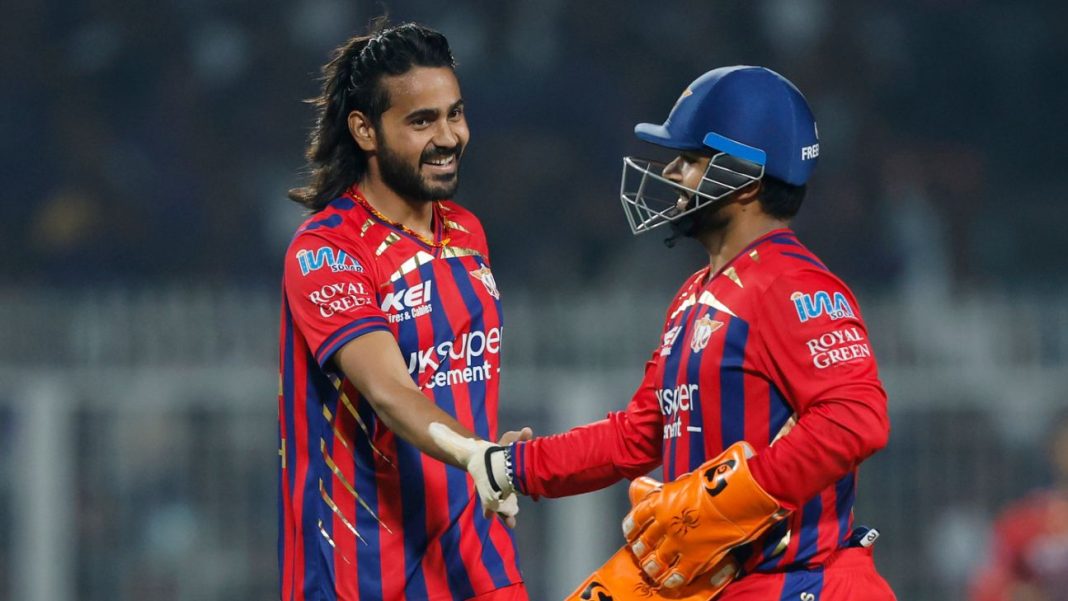
The Ekana Cricket Stadium in Lucknow was abuzz with anticipation as the coin flipped, setting the stage for a crucial Indian Premier League (IPL) clash. Royal Challengers Bangalore (RCB) captain Faf du Plessis won the toss and, without hesitation, elected to bowl first. The big news from the toss was RCB’s unwavering faith in their established lineup, opting for an unchanged Playing XI. In stark contrast, Lucknow Super Giants (LSG), under KL Rahul, made three significant changes, signalling a strategic overhaul in their quest for victory on their home turf.
RCB’s Unchanged Faith and Chase Preference
Royal Challengers Bangalore’s decision to maintain an unchanged squad underscores a deep confidence in their current team combination and individual player forms. Having performed reasonably well in recent outings, the team management clearly believes in continuity and stability. The core of their batting, featuring stalwarts like Virat Kohli, Faf du Plessis himself, and the explosive Glenn Maxwell, has been the bedrock of their performances. Their bowling attack, spearheaded by Mohammed Siraj and supported by the spin of Wanindu Hasaranga and the pace of Harshal Patel, has shown flashes of brilliance.
The choice to bowl first aligns with a common IPL strategy, especially in evening games where dew can become a significant factor in the second innings, making it challenging for bowlers and easier for batsmen. Furthermore, chasing targets often provides a clearer picture of the required run rate, allowing batsmen to plan their innings more effectively. It also suggests RCB’s pacers are primed to exploit any early movement the Lucknow pitch might offer, before conditions potentially flatten out. “We believe in our combination and the pitch looked like it might offer something for the bowlers early on, with dew potentially playing a role later,” said RCB captain Faf du Plessis at the toss, highlighting his team’s strategic choice and confidence in their bowling unit.
LSG’s Tactical Reset: Three Key Changes
On the other side, Lucknow Super Giants’ decision to ring in three changes speaks volumes about their assessment of recent performances and their tailored approach for the specific conditions at the Ekana Stadium. While the exact permutations would be revealed through play, such significant alterations often indicate a desire to address specific weaknesses, inject fresh energy, or adapt to the opponent’s strengths and the pitch’s characteristics. For this crucial encounter, LSG brought in the experienced Quinton de Kock in place of Kyle Mayers, offering a more stable opening option and valuable wicketkeeping prowess. Further, they bolstered their spin department by including Deepak Hooda, whose off-spin could be crucial on a slow Lucknow track, replacing Krishnappa Gowtham. Finally, Naveen-ul-Haq was brought in for Yash Thakur, potentially adding more variety and death-bowling expertise to their pace attack.
These changes suggest a tactical reset for LSG. Bringing in de Kock over Mayers, despite Mayers’ explosive starts, could be a move towards a more calculated batting approach on what is historically a challenging surface for high scores. Hooda’s inclusion indicates a recognition of the pitch’s spin-friendly nature, aiming to squeeze runs and pick up wickets in the middle overs. Naveen-ul-Haq’s return, meanwhile, could be a strategic response to RCB’s power-packed batting lineup, looking for economical spells and crucial breakthroughs.
The Ekana Pitch: A Deciding Factor
The Ekana Cricket Stadium in Lucknow has carved out a reputation for being a challenging pitch, often favouring bowlers, particularly spinners, and rarely witnessing towering totals. The surface tends to be on the slower side, making strokeplay difficult and demanding precise execution from batsmen. For RCB, bowling first provides an opportunity to assess the pitch conditions early and set a manageable target. For LSG, their three changes, especially those bolstering the spin department and adding experience to the batting, seem to be a direct response to this very characteristic.
This match is not just about individual brilliance but also about strategic acumen. RCB’s unchanged lineup banks on consistency and collective rhythm, while LSG’s modifications are a calculated gamble to find the perfect balance for their home conditions and counter their formidable opponents. The team that adapts better to the slow Ekana surface and executes their game plan with precision will undoubtedly hold the upper hand in this riveting contest.

