


The strategic Strait of Hormuz, a critical maritime chokepoint for global oil shipments, has once again become the focal point of heightened geopolitical tensions. Recent reports of ship attacks and escalating rhetoric between the United States and Iran have sent ripples of concern across international markets and diplomatic circles. Amidst this volatile backdrop, former US President Donald Trump issued a stern warning to Iran, emphasizing that any existing “ceasefire” or de-escalation must hold to prevent a catastrophic regional conflict. For India, a nation heavily reliant on Gulf oil, these developments carry profound implications for its energy security and regional stability efforts.
Escalating Tensions in the Strait of Hormuz: A Dangerous Chokepoint
The Strait of Hormuz, linking the Persian Gulf to the open sea, sees approximately a fifth of the world’s total oil supply pass through its narrow waters daily. This makes any disruption in the region a matter of global concern, directly impacting crude oil prices and supply chains. The current surge in tensions stems from a series of alleged incidents, including attacks on commercial vessels in the Gulf of Oman and surrounding waters. While investigations are often inconclusive, accusations and counter-accusations have fueled an already precarious relationship between Washington and Tehran.
The geopolitical landscape of the region remains complex. Years of stringent US sanctions have crippled Iran’s economy, with Tehran often responding through proxy actions or by challenging maritime security in the Gulf. The current situation appears to be a continuation of this cycle, where perceived provocations lead to strong warnings, creating a climate of uncertainty. For major importing nations like India, which sources a significant portion of its crude oil requirements from the Middle East, the stability of this waterway is paramount. Any sustained disruption could lead to a severe spike in energy costs, impacting India’s economy and inflation.
Trump’s Warning and the Call for a “Ceasefire” to Hold
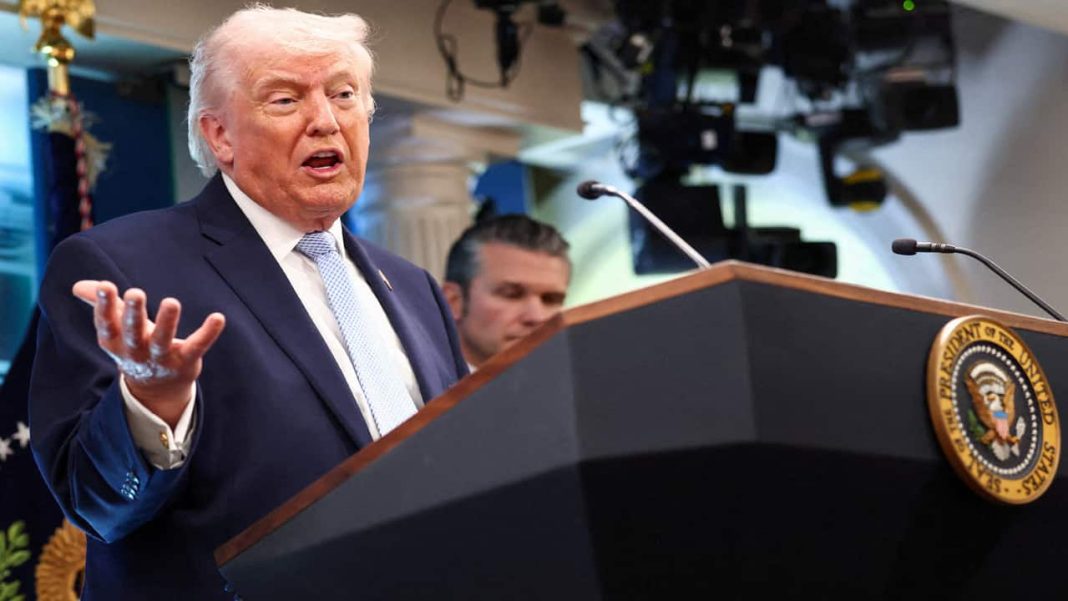
Amidst the brewing storm, Donald Trump, a prominent voice on US foreign policy, weighed in with a clear message to Iran. Speaking publicly, he cautioned Tehran against any further aggressive actions in the Strait of Hormuz or elsewhere in the region, stressing the imperative for restraint. His statement, which included the phrase “ceasefire must hold,” underscored a demand for a halt to any provocative behaviour that could further destabilize the critical maritime corridor. While there isn’t a formal “ceasefire” agreement in the conventional sense between the US and Iran, Trump’s remarks can be interpreted as a strong call for de-escalation and a return to a period of non-aggression to prevent inadvertent escalation.
Trump’s stance aligns with a long-held US policy of ensuring freedom of navigation and protecting international shipping lanes. He asserted, “Iran would be making a very big mistake if they did anything to happen. If they do anything, it will be bad for them.” This firm warning reflects the seriousness with which such incidents are viewed by Washington, signaling potential severe repercussions should Iran cross certain lines. From India’s perspective, while it maintains independent diplomatic ties with both the US and Iran, it consistently advocates for peaceful resolution and de-escalation. India’s strategic autonomy dictates a balanced approach, emphasizing dialogue over confrontation to safeguard its economic interests and the safety of its large diaspora residing in the Gulf region.
India’s Delicate Balancing Act
The ongoing tensions place India in a delicate diplomatic position. As one of the world’s largest oil importers, a substantial portion of India’s energy supply transits through the Strait of Hormuz. Any military confrontation or prolonged instability would directly threaten its energy security and could derail economic growth. Furthermore, India has historically maintained cordial relations with Iran, participating in infrastructure projects like the Chabahar Port, which offers a crucial connectivity link to Afghanistan and Central Asia, bypassing Pakistan.
New Delhi consistently urges all parties to exercise restraint and resolve differences through peaceful dialogue. The focus remains on safeguarding the stability of the Gulf region, which is vital not just for India but for the global economy. India’s diplomatic efforts are often directed at preventing an escalation that could spiral out of control, understanding that the ripple effects would be felt far beyond the immediate region, deeply impacting its own strategic and economic interests.
As the situation remains fluid, the international community, including India, will closely watch the developments in the Strait of Hormuz. The calls for de-escalation from global leaders underscore the urgent need for diplomatic engagement to avert a potential crisis that could have far-reaching consequences for global trade, energy markets, and regional peace.
The stakes are undeniably high, and the path forward requires careful navigation, diplomacy, and a shared commitment to stability from all actors involved.

