


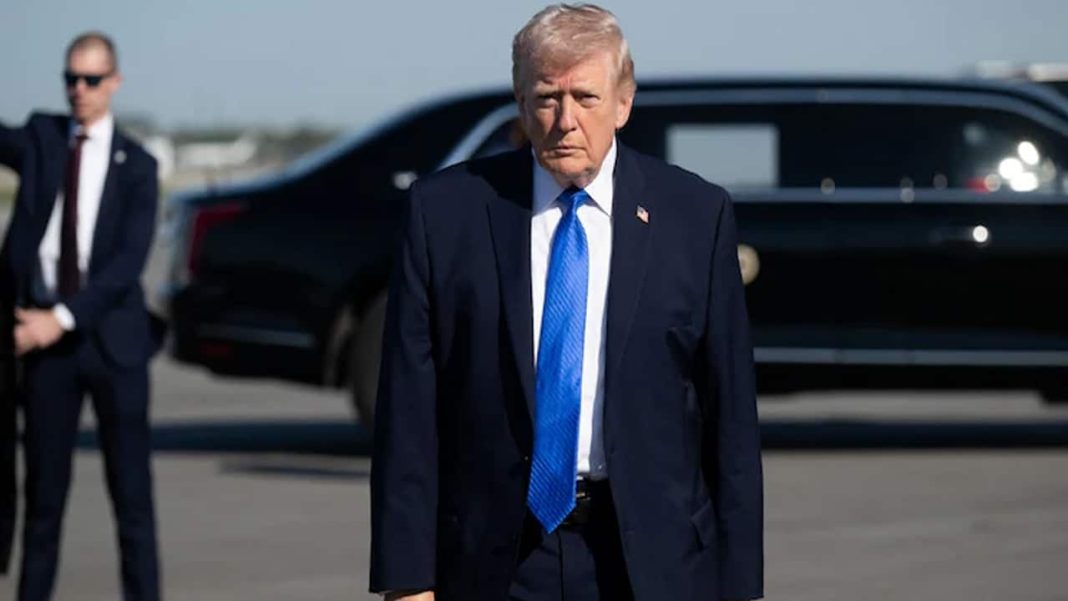
The geopolitical chessboard is once again seeing heightened tensions as reports suggest former U.S. President Donald Trump, eyeing a potential return to the White House, is growing increasingly frustrated with Tehran’s persistent defiance. Sources indicate a renewed consideration of military options to curb Iran’s nuclear ambitions and regional proxy activities, a development that sends ripples of concern across global capitals, including New Delhi.
For years, the U.S. under Trump pursued a strategy of “maximum pressure” through crippling sanctions after unilaterally withdrawing from the Joint Comprehensive Plan of Action (JCPOA), commonly known as the Iran nuclear deal. This campaign aimed to force Iran back to the negotiating table for a more stringent agreement. However, Tehran has largely resisted, instead engaging in incremental escalations of its nuclear program and continuing to support various regional groups, leading to a palpable sense of exasperation within conservative U.S. policy circles.
Mounting Frustration and the Re-evaluation of Options
The core of Trump’s reported frustration stems from the perception that the maximum pressure campaign, while economically damaging to Iran, has not fundamentally altered its strategic calculus. Iran has not only enriched uranium beyond JCPOA limits but has also been implicated in various regional incidents, from attacks on oil tankers and Saudi Arabian infrastructure to continued funding and arming of groups like Hamas, Hezbollah, and the Houthis.
This backdrop of perceived Iranian intransigence, coupled with a desire to project American strength, is fueling discussions about more assertive responses. While a full-scale invasion is widely seen as unlikely and fraught with immense peril, specific, targeted military actions—such as strikes against nuclear facilities, missile sites, or revolutionary guard assets—are reportedly being weighed. The aim would be to degrade Iran’s capabilities, restore deterrence, and compel a shift in its behavior, potentially without leading to a broader, protracted conflict. However, the line between deterrence and escalation in such a volatile region is incredibly thin.
One senior defense analyst, speaking on condition of anonymity, noted, “The administration’s patience with Tehran’s continued defiance is clearly wearing thin. While military options are always a last resort, the perception of a failed diplomatic strategy can push policymakers towards more aggressive measures, particularly when electoral considerations are also in play.” This sentiment underscores the complex interplay of domestic politics and foreign policy.
Regional Stability and India’s Stake
Any renewed military campaign against Iran would have immediate and profound implications for the Middle East and, by extension, for global stability and economic well-being. India, with its deep economic and historical ties to the region, stands to be significantly affected. As one of the world’s largest importers of crude oil, a conflict in the Persian Gulf would almost certainly lead to a sharp surge in global oil prices. Such a spike would exert immense pressure on India’s economy, increasing inflation, straining the current account deficit, and impacting common citizens through higher fuel costs.
Beyond economics, regional stability is paramount. The Strait of Hormuz, a vital chokepoint for global oil shipments, could become a flashpoint, disrupting maritime trade and threatening the energy security of nations like India. Furthermore, the Gulf region hosts millions of Indian expatriates whose safety and well-being would become an immediate concern. Any large-scale conflict could necessitate complex evacuation plans, reminiscent of past crises.
India has historically maintained a delicate diplomatic balance, fostering relations with both the U.S. and Iran. The Chabahar Port project, crucial for India’s trade access to Afghanistan and Central Asia, is a testament to its strategic interests in Iran. A military confrontation would complicate this balance significantly, forcing New Delhi to navigate an even more complex geopolitical landscape. India’s consistent call for de-escalation and diplomatic resolution reflects its deep-seated interest in maintaining peace and stability in its extended neighborhood.
The looming prospect of renewed military action against Iran, driven by growing frustration in Washington, underscores the precarious state of international relations. While the precise nature and timing of any potential U.S. response remain speculative, the discussions alone are a stark reminder of the volatile nature of the Middle East and the far-reaching consequences any escalation would entail for the global community. For India, the stakes could not be higher, necessitating vigilant monitoring and continued advocacy for peaceful resolution.

