


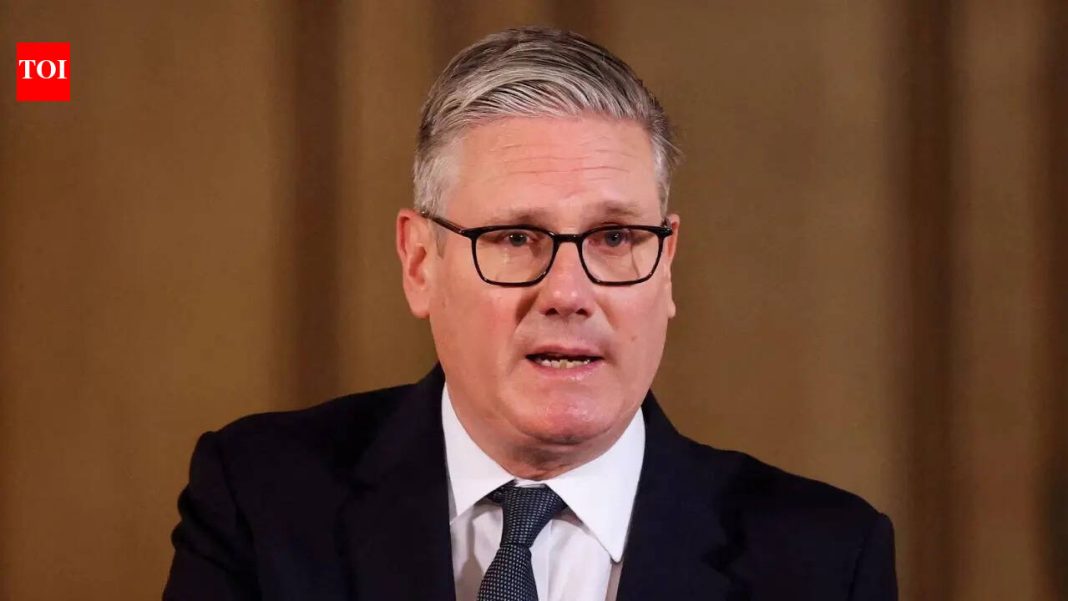
The United Kingdom’s political landscape is currently experiencing significant tremors, with Prime Minister Keir Starmer facing an unprecedented internal rebellion. Following what are described as “crushing election losses,” more than 70 Labour Members of Parliament (MPs) and senior cabinet ministers have publicly urged UK PM Keir Starmer to step down from his leadership role. This development has thrown the Labour Party into a profound crisis, questioning its future direction and leadership at a pivotal moment in British politics.
The calls for Starmer’s resignation come amidst a period of intense scrutiny for the Labour government, barely months into its tenure. While the specifics of the electoral defeats are still being dissected, the consensus within a significant faction of the party is that Starmer’s leadership has failed to deliver the mandate and stability promised to the electorate. For an Indian audience observing from afar, such internal strife within a major global power often raises questions about geopolitical stability, trade relations, and the welfare of the vast Indian diaspora in the UK.
The Aftermath of Crushing Electoral Defeat
The pressure on Prime Minister Starmer has been mounting steadily since the recent string of devastating electoral outcomes. These losses, spanning key local council elections and crucial by-elections, have seen traditional Labour strongholds fall to opposition parties, eroding the party’s parliamentary majority and its standing with the public. The sheer scale of the rebellion is staggering, with over 70 MPs—a significant portion of the parliamentary party—and several high-profile cabinet ministers making their discontent known.
Sources within the Labour Party suggest that the dissent stems from a variety of grievances. Some point to a perceived lack of a coherent and inspiring vision, arguing that Starmer’s government has struggled to articulate a clear agenda that resonates with working-class voters. Others criticize specific policy decisions that have alienated segments of the electorate, while a more ideologically driven faction believes the party has strayed too far from its traditional socialist roots in an attempt to occupy the political centre ground. The collective sentiment is one of disappointment and a desperate desire for a reset before the next general election cycle.
The immediate consequence has been a palpable sense of instability within Downing Street. Cabinet meetings are reportedly tense, and the government’s ability to push through its legislative agenda is now under severe threat. The opposition has naturally seized upon this internal discord, further amplifying the narrative of a government in disarray. The calls for Starmer’s resignation are not merely whispers but have become public declarations, placing the Prime Minister in an incredibly precarious position, forcing him to address the deep divisions within his own party.
A Crisis of Leadership and Direction
At its core, the current turmoil is a profound crisis of leadership and ideological direction for the Labour Party. Critics argue that Keir Starmer, despite his background as a former Director of Public Prosecutions, has struggled to connect emotionally with the electorate and project a decisive image. His leadership has been characterised by a cautious approach, which many now see as a weakness in a volatile political climate.
The party appears fractured between different ideological wings: the centrist faction that Starmer represents, and a more progressive, left-leaning contingent that feels marginalized. These internal divisions have been exacerbated by the election results, with each side blaming the other for the party’s electoral misfortunes. The fundamental question now facing Labour is not just who should lead, but what the party stands for in modern Britain.
A senior Labour insider, who wished to remain anonymous, encapsulated the mood perfectly: “This isn’t just about one election; it’s about the very soul of the Labour Party. We need a leader who can not only unify but also articulate a vision that resonates beyond the Westminster bubble, something Starmer has struggled to achieve.” This sentiment underscores the deep-seated frustration and the urgent need for a cohesive strategy to rebuild trust with voters. The potential vacuum in leadership also opens the door for other prominent Labour figures to emerge, each with their own vision for the party’s future, further complicating an already tumultuous situation.
Indian Perspective: Geopolitical Ripples and Diaspora Concerns
From an Indian standpoint, the unfolding political drama in the UK is being watched with keen interest. The UK remains a vital partner for India in areas such as trade, defence, and education. Political instability in London could have implications for the ongoing Free Trade Agreement (FTA) negotiations, which are crucial for enhancing bilateral economic ties. A change in leadership or a prolonged period of political uncertainty could either accelerate or derail these critical discussions, depending on the new government’s priorities and negotiating stance.
Furthermore, the welfare and concerns of the substantial Indian diaspora in the UK are always paramount. Policies related to immigration, healthcare, and economic opportunities are directly impacted by the government in power. Any shift in the UK’s domestic policy, particularly concerning immigration or visa regulations, could significantly affect Indians living, working, or studying in the country. Indian media outlets and policy analysts are closely monitoring the situation, not just for its immediate impact but also for its long-term ramifications on India-UK relations and the broader geopolitical landscape.
The UK’s global standing and its role on the international stage are also of interest to India. A stable and strong UK government is generally preferred for maintaining strategic alliances and addressing global challenges. The current internal strife within the Labour Party therefore represents more than just a domestic political issue; it carries the potential for wider geopolitical ripples, making it a topic of considerable discussion and analysis across India.
The coming weeks will be critical for Keir Starmer and the Labour Party. Whether Starmer can weather this storm of dissent, unify his fractured party, and regain the confidence of both his colleagues and the electorate remains to be seen. The stakes are incredibly high, not just for the future of the Labour Party but for the direction of UK politics and its engagement with the rest of the world, including its historical partners like India. The outcome will undoubtedly shape the UK’s trajectory for years to come.

