


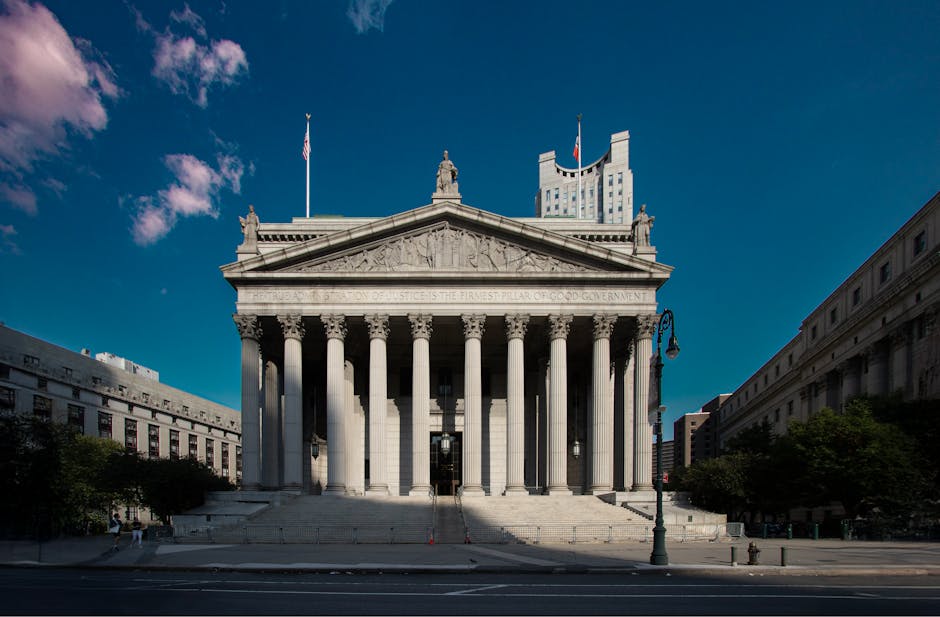
The political winds in Louisiana are shifting, and the Supreme Court has just handed down a ruling that will undoubtedly reshape the state’s congressional landscape. In what many are calling a landmark decision, the nation’s highest court has ordered Louisiana to redraw its congressional map, a move that carries significant weight for fair representation and the future of voting rights.
This isn’t just a technical adjustment; it’s a profound directive that addresses long-standing concerns about how electoral districts are drawn and whether they truly reflect the diversity of the state’s population. The ripple effects of this ruling are poised to resonate far beyond Louisiana’s borders, reigniting conversations about equitable representation across the country.
The Heart of the Challenge: Diluted Voices
At the core of the Supreme Court’s decision was a challenge arguing that Louisiana’s current congressional map violated Section 2 of the Voting Rights Act of 1965 (VRA). This crucial piece of legislation prohibits voting practices or procedures that discriminate on the basis of race, color, or membership in a language minority group.
For years, advocates and voters in Louisiana contended that the existing map effectively diluted the voting power of the state’s significant Black population. Despite Black residents making up nearly one-third of Louisiana’s total population, the map only featured one majority-minority congressional district out of six. Critics argued this configuration made it exceedingly difficult for Black voters to elect candidates of their choice, effectively marginalizing their collective voice in federal elections.
The legal battle navigated through various courts, with lower courts initially siding with the plaintiffs, citing evidence of racial gerrymandering that suppressed minority voting strength. The Supreme Court’s intervention now solidifies those earlier findings, pushing the state towards a more equitable electoral design.
A Mandate for Change: What Happens Next?
The Supreme Court’s order is unequivocal: Louisiana must go back to the drawing board. This means the state legislature will now be tasked with creating a new congressional map that adheres to the principles of the Voting Rights Act, specifically by creating an additional majority-Black district. This redraw is expected to fundamentally alter the state’s political dynamics, likely leading to the creation of a second district where Black voters constitute a majority or near-majority of the electorate.
The process won’t be without its challenges. Redistricting is often a contentious affair, involving complex demographic data, political maneuvering, and heated debate. However, the Court’s directive leaves little room for ambiguity regarding the outcome. As one local activist, Maria Sanchez, succinctly put it, “This isn’t just about lines on a map; it’s about ensuring every citizen has a meaningful say in their representation. It’s a huge step forward for democracy here in Louisiana and a powerful reminder that the fight for fair voting rights is far from over.”
Broader Implications Beyond Louisiana
While this decision directly impacts Louisiana, its significance ripples across the nation. The Supreme Court’s reaffirmation of Section 2 of the VRA sends a strong signal about the continued importance of protecting minority voting rights, especially in an era where such protections have faced increasing scrutiny. It reinforces the idea that congressional maps must be drawn fairly, preventing the deliberate disenfranchisement of any racial or ethnic group.
For other states with ongoing or potential redistricting challenges, this ruling could serve as a powerful precedent. It underscores the judiciary’s role in safeguarding the integrity of the electoral process and ensuring that maps reflect populations rather than merely political advantage. This pivotal moment emphasizes that true representation isn’t just a hopeful ideal, but a constitutional imperative.
The coming months will be critical as Louisiana grapples with the task of redrawing its map. The outcome will not only redefine the state’s political future but will also stand as a testament to the enduring power of the Voting Rights Act and the ongoing struggle for equitable representation for all.

