


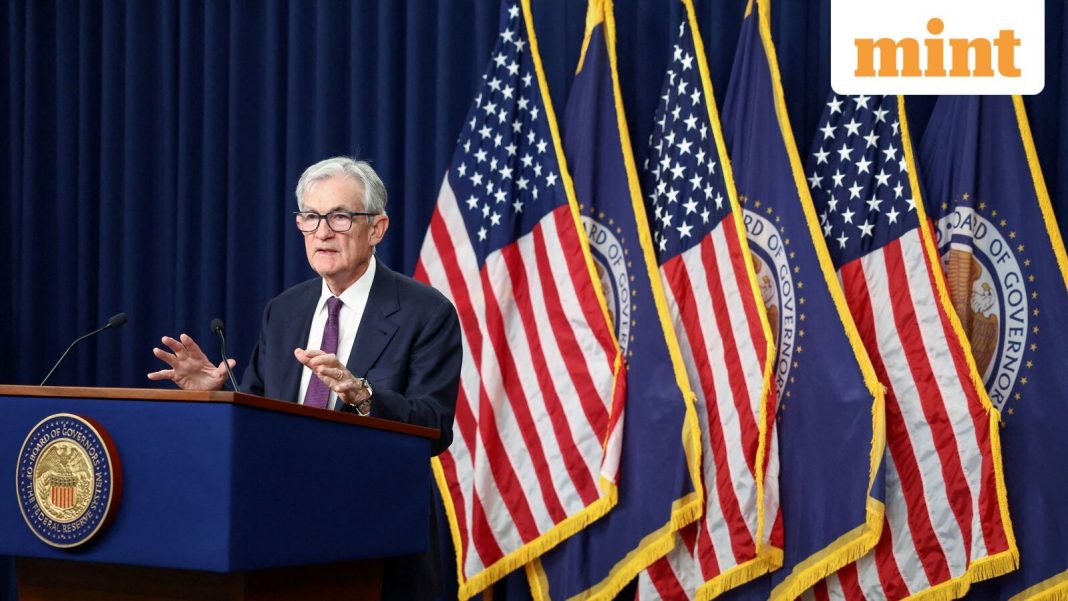
In a closely watched development that reverberated across global financial markets, the US Federal Reserve, in its latest meeting of 2026, opted to hold its benchmark interest rate steady for the third consecutive time. This decision, announced following a speech by Chair Jerome Powell, saw US stocks conclude the day with a mixed performance, reflecting diverse interpretations of the Fed’s cautious stance. For India, a significant emerging economy deeply integrated into global financial flows, the implications of this ‘hold’ decision are keenly observed, influencing everything from the rupee’s trajectory to foreign investment sentiment.
Fed Holds Steady: The Decision and Market Reaction
The Federal Open Market Committee (FOMC) concluded its recent meeting by maintaining the federal funds rate within its existing range, a move widely anticipated by analysts given persistent, albeit moderating, inflationary pressures and a resilient US labour market. Chair Jerome Powell, in his post-meeting address, underscored the Fed’s commitment to achieving its 2% inflation target while emphasizing a data-dependent approach. He reiterated that while significant progress has been made, the fight against inflation is not yet over, leaving the door open for potential future rate adjustments if economic conditions warrant.
The market’s reaction in the US was a study in nuance. The Dow Jones Industrial Average showed modest gains, while the S&P 500 ended largely flat. The tech-heavy Nasdaq Composite, however, saw slight declines. This mixed bag reflected investor apprehension, as some interpreted the ‘hold’ as a dovish pause, hinting at the end of the tightening cycle. Others viewed it as a hawkish hold, with Powell’s cautionary remarks suggesting rates could remain higher for longer, or even rise again if inflation proves stickier than anticipated. Yields on US Treasury bonds also saw fluctuations, responding to the subtle shifts in sentiment regarding the future path of monetary policy.
India’s Economic Compass: Navigating the Fed’s Stance
For India, the Fed’s decision holds significant sway. A prolonged period of high interest rates in the US typically exerts pressure on emerging market currencies, including the Indian Rupee. By holding rates steady, the immediate pressure for capital outflows from India to the US might abate, offering some stability to the Rupee. This breathing room is crucial for managing imported inflation, especially for commodities priced in US dollars.
Foreign Institutional Investors (FIIs) are another key cohort watching the Fed closely. When US interest rates stabilize, the relative attractiveness of higher-yielding emerging markets like India can increase. This could potentially lead to renewed FII inflows into Indian equities and debt markets, providing a tailwind for domestic asset prices. However, prolonged uncertainty about the Fed’s future moves can still deter risk appetite.
Furthermore, the Reserve Bank of India (RBI) invariably considers global monetary policy trends when formulating its own strategy. A stable Fed policy provides the RBI with greater flexibility to assess domestic inflation and growth dynamics, potentially easing the pressure to mirror US rate hikes. “The Fed’s ‘wait and watch’ approach offers a window of stability for emerging markets,” notes Dr. Alok Sharma, Chief Economist at Ascent Capital. “For India, it allows the RBI to focus more acutely on domestic factors, though global liquidity and commodity price movements remain critical variables.”
Outlook 2026: Global Headwinds and India’s Resilience
Looking ahead, the global economic landscape remains complex. While the Fed’s pause provides a temporary reprieve, the overarching theme of ‘higher for longer’ interest rates in major economies could still weigh on global growth. This environment necessitates continued vigilance from policymakers and businesses alike.
India, however, stands on a relatively stronger footing. Its robust domestic consumption, increasing government capital expenditure, and ongoing structural reforms have provided a degree of insulation from global shocks. Sectors like IT services, which derive a significant portion of their revenue from US and European markets, will continue to monitor global economic health, while domestic manufacturing and infrastructure remain key growth drivers.
The year 2026 is likely to be characterized by continued global economic rebalancing. As the Fed navigates its dual mandate amidst evolving inflationary pressures, its decisions will remain a critical input for financial markets worldwide. For India, maintaining its growth momentum while managing external vulnerabilities will be paramount, leveraging its inherent strengths to navigate what promises to be an interesting economic journey.

