


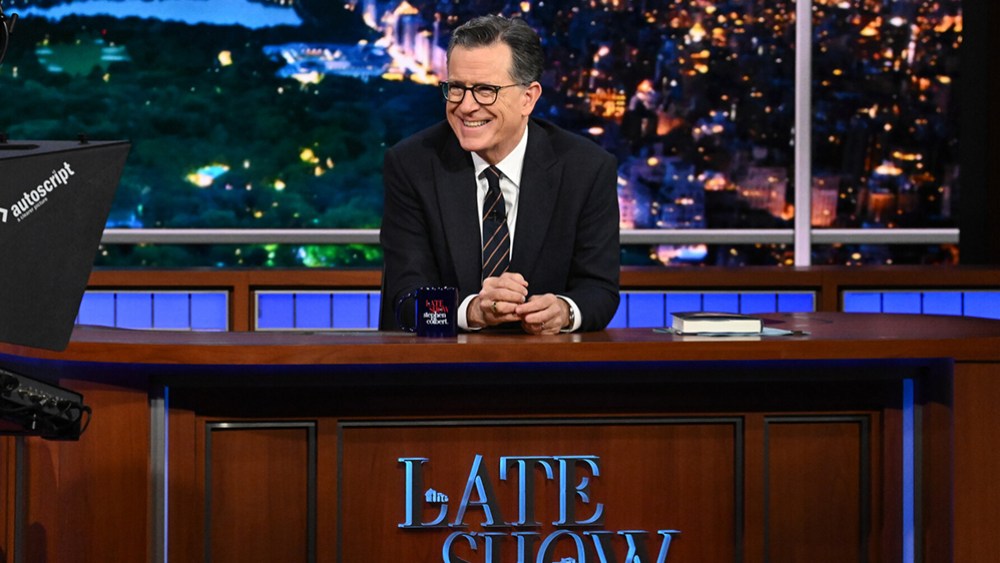
Stephen Colbert has long been a fixture in the late-night landscape, known for his sharp wit, incisive interviews, and, increasingly, his deeply political commentary. For years, viewers have watched The Late Show with Stephen Colbert navigate the often turbulent waters of current events with a blend of humor and earnest reflection. But how did a show traditionally meant for a broader, less politically charged audience come to be such a strong voice in the national conversation? Colbert himself has offered insights into this evolution, suggesting that its political bent wasn’t just a strategic choice, but an almost inevitable response to the world around it.
Responding to the Unprecedented News Cycle
One of the primary reasons Colbert’s show became so political, as he often alludes, is the sheer inescapability of politics in modern life. During certain periods, the news cycle itself became so overwhelmingly dominated by political developments and controversies that to ignore them would have felt disingenuous, even negligent. Imagine trying to host a nightly talk show and sidestep the biggest stories everyone is talking about – it’s a recipe for irrelevance.
Colbert’s approach, then, became one of acknowledging and processing this reality through the lens of comedy and commentary. His monologue often starts with the day’s most pressing headlines, dissecting them with a mix of satire, incredulity, and genuine concern. This isn’t just about making jokes; it’s about providing a collective space for viewers to grapple with the complexities and absurdities of political life. By addressing the elephant in the room head-on, Colbert ensures his show remains pertinent and resonant with an audience eager for both laughs and a sense of shared understanding.
The Host’s Inherent DNA and Evolved Persona
Another crucial factor is Colbert himself. Before taking over The Late Show, he spent nearly a decade perfecting a highly political, satirical persona on The Colbert Report. That show was built entirely around lampooning political pundits and the cable news echo chamber. While The Late Show required him to shed the character and present as himself, the underlying analytical mind and passion for political discourse remained. It would have been difficult, if not impossible, for him to simply turn off that part of his journalistic and comedic sensibility.
His background as a thoughtful interviewer and a comedian who uses intellect as much as slapstick means he’s naturally drawn to exploring complex issues. When significant political events unfold, Colbert’s default setting is to analyze, question, and find the humor (or the pathos) within them. This isn’t just about ratings; it’s about his inherent comedic and intellectual makeup. As Dr. Evelyn Reed, a media studies professor, put it, “Late-night hosts like Colbert often become essential figures for collective processing, offering both laughter and poignant truth when the world feels overwhelming. His transition from character to self allowed for a more direct, yet still deeply satirical, engagement with the political landscape.” This evolution signifies a host who understands the power of his platform and his own voice in a changing media environment.
The Late-Night Show as a Cultural Barometer
Ultimately, Colbert’s show becoming overtly political reflects a broader shift in late-night television’s role. Once primarily a platform for celebrity interviews and light entertainment, late-night has increasingly morphed into a significant cultural barometer and a space for political catharsis. In an era of constant news and social media engagement, audiences expect their entertainers to be aware of, and often to comment on, the major issues of the day.
Colbert seems to understand this implicitly. His political segments are not just for partisan cheerleading; they often aim to articulate the frustration, confusion, or anger many viewers feel, providing a release through shared humor and articulate critique. It’s a testament to his skill that he can navigate these fraught topics while still delivering an entertaining and thought-provoking program. Far from being a calculated maneuver for controversy, the political nature of The Late Show with Stephen Colbert appears to be a genuine reflection of the host, the times, and the evolving expectations of a discerning audience.
*

