


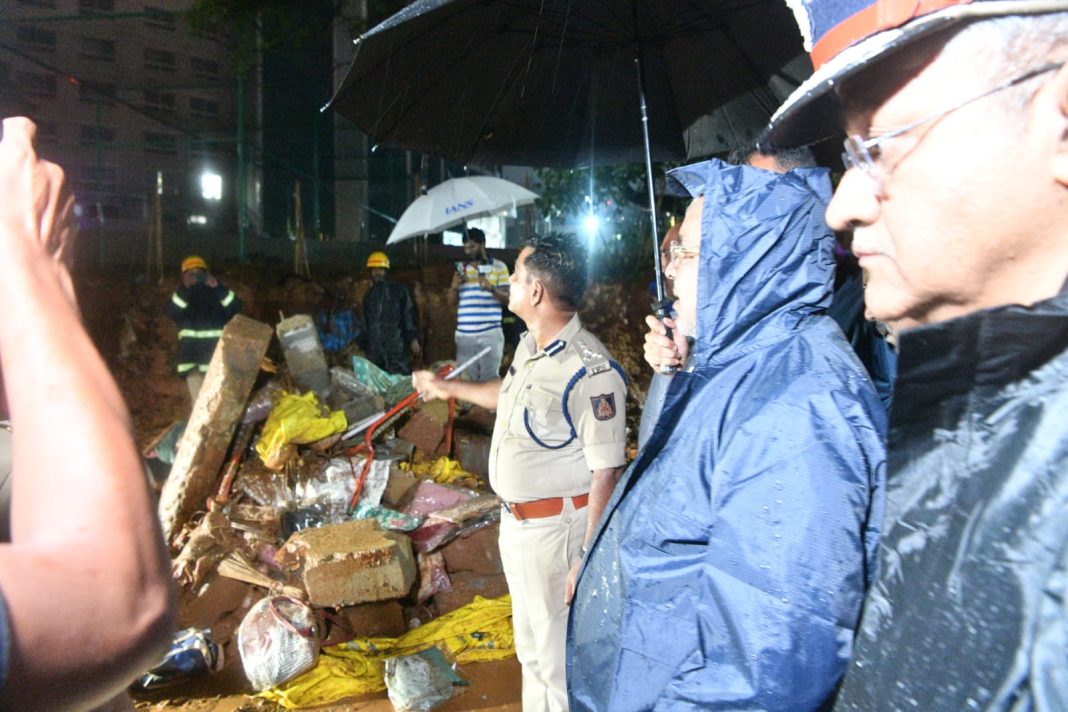
Bengaluru, India – The bustling metropolis of Bengaluru, often hailed as India’s Silicon Valley, was plunged into grief and shock earlier this week following a devastating incident at Bowring and Lady Curzon Hospitals. A section of the hospital’s compound wall, weakened by incessant heavy rainfall, collapsed, claiming the lives of seven individuals. The tragic event, which unfolded in the late hours, has cast a somber shadow over the city, reigniting critical conversations about urban infrastructure, monsoon preparedness, and the safety of vulnerable populations.
The Tragic Collapse and Gruelling Rescue Efforts
The incident occurred on a night marked by torrential downpours that lashed Bengaluru, transforming streets into waterways and testing the limits of the city’s drainage systems. Around 11:30 PM, a substantial portion of the peripheral wall of Bowring Hospital, located near its staff quarters and a makeshift settlement, gave way. The victims, primarily daily wage labourers and their families who had sought shelter in temporary dwellings adjacent to the wall, were tragically crushed under the debris as they slept.
Eyewitnesses recounted harrowing scenes of chaos and desperate cries for help in the immediate aftermath. The sound of the collapse, muffled by the continuous rain, was soon followed by frantic shouts as neighbours and hospital staff realised the gravity of the situation. Emergency services, including the National Disaster Response Force (NDRF), State Disaster Response Force (SDRF), local police, and fire brigades, were immediately mobilised. However, the relentless rain, waterlogged access routes, and the sheer volume of rubble complicated rescue operations significantly.
Working through the night under challenging conditions, rescue teams meticulously sifted through the mud and debris. The grim task revealed the bodies of seven individuals, including women and children, trapped beneath the rubble. Several others sustained injuries and were rushed to nearby medical facilities, including Bowring Hospital itself. The heroic efforts of the first responders and volunteers, despite the odds, prevented further casualties and provided crucial assistance to the injured.
Unravelling the Causes: Rain, Structure, and Settlements
While heavy rainfall has been identified as the immediate trigger for the collapse, a deeper probe is underway to ascertain the underlying factors that contributed to such a catastrophic failure. The Bowring Hospital wall, like many structures in older parts of Indian cities, is believed to be decades old. Concerns have been raised regarding its structural integrity, maintenance history, and whether it could withstand the increasing intensity of monsoon downpours that Bengaluru has experienced in recent years.
Another critical aspect under scrutiny is the presence of informal settlements and makeshift shelters directly abutting the hospital wall. This is a common sight in urban India, where migrant workers and daily wage earners often construct temporary homes near their workplaces or available public land due to a lack of affordable housing. While these settlements offer immediate shelter, they often lack proper planning, safety assessments, and can inadvertently compromise the stability of adjacent structures, especially if foundations are disturbed or water accumulation occurs at the base of walls.
A senior municipal official, speaking on condition of anonymity due to the ongoing investigation, stated, “This incident is a stark reminder of the urgent need for comprehensive infrastructure audits, particularly for public buildings and older structures across the city. We must critically examine not just the construction quality but also the encroachment issues that often exacerbate such vulnerabilities.”
Authorities, including the Bruhat Bengaluru Mahanagara Palike (BBMP) and the Public Works Department (PWD), have launched a joint investigation. This inquiry aims to determine if there were any structural deficiencies, lapses in maintenance, or failures in risk assessment that could have prevented the tragedy. The state government has also announced ex-gratia compensation for the victims’ families, a standard measure in such disasters.
Beyond the Rubble: Accountability and Urban Resilience
The Bowring Hospital wall collapse serves as a grim wake-up call for Bengaluru, a city grappling with rapid urbanisation and the escalating challenges of climate change. It highlights the pervasive issue of ageing infrastructure in Indian cities that struggle to keep pace with growth and environmental pressures. This incident is not an isolated one; several instances of building and wall collapses have been reported across the country during the monsoon season, underscoring a systemic vulnerability.
There is an urgent call for greater accountability from urban planning bodies and civic authorities. Regular and rigorous safety audits of all public and private structures, especially those deemed high-risk or situated near vulnerable populations, are imperative. Furthermore, addressing the socio-economic issues that force individuals to live in precarious conditions, such as the informal settlements near the collapsed wall, requires a more humane and sustainable approach.
As Bengaluru mourns the loss of seven lives, the focus shifts to ensuring that such a tragedy is not repeated. The incident demands not just an investigation into what went wrong, but a proactive strategy to build a more resilient, safer, and inclusive urban environment for all its inhabitants, especially those who often bear the brunt of developmental shortcomings.

