


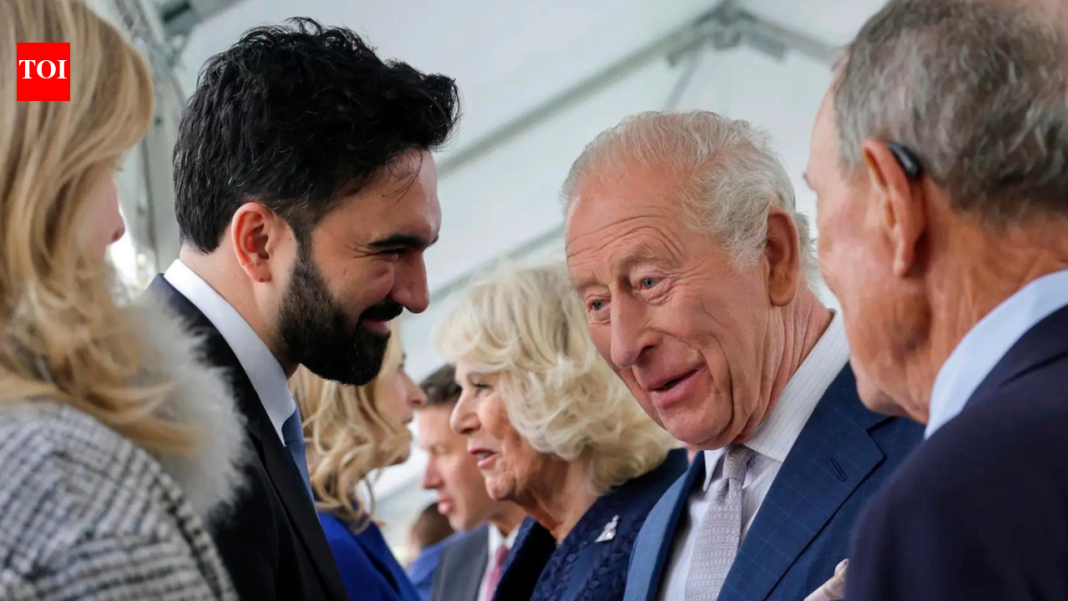
A recent statement by New York State Assemblyman Zohran Mamdani, an Indian-American politician, has reignited a centuries-old debate surrounding one of the world’s most contested jewels: the Kohinoor diamond. During a candid interview, when asked what he would request of King Charles III, Mamdani’s unequivocal response was, “I would ask him to return the Kohinoor diamond.” This declaration, made in a viral clip, swiftly resonated across social media platforms, particularly within the Indian diaspora and in India itself, drawing fresh attention to the contentious issue of colonial-era acquisitions and the persistent calls for their repatriation.
Mamdani’s Stance and the Echo of History
Zohran Mamdani, who represents the 36th Assembly District in New York, is known for his progressive political views and his vocal advocacy on various social issues. His statement, delivered with a directness that belied the diamond’s immense historical baggage, taps into a deep vein of sentiment among many Indians. The Kohinoor, meaning “Mountain of Light” in Persian, is not merely a gemstone; it is a powerful symbol of colonial exploitation and lost heritage for a nation that continues to grapple with the legacies of British rule.
The assemblyman’s remarks come at a time when global conversations about reparations and the restitution of cultural artifacts are gaining significant momentum. Museums and former colonial powers are increasingly facing scrutiny over the provenance of their collections. While Mamdani’s political role is in the United States, his Indian heritage undoubtedly informs his perspective, making his public call for the diamond’s return particularly poignant and widely discussed within Indian circles. His statement serves as a reminder that the demand for the Kohinoor’s return transcends national borders, echoing the sentiments of millions who view its presence in the British Crown Jewels as a continuing affront.
The Kohinoor: A Journey Through Empires and Disputes
The history of the Kohinoor diamond is as glittering as its facets, marked by tales of conquest, betrayal, and power shifts across various empires. Originating from the Kollur Mine in the Golconda region of what is now Andhra Pradesh, India, the diamond’s recorded history dates back to the 13th century. It passed through the hands of numerous Indian and Persian rulers, including the Kakatiya dynasty, the Mughal emperors, Nadir Shah of Persia, and Afghan rulers, before eventually landing with the Sikh Empire under Maharaja Ranjit Singh.
Its ultimate transfer to British possession occurred in 1849, following the annexation of Punjab after the Second Anglo-Sikh War. The Treaty of Lahore, signed with the minor Maharaja Duleep Singh, stipulated the surrender of the Kohinoor to Queen Victoria. While the British government maintains that the diamond was acquired legally under the terms of a treaty, many historians and the Indian government argue that the circumstances surrounding its acquisition – involving a child ruler under duress and a defeated kingdom – constituted colonial plunder rather than a voluntary gift. This fundamental disagreement forms the crux of the ongoing dispute.
India’s Persistent Claims and the Symbolism
Since India gained independence in 1947, various Indian governments have repeatedly sought the return of the Kohinoor. These requests, often met with polite refusals from the United Kingdom, highlight the diamond’s symbolic weight. For India, its return would represent an acknowledgment of historical injustices and a restoration of national pride. It is seen as more than just a jewel; it embodies a fragment of India’s pre-colonial sovereignty and rich cultural legacy, currently displayed in the Tower of London as part of the Crown Jewels, specifically set in the Queen Mother’s Crown.
The UK’s stance has generally been one of resisting calls for repatriation, citing the precedent it might set for countless other artifacts in its museums and royal collections, and often asserting the legality of its acquisition. However, as public consciousness around colonial legacies evolves, such arguments face increasing scrutiny. Zohran Mamdani’s call, though from an individual politician abroad, underscores the enduring nature of this historical wound and the continued desire for its symbolic healing through the return of such emblematic treasures.
The Kohinoor diamond remains a powerful emblem, sparking passionate debate across continents. Mamdani’s recent statement adds another voice to a long chorus of demands, keeping the conversation alive and reminding the world of the unresolved historical questions that still resonate deeply within contemporary India and its diaspora. While immediate change may not occur, such public pronouncements ensure that the ‘Mountain of Light’ continues to illuminate complex discussions about heritage, ownership, and the lingering shadows of empire.

