


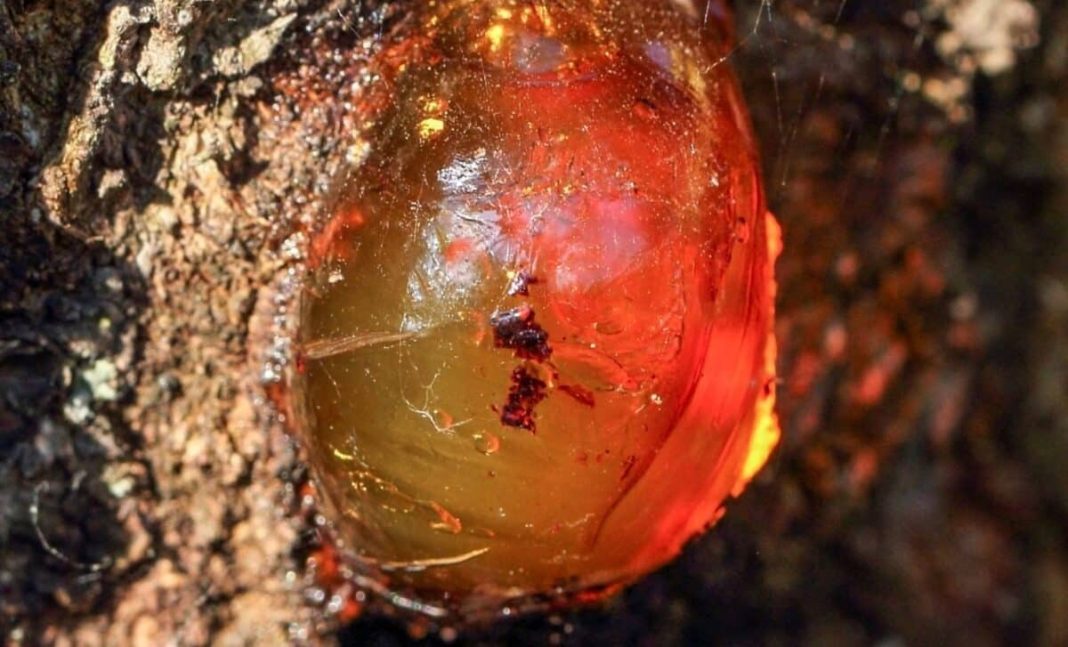
Imagine peering into a perfectly preserved window to a world millions of years ago, where dinosaurs roamed and ancient forests stood tall. This is precisely the sensation evoked by a recent scientific discovery that has entomologists and paleontologists abuzz. Scientists have unearthed a remarkably preserved, tiny insect, encased in a shimmering droplet of amber from the dinosaur era. While finding ancient insects in amber is not entirely new, this particular specimen boasts an anatomical feature so bizarre and unprecedented that it’s challenging our understanding of insect evolution and the strange paths life took during the Mesozoic.
An Amber Time Capsule: A Glimpse into the Cretaceous
The discovery comes from a fossil-rich region known for its exquisite amber specimens, offering unparalleled detail of ancient life. This particular piece of amber, estimated to be around 99 million years old, hails from the mid-Cretaceous period – a time when flowering plants were emerging, and many fascinating smaller creatures thrived alongside their giant reptilian counterparts. Within its golden depths lies an insect, no bigger than a grain of rice, yet perfectly preserved down to the intricate veins on its wings and the delicate hairs on its legs. It’s not immediately assignable to any known modern insect order, hinting at an entirely extinct lineage that once roamed ancient ecosystems.
The Baffling “Neck” of an Ancient Hunter
What truly sets this tiny creature apart, sparking widespread scientific curiosity, is its extraordinarily long and flexible neck. Unlike the compact, almost non-existent necks of most modern insects, this ancient bug possesses a neck segment that appears disproportionately extended, giving its small head an unusual, almost serpent-like mobility. The head itself is tiny but equipped with what appear to be specialized, raptorial mouthparts, suggesting it was an active predator, perhaps ambushing even smaller prey with lightning-fast strikes from its elongated appendage. This unique morphology has no direct modern analogue, making it a profound enigma.
“It’s like finding a miniature, six-legged giraffe, but instead of grazing, it’s clearly built for precision hunting,” remarked one paleontologist studying the specimen. “The sheer evolutionary experimentation on display in the fossil record never ceases to astonish. This creature must have occupied an incredibly specific ecological niche that demanded such an unusual adaptation.”
Unraveling Evolutionary Mysteries
The existence of such a creature provides invaluable insights into the immense biodiversity and evolutionary ingenuity of life during the age of dinosaurs. It highlights how certain ecological pressures could lead to the development of highly specialized, and often unique, anatomical features that have since vanished from the Earth. This tiny hunter reminds us that the insect world of the past was far more diverse and perhaps even more alien than we often imagine. Discoveries like this help scientists reconstruct ancient ecosystems, understand the intricate food webs, and trace the branching paths of evolution, revealing a constantly changing tapestry of life that extends millions of years into our planet’s history.
The amber-encased bug is more than just a fossil; it’s a silent testament to the vast, largely unexplored history of life on Earth, prompting us to wonder what other evolutionary marvels lie hidden, waiting to be discovered, within the geological record.

