


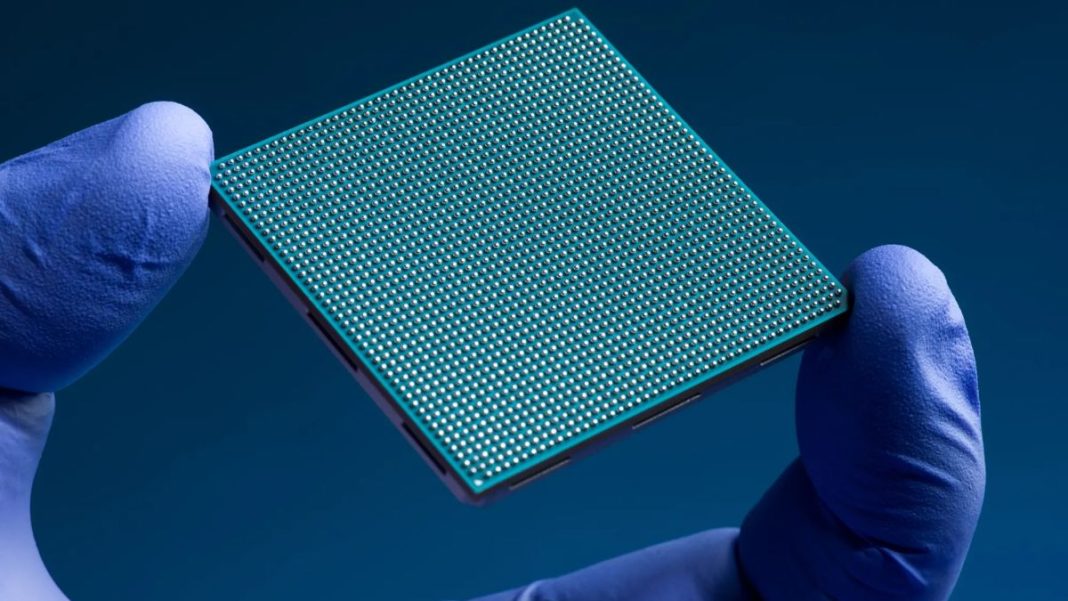
The vast expanse of space continues to beckon humanity, promising new frontiers, invaluable scientific discoveries, and a deeper understanding of our universe. As nations worldwide, including India, set their sights on ambitious lunar and Martian missions, the need for cutting-edge technology to power these endeavors has never been more critical. NASA, a global leader in space exploration, has recently unveiled a groundbreaking new space processor, poised to revolutionize future deep-space missions by delivering an astounding 500 times faster performance than its predecessors.
This monumental leap in computing power is not merely an upgrade; it represents a fundamental shift in how spacecraft will operate beyond Earth’s protective embrace. For India’s burgeoning space sector and ISRO’s future aspirations, this development holds profound implications, potentially paving the way for enhanced collaboration and more sophisticated indigenous missions.
The Imperative for Intelligence Beyond Earth
Space missions are inherently challenging, demanding electronics that can withstand extreme radiation, temperature fluctuations, and the vacuum of space. Historically, this meant using highly robust, radiation-hardened processors that often lagged significantly behind their terrestrial counterparts in performance. Most complex data processing and decision-making were therefore performed on Earth, leading to considerable communication delays and limitations on real-time autonomy.
The new processor addresses this critical bottleneck head-on. By integrating advanced computing capabilities directly onto spacecraft, it drastically reduces the reliance on constant communication with Earth. This translates to the ability for spacecraft to perform complex computations, process vast datasets from scientific instruments, and even make autonomous decisions in real-time, hundreds of millions of miles away. Imagine a Mars rover independently navigating treacherous terrain or a lunar lander optimizing resource extraction without immediate human intervention – such scenarios move closer to reality with this technological advancement. This enhanced processing power is vital for implementing sophisticated onboard Artificial Intelligence (AI) and Machine Learning (ML) algorithms, transforming how missions gather, analyze, and react to their environment.
Powering the Artemis Era and Martian Dreams
NASA’s ambitious Artemis program, aiming to establish a sustainable human presence on the Moon, and its long-term vision for human missions to Mars, will be direct beneficiaries of this accelerated processing capability. On the Moon, future habitats and scientific outposts will require robust computing for everything from life support systems and resource utilization (ISRU) to advanced robotics and scientific instrumentation. The new processor will enable these systems to operate with unprecedented efficiency and autonomy, critical for long-duration stays far from Earth.
For Mars missions, the impact is even more pronounced. The immense distances involved mean significant communication delays – up to 20 minutes one-way. A spacecraft equipped with a 500x faster processor can analyze geological samples, detect anomalies, and even course-correct in real-time, optimizing mission productivity and safety without waiting for instructions from Earth. This level of onboard intelligence is paramount for the success of future sample return missions, astronaut protection, and the ultimate goal of human exploration of the Red Planet.
“This new processing capability isn’t just an incremental improvement; it’s a paradigm shift,” remarked Dr. Alisha Singh, Lead Architect for Advanced Computing at NASA’s Jet Propulsion Laboratory. “It empowers our missions with unprecedented autonomy and intelligence, allowing us to ask and answer far more complex scientific questions directly on site, whether on the Moon or the sands of Mars. It truly redefines the boundaries of what’s possible in deep space exploration.”
India’s Trajectory in the Global Space Endeavor
India, with its remarkable achievements through ISRO – from Chandrayaan to Mangalyaan – is a significant and increasingly influential player in the global space arena. As ISRO gears up for its Gaganyaan human spaceflight mission and plans for future lunar landings and planetary explorations, the insights and technologies emerging from NASA’s advancements hold immense value. While the specific processor is a NASA development, the underlying principles of high-performance, radiation-hardened computing are universally applicable and represent a future direction for all advanced space programs.
For India, this could mean several opportunities: potential future collaborations with NASA on missions utilizing such advanced processors, developing indigenous versions or components based on similar architectural philosophies, and enhancing the capabilities of Indian spacecraft. The rapidly growing private space sector in India, too, stands to gain, as access to or understanding of such technology could fuel innovation in satellite manufacturing, launch services, and deep-space ventures. India’s commitment to space exploration, combined with the global push for faster, smarter, and more autonomous spacecraft, positions the nation at a crucial juncture for future space leadership and international partnerships.
The introduction of NASA’s new space processor marks a pivotal moment, signaling a new era where spacecraft are not just instruments, but intelligent entities capable of complex thought and action far from home. As the global space community, including India, looks towards an exciting future of lunar bases and Martian expeditions, this technological leap is set to accelerate our journey to unravel the universe’s deepest secrets, making the impossible, truly probable.

