


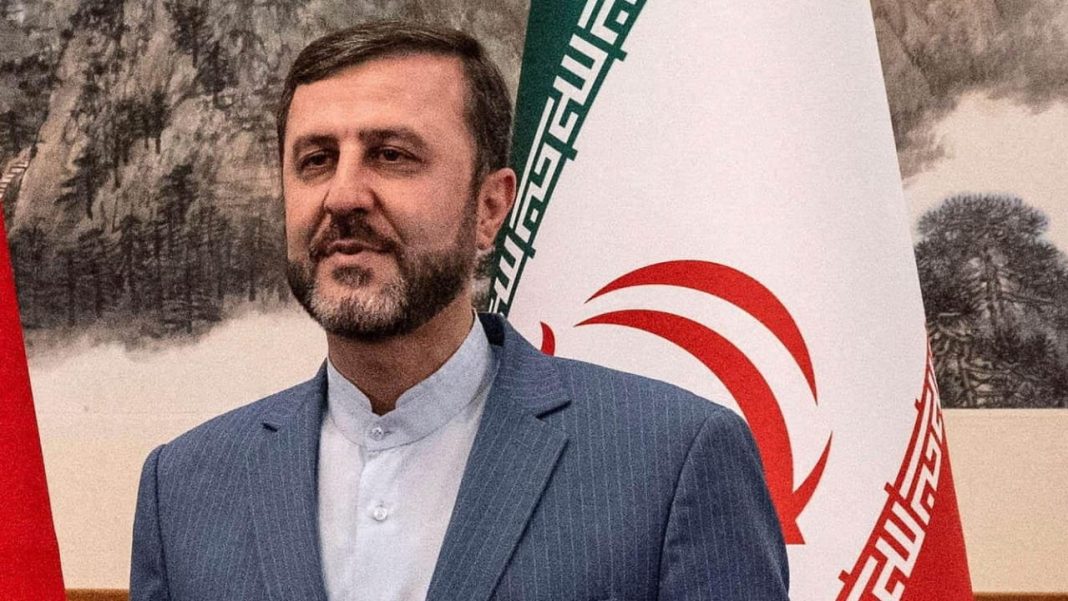
In a significant development, a senior Iranian official has highlighted India’s crucial role in fostering peace in a volatile West Asia. A statement attributed to an Iranian Deputy Foreign Minister indicates Tehran’s receptiveness to India’s diplomatic overtures, even as it reveals internal friction within the BRICS grouping regarding the ongoing regional conflict. This dynamic places India at the heart of intricate geopolitical negotiations, underscoring its growing global influence.
India’s Diplomatic Engagement and Iran’s Welcome
India’s foreign policy, rooted in non-alignment and strategic autonomy, uniquely positions it to mediate complex international disputes. The Iranian Deputy Foreign Minister’s comments affirm this, indicating Tehran’s clear preference for India’s involvement in de-escalating West Asian tensions. India’s consistent call for dialogue and a diplomatic resolution to the current conflict – widely understood to be the Israel-Hamas war and its wider regional ramifications – resonates with nations seeking stability.
Tehran’s readiness to welcome India’s peace push stems from several factors. India maintains robust diplomatic ties with key players across the region, including Israel, Palestine, and various Arab nations, alongside its historical relationship with Iran. This balanced approach allows New Delhi to engage with multiple stakeholders without being perceived as overtly partisan. India’s burgeoning economic power and commitment to international law further lend considerable weight to its diplomatic initiatives.
For Iran, often at odds with Western powers, India represents a powerful, independent voice capable of advocating for peaceful solutions that consider diverse perspectives. This endorsement from Tehran underscores India’s evolving role from a regional power to a significant global player, with potential to shape outcomes in critical geopolitical flashpoints.
The BRICS Conundrum: A Stalling Member
Perhaps the most intriguing revelation from the Iranian Deputy Foreign Minister’s statement is the assertion that one BRICS member is actively stalling consensus on the “Iran war” within the bloc. While the identity of this nation remains undisclosed, the comment highlights internal dynamics and differing strategic interests within the expanded BRICS grouping, now including Iran and other new members.
This stalling suggests a divergence in foreign policy priorities among BRICS nations, particularly concerning the sensitive West Asian conflict. Consensus is crucial for BRICS to act cohesively on global issues, and reported obstruction highlights challenges of unifying diverse national interests under a common geopolitical umbrella. The reluctance to move forward on a collective approach underscores diplomatic intrigue.
“We appreciate India’s principled stance and its readiness to contribute to peace in our region. However, the path to a united BRICS position is currently complicated by one member’s reluctance to move forward on a collective approach to the current conflict,” the Iranian Deputy Foreign Minister reportedly stated, emphasizing internal hurdles faced by the bloc despite its growth in influence.
For India, a founding BRICS member and proponent of multilateral cooperation, navigating these internal disagreements while pursuing its own peace agenda adds another layer of complexity. India’s commitment to finding common ground within BRICS will be tested as it balances solidarity with partners and independent diplomatic initiatives.
India’s Strategic Tightrope and Global Ambitions
India’s position as a preferred peace broker, coupled with the internal BRICS challenge, illustrates the complex geopolitical chessboard it navigates. Its long-term strategic interests in West Asia are multifaceted, encompassing energy security, trade routes, and the welfare of a large Indian diaspora. The Chabahar Port in Iran, a key Indian investment, exemplifies India’s strategic imperative to maintain stability and connectivity, offering a vital gateway to Afghanistan and Central Asia.
New Delhi’s diplomatic efforts are a delicate tightrope walk. On one hand, it seeks to maintain strong ties with Israel, an important partner in defence and technology. On the other, it upholds its historical solidarity with the Palestinian cause and champions a two-state solution. This balanced approach allows India to remain a credible interlocutor, facing pressures from various sides.
The Iranian Deputy FM’s statement indirectly validates India’s aspiration to be a Vishwa Guru – a global leader in promoting peace and stability. In an increasingly multipolar world, India’s ability to forge consensus and offer alternatives to conflict is more critical than ever. The challenge now lies in translating Tehran’s welcome into tangible diplomatic progress, both bilaterally and within the BRICS framework, especially given the reported internal resistance.
The Iranian Deputy Foreign Minister’s comments underscore India’s rising diplomatic prominence and its potential to play a pivotal role in de-escalating tensions in West Asia. While Tehran expresses openness to India’s peace initiatives, the internal divergence within BRICS presents a significant hurdle for collective action. India’s ability to deftly manage its relationships with all stakeholders, navigate BRICS complexities, and advance a path towards peace will be a defining test of its global diplomatic acumen. The international community will keenly observe New Delhi’s efforts as it seeks to translate trust and influence into concrete steps for regional stability.

