


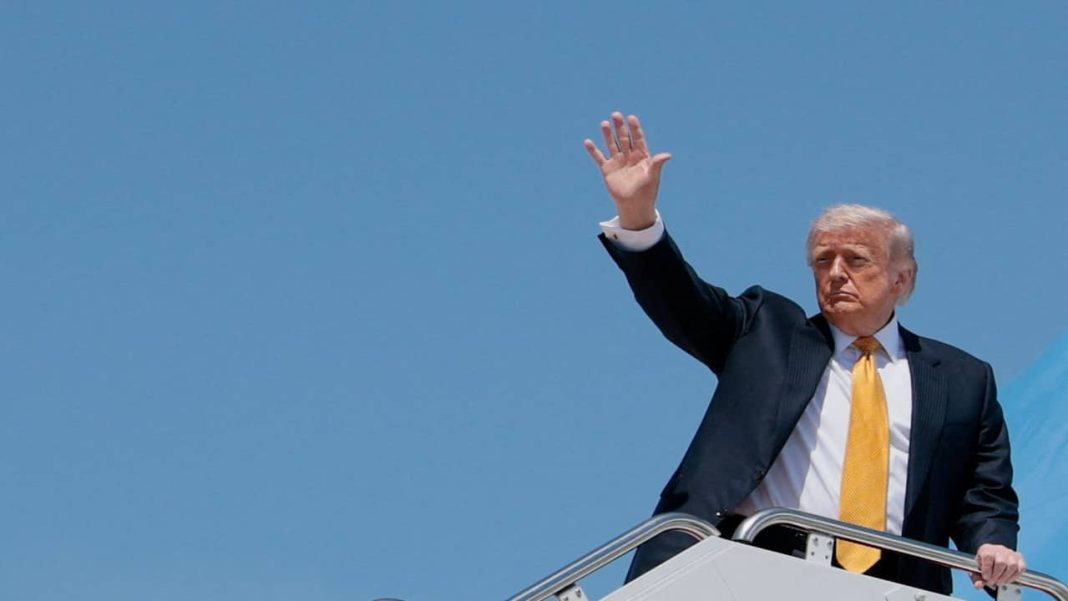
The geopolitical chessboard is ever-shifting, and few moves have garnered as much global attention recently as the unexpected overture from Washington D.C. Donald Trump, known for his confrontational stance on both China and Iran, has reportedly sought Beijing’s assistance in de-escalating tensions with Tehran. This surprising pivot introduces a new, intricate dynamic into an already volatile Middle East, forcing a strategic recalculation not just in Beijing and Tehran, but also in capitals worldwide, including New Delhi, as nations grapple with the potential fallout of this triangular diplomacy.
The US-Iran Standoff and China’s Pivotal Role
The roots of the current US-Iran friction run deep, exacerbated by the Trump administration’s unilateral withdrawal from the Joint Comprehensive Plan of Action (JCPOA), commonly known as the Iran nuclear deal, in 2018. This was followed by a “maximum pressure” campaign of stringent sanctions aimed at crippling Iran’s economy and forcing it back to the negotiating table on new terms. Despite these pressures, Iran has largely remained defiant, leading to a dangerous cycle of escalation in the Persian Gulf, marked by attacks on oil tankers, drone incidents, and increased rhetoric.
Enter China, a permanent member of the UN Security Council and a signatory to the original JCPOA, which has consistently advocated for diplomatic solutions and adherence to the agreement. Beijing also shares significant economic ties with Iran, notably as a major importer of Iranian oil, albeit reduced due to US sanctions. For President Trump, engaging China on Iran could serve multiple purposes: it leverages Beijing’s economic influence over Tehran, potentially isolates Iran further if China cooperates, and, perhaps, creates a channel for de-escalation that bypasses direct US-Iran talks. It’s a pragmatic, if unusual, move from an administration that has often viewed China as a primary strategic competitor in trade and global influence.
Beijing’s Complex Calculation: Beyond US Demands
While Washington may hope for a compliant ally, Beijing’s response is likely to be far more nuanced than simple cooperation. China views its relationship with Iran through a multi-faceted lens that extends beyond merely US pressure. Iran is a critical node in China’s expansive Belt and Road Initiative (BRI), offering strategic access to the Middle East and Europe. Furthermore, Beijing staunchly upholds the principle of non-interference in internal affairs and sees US unilateral sanctions as contravening international law, a position it shares with many nations, including India.
China’s leadership might perceive this request as an opportunity to assert its growing geopolitical clout and mediate on its own terms, rather than simply enforcing US policy. It could also use the situation as leverage in ongoing trade negotiations with the United States, seeking concessions in exchange for its cooperation on Iran. Beijing could propose a multilateral approach, pushing for the revival of the JCPOA, or advocating for a broader regional security dialogue that includes all stakeholders. Such a stance would not only align with China’s long-standing diplomatic principles but also enhance its image as a responsible global power, distinct from American unilateralism. As one geopolitical observer noted, “The US seeking China’s help on Iran is a testament to Beijing’s growing global influence, but it also places China in a delicate position, balancing its own strategic interests with international expectations.”
India’s Delicate Tightrope Walk
For India, the unfolding US-China-Iran dynamic carries significant implications. New Delhi has historically maintained strong, independent ties with Iran, viewing it as a crucial partner for energy security and regional connectivity. India is heavily reliant on oil imports, and historically, Iran has been a consistent and reliable supplier, even offering favourable terms. The continued instability and sanctions directly impact global oil prices, which have a cascading effect on India’s economy, leading to higher inflation and import bills.
Moreover, India’s strategic investment in the Chabahar Port in Iran is vital for its connectivity to Afghanistan and Central Asia, bypassing Pakistan. US sanctions have complicated this project, with India navigating waivers and diplomatic channels to keep it operational. Any US-China engagement on Iran that further isolates Tehran or creates greater instability could jeopardize these vital Indian interests. India finds itself in a precarious position, needing to balance its strategic partnership with the United States against its independent foreign policy, energy needs, and regional connectivity aspirations tied to Iran. New Delhi will keenly observe Beijing’s actions, understanding that China’s choices could either exacerbate or mitigate the challenges India faces in maintaining its strategic autonomy and economic stability amidst the great power rivalry.
The proposition of Donald Trump seeking China’s assistance on Iran underscores the complex, interconnected nature of 21st-century geopolitics. While the immediate focus remains on Washington, Beijing, and Tehran, the reverberations of this intricate dance will be felt far beyond. For India, a rising power with substantial stakes in regional stability and global energy markets, navigating this evolving landscape will require astute diplomacy and a clear vision for its own strategic interests. The outcome of Beijing’s deliberation will not only shape the future of US-Iran relations but also redefine aspects of the US-China rivalry and the broader international order, marking a pivotal moment in contemporary global affairs.

