


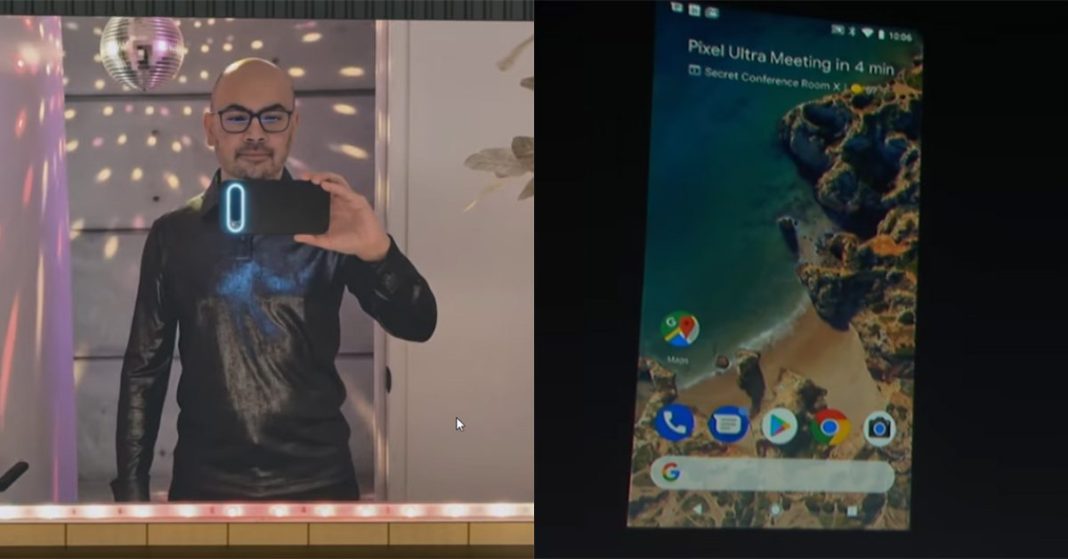
The tech world is still buzzing from the recent I/O event, and as always, speculation around Google’s next Pixel flagship is at an all-time high. There was a particular moment during the keynote – a dazzling demo, a glimpse into the future of mobile photography or visual computing – that immediately set tongues wagging. Many rushed to connect this groundbreaking reveal with the long-rumored “Glow” feature expected on the Pixel 11. But hold your horses, Pixel prophets. A closer look suggests we might be misinterpreting what we saw. That wasn’t just ‘Glow’ for the Pixel 11; it felt like a declaration, a hint at something far grander: the fabled Pixel Ultra.
Was That Really Just “Glow”? The Mismatch
For months, whispers of “Glow” for the Pixel 11 have circulated, generally pointing towards an evolution in display technology, enhanced low-light photography capabilities, or a more dynamic, adaptive user interface. These are all welcome improvements, typical of an incremental, albeit significant, generational leap. What we witnessed at I/O, however, felt entirely different. It was an unprecedented demonstration of real-time computational photography, pushing the boundaries of what a mobile device can achieve in capturing and rendering reality.
The I/O reveal showcased a level of visual processing and AI integration that bordered on the revolutionary. Imagine a feature so sophisticated, so demanding of processing power, that it felt less like a software tweak and more like a fundamental re-imagining of mobile imaging. This wasn’t merely brightening shadows or perfecting skin tones; it was a fundamental shift in how a device perceives and presents the world. To lump this kind of innovation under a feature name as relatively benign as “Glow” for a standard flagship seems to undersell its true magnitude. It felt like putting a supercar engine into a family sedan and calling it a “performance package.”
Enter the “Ultra” Speculation: Why It Makes Sense
The idea of a “Pixel Ultra” isn’t new; it’s been a persistent dream among enthusiasts for years. And for good reason. In an increasingly competitive smartphone market, manufacturers are looking for ways to differentiate their top-tier offerings and capture the premium segment. Apple has its ‘Pro Max’ and now ‘Ultra’ Watch, Samsung boasts its ‘Ultra’ line, and the trend towards super-premium, feature-packed devices is undeniable. Google, with its ambition in AI and hardware, seems ripe for such a move.
The I/O reveal perfectly aligns with this “Ultra” narrative. Such a monumental leap in visual capability would undoubtedly require specialized, top-of-the-line hardware – perhaps a next-generation Tensor chip, a dedicated imaging co-processor, or entirely new sensor technology that couldn’t realistically be crammed into a standard flagship model while maintaining an accessible price point. This level of innovation justifies not just a higher price tag, but an entirely new echelon in Google’s phone lineup. “Honestly,” remarked one long-time tech analyst, “what we saw felt like it belonged in a league of its own. It’s more than just a software trick; it smells like a whole new hardware beast built for something extraordinary.”
Such a device could serve as Google’s technological showpiece, demonstrating the absolute peak of its AI and hardware integration, setting a new benchmark for what a smartphone camera can be. It would be a halo product, not necessarily for mass-market sales, but for showcasing Google’s prowess and pulling consumers into the broader Pixel ecosystem.
The Path Forward: Standard Flagship vs. Super-Premium Beast
While the Pixel 11 will undoubtedly bring its own suite of impressive upgrades, the groundbreaking visual reveal at I/O felt too significant to be just another feature for Google’s standard annual flagship. The sheer ambition of what was demonstrated points squarely to a device designed to break molds and redefine expectations. The concept of a “Pixel Ultra” isn’t just wishful thinking; it’s a logical response to what we witnessed – a platform designed to house Google’s most audacious technological advancements.
Whether Google officially unveils a multi-tiered Pixel strategy remains to be seen, but the evidence from I/O strongly suggests that something truly special is brewing beyond the standard lineup. The “Glow” might still grace the Pixel 11, but the truly blinding light might just be coming from an entirely different, ultra-premium device.

