


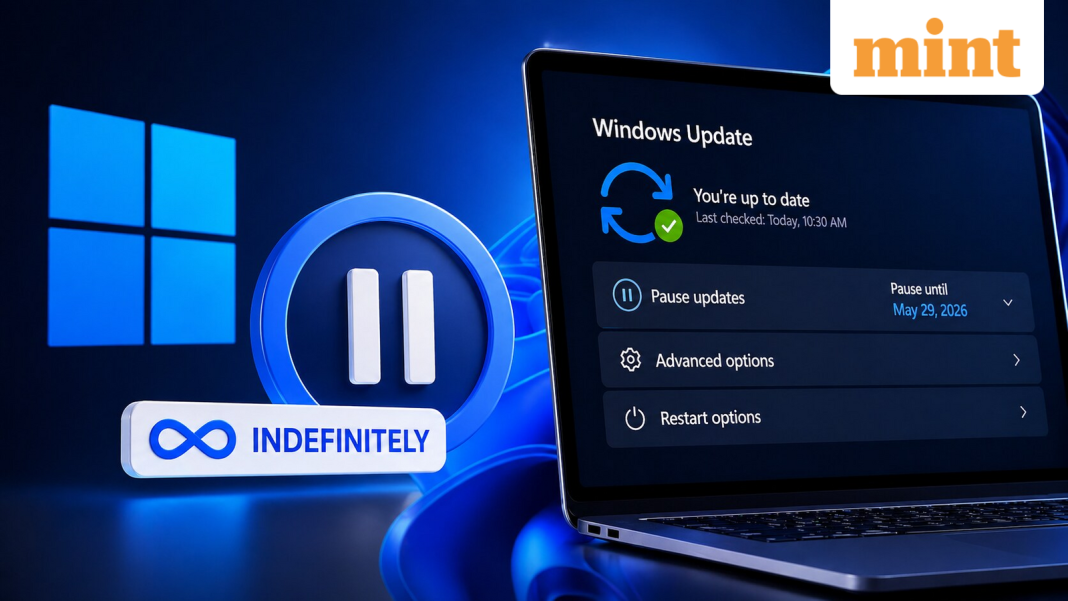
For countless Windows users in India and worldwide, the sight of a pending update notification often invoked a familiar sense of dread. The sudden reboot, the interrupted workflow, the crucial online meeting cut short – these were the inconvenient realities of keeping an operating system secure and up-to-date. But now, it seems Microsoft has finally listened to its vast user base, rolling out a game-changing feature for Windows 11: the ability to pause updates indefinitely and decide when to restart on your own terms.
The End of Forced Interruptions?
Historically, Windows updates, while essential for security and new features, have been notoriously insistent. Users could temporarily defer updates for a few days or weeks, but a hard limit typically forced an eventual reboot. This often led to productivity loss, especially for those working on critical tasks, gaming, or engaged in video conferences. The maximum pause duration was generally around 5 weeks, after which the system would demand attention.
With the latest changes, Windows 11 users will find a new level of autonomy. Navigating to Settings > Windows Update now reveals enhanced control. Instead of a limited pause duration, users can effectively defer updates for as long as they deem necessary. The system will still notify you of available updates, but the power to initiate the installation and subsequent restart rests squarely with the user. This means no more unexpected reboots during a crucial presentation or a frantic sprint to save open documents when a prompt appears. It’s a significant shift from an “update-first” to a “user-control-first” philosophy.
A Boon for Indian Users and Businesses
This update is particularly impactful for the Indian subcontinent, where internet connectivity can be unpredictable, and power fluctuations are a common reality. Large Windows updates, often several gigabytes in size, can strain limited data plans or take hours to download on slower broadband connections. An untimely update initiation could consume valuable bandwidth, disrupt ongoing work, or even lead to data corruption if a power cut occurs mid-installation.
For the growing workforce operating from home or in hybrid models, and for small and medium-sized businesses (SMBs) across India, this newfound control is a godsend. Imagine a freelancer in a Tier-2 city, relying on a mobile hotspot for an urgent client deadline. An unexpected Windows update forcing a download and reboot could mean missed opportunities or financial losses. Similarly, an SMB with limited IT support can now schedule updates for off-peak hours, ensuring minimal disruption to their daily operations. The ability to truly “restart on your own terms” means businesses can maintain continuity, and individuals can safeguard their productivity.
Speaking on the broader implications of such user-centric features, tech analyst Priya Sharma commented, “This move by Microsoft acknowledges the diverse computing environments users operate in today. It’s not just about pushing out security patches; it’s about empowering users to integrate those essential updates into their lives without sacrificing control or productivity. For markets like India, where infrastructure challenges often intersect with demanding work schedules, this flexibility is not just convenient, it’s a fundamental necessity.”
More Control, Better Experience
While some might argue that indefinite pausing could lead to unpatched systems and security vulnerabilities, Microsoft’s approach still ensures users are aware of pending updates. The onus is now on the user to responsibly manage their system’s health. However, the psychological benefit of having control over one’s device cannot be overstated. It fosters a sense of trust and reduces the friction often associated with system maintenance.
This feature enhancement aligns with a broader industry trend towards greater user agency. In a world where personal devices are increasingly central to both professional and personal lives, dictatorial operating system behaviour is no longer acceptable. By allowing users to pause updates indefinitely and choose their restart times, Microsoft is not just introducing a new feature; it’s acknowledging the evolving needs of its global user base, promising a more harmonious and less intrusive computing experience for Windows 11 users.
The days of surprise reboots might finally be behind us, ushering in an era where managing your Windows 11 updates feels less like a chore and more like a choice.

