


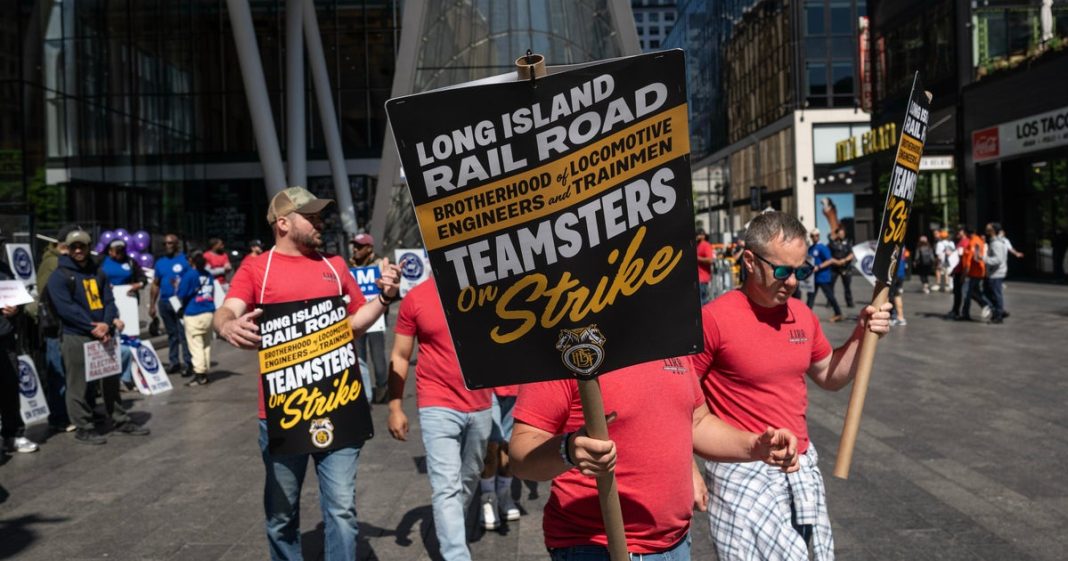
The daily commute for thousands of Long Island Rail Road (LIRR) riders has transformed from a routine journey into an epic saga of delays, frustration, and sheer exhaustion. As the train strike against the LIRR enters its third day, the promises of efficient, swift travel to and from New York City remain a distant memory, replaced by hours-long treks that test the patience and resilience of even the most seasoned commuters.
The Commuter’s Daily Gauntlet
For many, the LIRR is not just a mode of transport; it’s the lifeline connecting their homes on Long Island to their livelihoods in the bustling metropolis. With trains either halted or running on severely limited, often unpredictable schedules, the morning and evening rushes have become a daily gauntlet. Riders report waking hours earlier, only to face overcrowded platforms, chaotic bus transfers, or exorbitant surge pricing for ride-share services that are themselves caught in unprecedented traffic snarls.
Imagine setting out for work before dawn, only to arrive well past your start time, already drained before the workday even begins. Then, the entire ordeal repeats itself in the evening, pushing arrival home late into the night, cutting into precious family time and personal well-being. This isn’t just an inconvenience; it’s a significant disruption to life itself. Students are struggling to make classes, parents are missing critical childcare pickups, and the general rhythm of life for hundreds of thousands has been thrown into disarray.
Behind the Standoff: Unpacking the Dispute
The core of this widespread disruption lies in a persistent labor dispute between LIRR workers and management. While the specifics of contract negotiations can be complex, involving discussions around wages, benefits, and working conditions, the impact on the riding public is unequivocally clear and immediate. Both sides remain at an impasse, and with each passing hour, the pressure mounts not only on the negotiators but on the countless individuals caught in the middle.
The lack of a swift resolution is a source of palpable frustration for those who rely on the service. “This isn’t just about a paycheck for the workers or a budget for the LIRR,” lamented Sarah Jenkins, a marketing professional commuting from Huntington. “This is about my ability to do my job, to see my kids, to simply live my life. Every day this drags on, it feels like another piece of normal life is chipped away. There has to be a middle ground, and they need to find it, fast.” Her words echo the sentiment of many who feel their daily routines have been held hostage by the ongoing disagreement.
Beyond the Tracks: Ripple Effects on NYC
The economic ripple effects of this LIRR strike extend far beyond the individual commuter. Businesses in New York City are feeling the pinch as employees struggle to arrive on time, or at all. Productivity takes a hit, meetings are delayed or cancelled, and the vibrant flow of the city’s workforce is undeniably hampered. Essential services, from healthcare to retail, face staffing challenges, highlighting the critical role that a functioning public transit system plays in the entire region’s ecosystem.
Moreover, the environmental impact is not to be overlooked. As more commuters resort to driving personal vehicles or relying on taxis and ride-shares, traffic congestion intensifies, and air quality inevitably suffers. The very infrastructure designed to move people efficiently across the region is now forcing a less sustainable, more stressful alternative upon them.
A Call for Resolution
As the LIRR strike continues its unrelenting march, the call for a swift and equitable resolution grows louder. Commuters, businesses, and the wider New York metropolitan area are all holding their breath, hoping for a breakthrough that will restore normalcy to their daily lives. The ongoing saga serves as a stark reminder of how deeply interconnected our lives are with the essential services we often take for granted, and how profoundly their disruption can affect us all. The hope is that both sides will recognize the immense toll this dispute is taking and find common ground to put an end to the hours-long commutes and return the LIRR to its vital role.
*

