


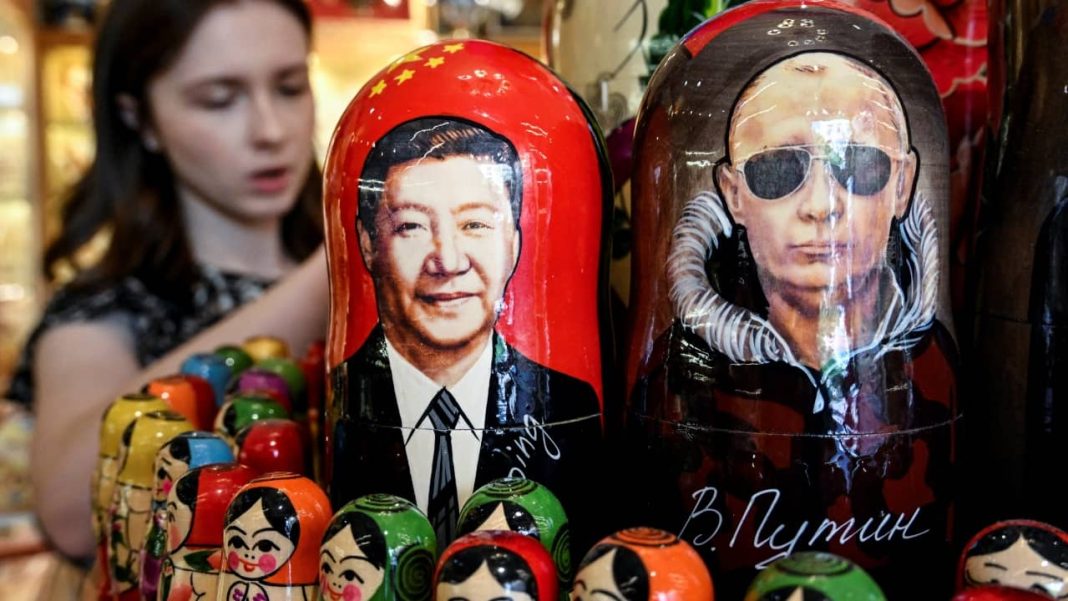
The global diplomatic stage is witnessing a profound realignment, with Beijing increasingly emerging as a central player. Last week, former US President Donald Trump’s visit to China sparked considerable speculation, and now, the impending arrival of Russian President Vladimir Putin further cements Beijing’s newfound gravitational pull. This confluence of high-stakes diplomatic traffic, involving two of the most significant figures in contemporary geopolitics, underscores a fundamental shift in the world order. For decades, Washington, London, and Brussels held undisputed sway as primary hubs for international dialogue and power brokering. Today, that paradigm is visibly evolving, with China asserting itself not merely as an economic powerhouse but as a critical diplomatic pivot. For India, a regional giant and aspiring global power, understanding and navigating this shift is paramount.
A Shifting Geopolitical Landscape: Beyond Traditional Power Blocs
The visits by Trump and Putin are not isolated incidents but symptoms of a broader transformation. China’s economic ascent over the past four decades has been nothing short of spectacular, allowing it to translate economic might into considerable diplomatic leverage. Its signature Belt and Road Initiative (BRI), while controversial for some, has undeniably expanded its influence across Asia, Africa, and parts of Europe. Beyond economic engagement, Beijing has also demonstrated a growing willingness, and indeed capability, to mediate complex international disputes, as evidenced by its role in brokering the rapprochement between Iran and Saudi Arabia earlier this year.
This rise challenges the traditional unipolar international system that prevailed post-Cold War. Instead, we are seeing the contours of a more multipolar world, where power is diffused, and various centres vie for influence. For nations like India, historically non-aligned but with strong strategic ties to both Western and Eastern powers, this shift presents both opportunities and complexities. India’s own ambitions on the global stage, including its call for a reformed UN Security Council and its leadership within forums like the G20 and BRICS, are shaped by this evolving landscape. While India maintains robust partnerships with democratic nations, particularly through platforms like the Quad, its engagement with organisations like the Shanghai Cooperation Organisation (SCO) also highlights the necessity of balancing diverse geopolitical interests.
China’s Multifaceted Diplomatic Playbook and Global Implications
Beijing’s diplomatic strategy is a sophisticated blend of economic incentives, security partnerships, and a cautious approach to international intervention, often framed by its principle of “non-interference.” This approach has found resonance with many developing nations in the Global South, who view it as an alternative to what they perceive as Western conditionalities. The visits by Trump and Putin illustrate different facets of this playbook.
Trump’s engagement, even post-presidency, signals the enduring significance of US-China relations, particularly concerning trade, technology, and economic interdependence. Despite political rhetoric and strategic competition, direct communication channels and potential for negotiation remain crucial for global stability. Putin’s arrival, conversely, underscores the deepening strategic alignment between Moscow and Beijing, driven by shared geopolitical interests and a common desire to counter Western dominance. This partnership, forged against the backdrop of the Ukraine conflict, has seen increased energy cooperation, joint military exercises, and coordinated diplomatic efforts on international platforms.
“China’s willingness to engage with both its geopolitical adversaries and strategic allies simultaneously marks a maturation of its diplomatic posture,” observes Dr. Rhea Sharma, a prominent geopolitical analyst based in New Delhi. “It’s not just about bilateral trade anymore; Beijing is actively shaping a new global discourse, often presenting itself as a stabilising force amidst turbulence.” This multi-vector approach allows China to project an image of a comprehensive global player, capable of influencing outcomes across a spectrum of international issues.
What This Means for India
For India, the strengthening of Beijing as a diplomatic epicentre carries significant implications. On one hand, China’s growing influence directly impacts India’s neighbourhood, particularly through the BRI and its controversial component, the China-Pakistan Economic Corridor (CPEC), which traverses disputed territory. The long-standing border disputes also remain a point of friction, necessitating careful diplomatic engagement. On the other hand, a more prominent China in global governance discussions could, in certain areas like climate change or pandemic response, offer avenues for cooperation where common interests align. India must continue to refine its strategic autonomy, strengthening its own alliances while keeping lines of communication open, even with complex neighbours. The goal for India must be to leverage its own growing economic and military might to secure its interests and ensure its voice is heard clearly in this new, multi-polar world order.
The convergence of such high-profile figures in Beijing is a potent symbol of China’s ascendance. It highlights an undeniable shift away from traditional geopolitical centres, indicating a future where diplomatic power is more distributed and complex. As the world navigates this evolving landscape, China’s role as a new diplomatic power centre will undoubtedly shape global dynamics for decades to come, requiring careful observation and strategic adaptation from all major players, not least India.

