


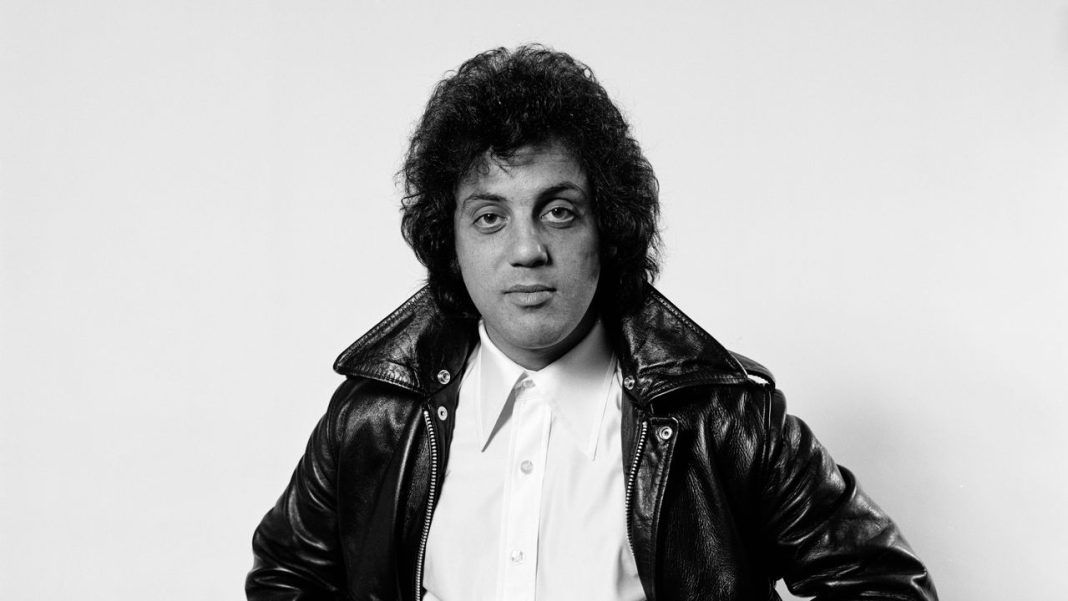
The lights dim, the opening chords swell, and a legendary life unfolds on the silver screen. It’s a formula we’ve come to expect, even crave, especially when it concerns a musical titan. But what happens when the subject of that biopic — the very artist whose life is being dramatized — would much rather you just… didn’t? Enter Billy Joel, the Piano Man himself, who reportedly isn’t exactly thrilled about a film chronicling his iconic journey. It’s a fascinating wrinkle in the biopic machine, and it prompts us to ask: why the resistance, and what does it tell us about the delicate dance between art, artist, and audience?
The Reluctant Icon: Ownership of Narrative
For many artists, a film adaptation of their life might seem like the ultimate validation, a permanent stamp on their legacy. But for someone like Billy Joel, who has always presented himself with a pragmatic, no-nonsense demeanor, the idea of having his life distilled into a two-hour Hollywood narrative might feel less like an honor and more like an intrusion. Think about it: every creative choice, every nuanced interpretation, every moment of personal vulnerability would be filtered through another’s lens. This isn’t just about protecting privacy; it’s about the fundamental right to own one’s story.
Artists pour their souls into their work, and for a songwriter like Joel, much of his autobiography is already woven into his lyrics. Songs like “Piano Man,” “Scenes from an Italian Restaurant,” and “Movin’ Out (Anthony’s Song)” are vignettes of his life, his observations, his struggles. A biopic, by its very nature, attempts to visually reinterpret and dramatize what he’s already communicated through melody and verse. It’s an act of re-telling that often prioritizes dramatic arc over factual fidelity or the artist’s preferred portrayal. “When you’ve spent a lifetime crafting your own narrative through music, the thought of someone else packaging it for mass consumption, potentially with sensationalism or inaccuracies, can be deeply unsettling,” notes cultural critic Dr. Lena Hansen. “It’s about preserving the integrity of their self-expression.”
Beyond the Glare: A Desire for Normalcy
Billy Joel famously stepped away from consistent album releases decades ago, choosing a life that, while still involving performing, granted him a degree of normalcy far removed from the constant churn of the music industry machine. His long-running residency at Madison Square Garden is a testament to his unique career path – a deliberate choice to play by his own rules, free from the album-tour-album cycle that exhausts so many. A biopic, however, would thrust him back into the spotlight in a way he seems to have actively avoided for years. It would reignite conversations about his relationships, his past struggles, his motivations – all elements he has likely moved beyond, or at least compartmentalized, in his current, comfortable existence.
There’s also the fundamental question of what a biopic can truly add. His career highs and lows are well-documented. His music speaks volumes. Perhaps Joel believes there’s nothing new to reveal, or rather, nothing that needs to be revealed in such a public, dramatized fashion. His reluctance could stem from a desire to let his music stand on its own, unencumbered by the biographical baggage that a film inevitably highlights. It’s a quiet act of defiance against the endless appetite for celebrity narrative, a declaration that some stories are best left to the individual to tell, or to the music itself to convey.
Ultimately, Billy Joel’s reported disinterest in a biopic is a powerful reminder that an artist’s life, even one lived in the public eye, remains their own. While we, the fans, might crave every detail, every dramatic turn, the man behind the piano might simply prefer to let the melodies do the talking, and for the rest, to remain just beyond the silver screen’s reach.

