


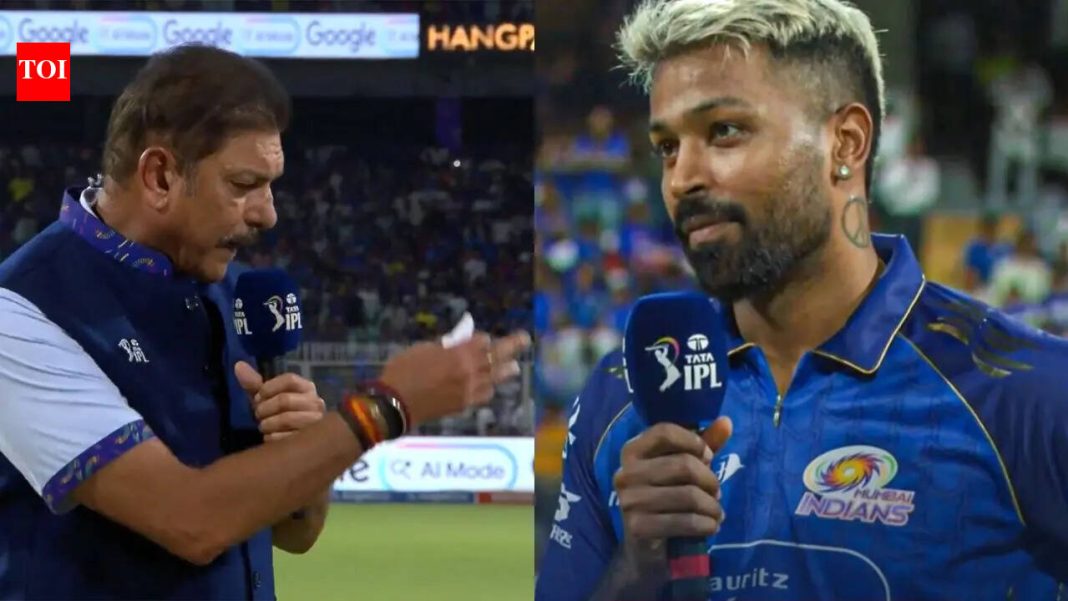
The Indian Premier League (IPL) is a cauldron where cricketing fortunes are forged and shattered, and where pressure tests the mettle of even the most seasoned campaigners. IPL 2026 has been no exception, delivering its usual quota of thrilling encounters, unexpected upsets, and intense scrutiny on its biggest stars. Amidst this high-octane drama, a specific exchange at the toss involving Hardik Pandya and the ever-incisive Ravi Shastri has not only gone viral but also sparked a nationwide debate about pride, performance, and the very essence of playing the game when the chips are down.
The setting was a pulsating night game at the Wankhede Stadium, a venue synonymous with Mumbai Indians’ (MI) triumphs and tribulations. Hardik Pandya, captaining the franchise, found his team in an unenviable position. Mathematically out of contention for the playoffs, MI was playing its penultimate league match against the high-flying Chennai Super Kings (CSK). The pressure on Pandya, both as a player and a leader, had been immense throughout the season, with the team struggling to find consistency despite flashes of individual brilliance. Fans had expressed their disappointment, and media pundits had already begun dissecting the team’s campaign, pointing fingers at various aspects, including captaincy decisions and player form.
The Crucible of IPL 2026: A Season of Scrutiny
Hardik Pandya’s journey as captain in IPL 2026 had been a rollercoaster, marked by soaring expectations and the harsh realities of T20 cricket. After a successful stint leading another franchise to glory in a previous season, his return to MI as captain was heralded as a new era. However, the season unfolded differently. Early losses piled pressure, key players struggled with form and injuries, and the team seemed to lack the cohesive unit spirit that often defines IPL champions. Each defeat intensified the spotlight on Pandya, leading to a relentless stream of analyses about his tactical acumen, his on-field demeanor, and his ability to inspire a struggling side.
The match against CSK was, for many, a mere formality in the context of playoff qualification. Yet, for players and fans, it represented an opportunity for redemption, a chance to restore some dignity and finish the season on a stronger note. It was against this backdrop that Ravi Shastri, renowned for his direct and often challenging questions at the toss, stepped up to interview Hardik Pandya. The air was thick with anticipation, not just for the match itself, but for what insights might emerge from the captains before the first ball.
The Toss: Shastri’s Query and Pandya’s Poise
As the coin flipped and the call was made, Hardik Pandya, dressed in his team’s blue and gold, appeared calm, almost reflective. Ravi Shastri, with his characteristic booming voice, wasted no time in cutting to the chase, addressing the elephant in the room. “Hardik,” Shastri began, his tone direct but not unkind, “with the playoffs now mathematically out of reach, a lot of people are asking if Mumbai Indians are playing purely for pride tonight?”
The question hung in the air, loaded with implications. A lesser leader might have deflected, offered a generic platitude, or even shown a hint of frustration. But Hardik Pandya, known for his composure under pressure on the field, met the question head-on. He paused for a brief moment, a subtle smile playing on his lips, before delivering a response that immediately resonated with millions and began its rapid ascent to viral status.
“Ravi bhai,” Pandya began, his voice clear and measured, “in the IPL, every game is about pride. But beyond that, it’s about the badge, the process, and showing up for those who believe in us, regardless of the scoreboard. We’re playing to finish strong and build for what’s next. We owe it to ourselves and to our incredible fans.”
The response was swift, articulate, and carried a depth that surprised many. It acknowledged the immediate context of “pride” but elevated the discussion to a higher plane – emphasizing the broader commitment to the team’s emblem, the importance of sticking to a strategy (“the process”), and the unwavering loyalty to the fan base. It was a statement that transcended the immediate result, hinting at a vision for the future.
Social Media Erupts: A Deeper Meaning Unpacked
Within minutes of the broadcast, Hardik Pandya’s words were being dissected, shared, and celebrated across social media platforms. #HardikOnPride and #IPL2026Toss became trending topics on X (formerly Twitter). Fans and former cricketers alike weighed in, praising Pandya’s maturity and leadership.
“That’s a captain’s response,” tweeted one prominent cricket analyst, “acknowledging the truth but pivoting to the larger picture of team ethos and future building. Shows immense character.” Others pointed to the fact that his words resonated with anyone who has faced adversity in their professional lives – the idea of performing with dignity even when the ultimate prize is out of reach. Memes began circulating, juxtaposing his calm demeanor with Shastri’s pointed question, highlighting the elegance of his comeback.
The viral moment became more than just a soundbite; it transformed into a talking point about sportsmanship, resilience, and the true spirit of competition. It offered a glimpse into the mindset of an athlete who, despite facing immense pressure and criticism, chose to articulate a philosophy of perseverance and long-term vision rather than succumbing to the immediate disappointment.
Hardik Pandya’s viral response at the IPL 2026 toss transcended a simple cricketing exchange. It became a powerful statement on leadership, resilience, and the enduring values that underpin professional sports. As the IPL continues to captivate audiences with its blend of fierce competition and compelling narratives, moments like these serve as a reminder that beyond the runs and wickets, there are stories of character, commitment, and the human spirit striving for excellence, even when playing “for pride.” It’s a message that resonated deeply, offering a fresh perspective on what it means to truly compete.

