


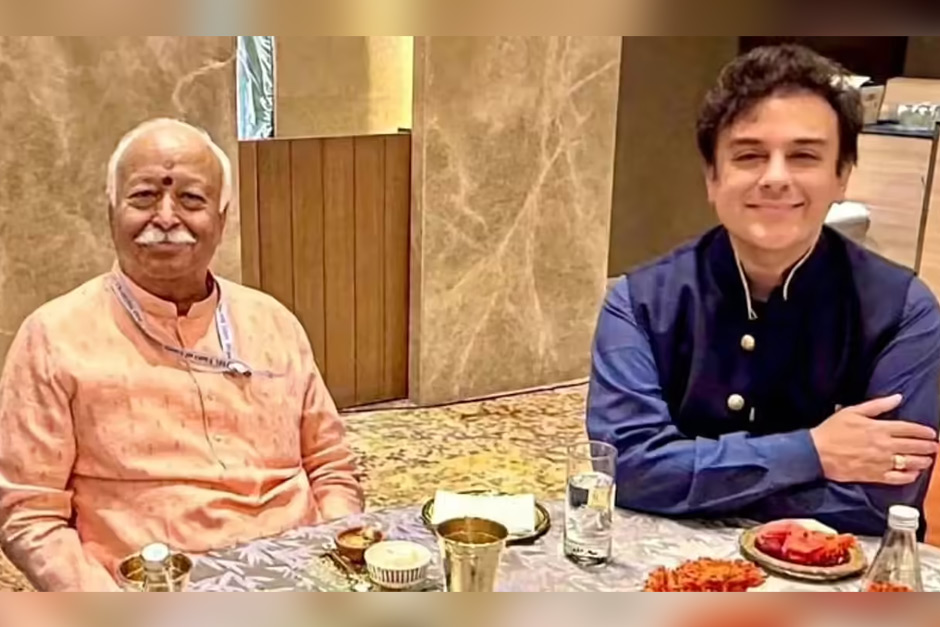
In an era where public figures constantly navigate the complex terrain of social media scrutiny, playback singer and composer Adnan Sami recently found himself at the center of a swirling online controversy. The trigger? A meeting with Rashtriya Swayamsevak Sangh (RSS) chief Mohan Bhagwat at the RSS headquarters in Nagpur. While such interactions are not uncommon for celebrities, the online reaction to Sami’s visit was intense and polarizing, leading the Padma Shri recipient to issue a characteristically forthright response, declaring his indifference to public judgment.
The Courtesy Call that Ignited a Debate
The meeting, described by Sami as a courtesy visit, took place on a Monday evening. Visuals circulated online showed Sami engaging in conversation with Bhagwat, a scene that quickly became fodder for debate across various social media platforms. For many, the interaction was viewed as a private citizen exercising his freedom of association, meeting a prominent figure in Indian society. Adnan Sami, known for his vocal patriotism and deep connection to India, having become an Indian citizen in 2016, has often emphasized his allegiance to the nation.
However, the visit quickly drew sharp criticism from a segment of online users. The RSS, a Hindu nationalist organization, holds a significant, often debated, position in India’s socio-political landscape. For some detractors, a Muslim artist of Sami’s stature meeting the head of the RSS raised questions about perceived political alignment or endorsement, leading to accusations and accusations of hypocrisy. The speed with which an innocuous meeting transformed into an online battleground highlighted the hypersensitivity surrounding public figures’ interactions with politically resonant entities in India.
Adnan Sami’s Unflinching Stand Against Trolling
As the online trolling intensified, Adnan Sami, known for not shying away from expressing his views, took to social media to address the backlash directly. His response was unambiguous and forceful, cutting through the noise with a clear assertion of his personal liberty. “I don’t give a st what anybody thinks,” Sami reportedly stated, making his stance unequivocally clear. This declaration was not merely a dismissive retort but a firm refusal to be dictated by the often-vitriolic nature of online commentary.
Sami further elaborated on his right to meet anyone he chooses, emphasizing that such interactions are personal and do not require external validation or explanation. He questioned the entitlement of trolls to dictate his personal or social engagements, highlighting a growing sentiment among public figures who are increasingly pushing back against the culture of online bullying and moral policing. His defiance resonated with supporters who lauded his courage to stand up for his personal autonomy, while also underlining the broader conversation about freedom of expression and association in a democratic society.
Celebrity Interactions and the Digital Scrutiny Landscape
The incident involving Adnan Sami is not an isolated one but rather reflective of a broader trend where public figures’ every move, especially those involving political or ideologically charged individuals, is meticulously scrutinized and often weaponized online. In India, where the lines between entertainment, politics, and social commentary are frequently blurred, celebrities often find themselves in a precarious position, expected by some to align with particular narratives while facing severe backlash for deviating.
This episode brings into focus the evolving dynamics of celebrity engagement in the public sphere. While their platforms grant them immense reach, they also expose them to unprecedented levels of digital surveillance and criticism. Adnan Sami’s blunt reaction serves as a powerful reminder of an individual’s right to personal choice and association, even under the intense glare of the public eye. It underscores the ongoing struggle of public figures to maintain their individuality and personal beliefs amidst the relentless pressures and often unreasonable expectations of the digital age, asserting that personal freedom extends beyond the boundaries of public perception.
Ultimately, Sami’s reaction encapsulates a growing resolve among public figures to reclaim their personal space and narrative, refusing to be silenced or intimidated by the incessant hum of online negativity. It’s a testament to the increasing awareness that while public life invites scrutiny, it doesn’t necessitate the forfeiture of fundamental personal liberties.

