


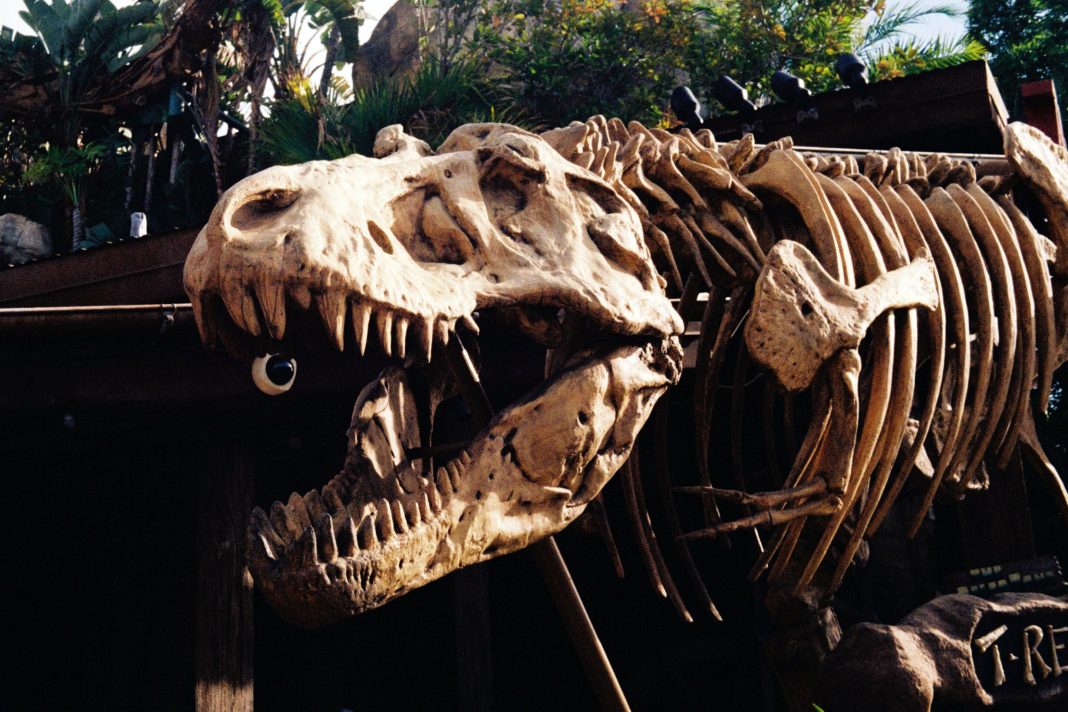
Quick Summary
A new hypothesis suggests that the famously tiny arms of meat-eating dinosaurs like Tyrannosaurus rex were not vestigial, but rather an evolutionary adaptation to prevent injuries during chaotic group feeding scenarios.
What Happened
Researchers from the University of California, Berkeley, propose that when multiple large predators converged on a carcass, longer arms would have been vulnerable to accidental bites and even amputation by other feeding dinosaurs. By having disproportionately small limbs, the risk of such dangerous encounters was significantly reduced, allowing the dominant jaws and heads to focus on feeding without limb interference.
“This hypothesis offers a compelling new angle, suggesting these limbs weren’t useless, but strategically adapted for a specific, dangerous scenario,” explains Dr. Amelia Chen, a paleontologist.
Why It Matters
This theory provides a fresh perspective on a long-standing paleontological mystery. It challenges previous assumptions that the arms were either vestigial, used for balancing after a fall, or aiding in mating. Instead, it posits a direct survival benefit linked to the intense competition for food among apex predators of the Mesozoic era, offering new insights into dinosaur social and feeding behaviors.
Bottom Line
The notion that T. rex’s tiny arms served a protective purpose during group feeding shifts our understanding of their anatomy, highlighting a nuanced evolutionary strategy to thrive in a perilous ancient world.

