


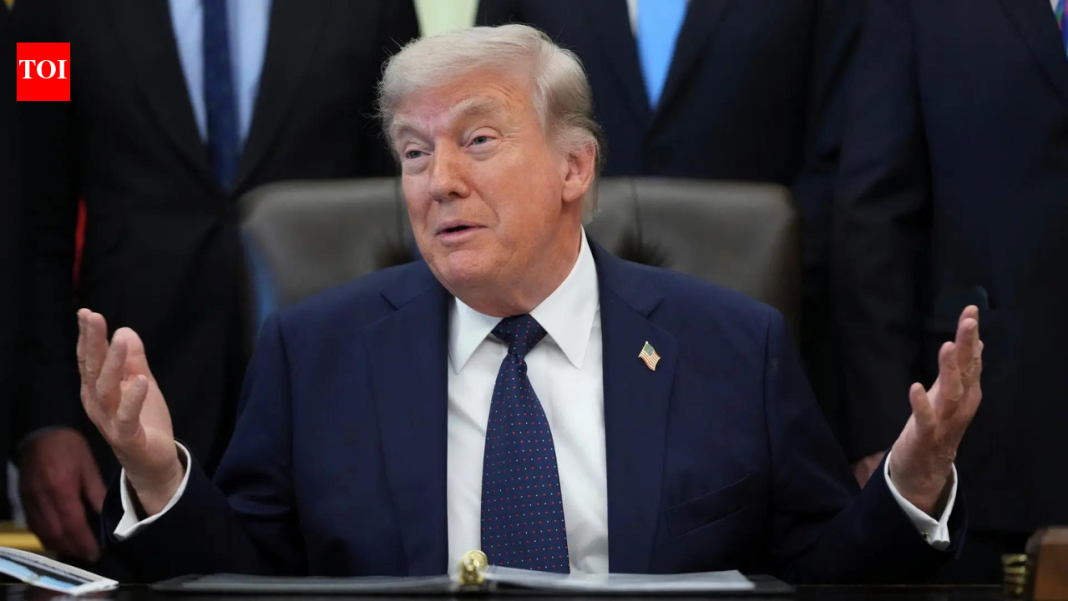
Recent statements from US President Donald Trump regarding Iran have sent a ripple of nuanced signals across the geopolitical landscape. In a notable departure from previous hawkish rhetoric, Trump recently asserted, “Don’t rush me,” dismissing any imposed deadline for a new proposal concerning Iran. More significantly, he explicitly stated his disinterest in “nuclear options,” a phrase widely interpreted as a rejection of military confrontation. This shift comes amidst protracted tensions, economic sanctions, and the lingering shadow of the 2015 Iran nuclear deal, known as the Joint Comprehensive Plan of Action (JCPOA), from which the US unilaterally withdrew.
De-escalation or Strategic Pause?
President Trump’s latest remarks appear to dial down the immediate temperature in the volatile US-Iran standoff. For months, the US had pursued a policy of “maximum pressure,” imposing stringent sanctions aimed at crippling Iran’s economy and forcing it to renegotiate a more comprehensive deal. This strategy, however, had also led to a series of escalating incidents in the Persian Gulf, raising fears of a broader conflict. Trump’s “Don’t rush me” comment suggests a degree of patience and perhaps a preference for a prolonged diplomatic pressure campaign over swift, decisive action.
The explicit turning down of “nuclear options” is particularly noteworthy. While the term can refer to various strategies, in this context, it is widely understood to mean military intervention or the use of overwhelming force. This public disavowal of military solutions, even if tactical, offers a potential window for de-escalation. President Trump himself recently articulated this measured approach, stating, “I’m in no hurry. I don’t need speed.” This underscores a shift in tone, moving away from the brinkmanship that characterised much of the previous rhetoric. It aligns with growing international calls, including from European allies and regional powers like India, for peaceful resolution and dialogue rather than confrontation.
The Nuclear Question and Regional Stability
The rejection of “nuclear options” by President Trump holds significant implications for regional stability, particularly for countries like India that have substantial stakes in the Persian Gulf. Any military conflict in the region would inevitably disrupt global oil supplies, impact crucial trade routes, and send shockwaves through the world economy. For India, a major energy importer, the stability of the Gulf is paramount. New Delhi has consistently advocated for restraint and diplomacy between Washington and Tehran, understanding that escalation serves no nation’s interest.
The backdrop to this entire saga is Iran’s nuclear programme and its alleged pursuit of nuclear weapons, which Iran consistently denies. While the JCPOA aimed to curtail Iran’s nuclear capabilities in exchange for sanctions relief, the US withdrawal reignited concerns. Trump’s current stance, while ruling out military action, still seeks a more restrictive deal than the JCPOA. However, by explicitly removing the military option from the immediate table, he might be trying to create space for a diplomatic channel, potentially through intermediaries like France or Japan, who have actively attempted to mediate.
India’s long-standing relationship with Iran, particularly concerning energy imports and strategic projects like the Chabahar Port, places it in a delicate position. While India respects international sanctions, it also navigates its national interests. A peaceful resolution to the US-Iran standoff would greatly benefit India, allowing it to continue its strategic engagements and secure its energy needs without geopolitical complications.
Global Repercussions and India’s Balancing Act
Trump’s latest declarations will undoubtedly be scrutinised by allies and adversaries alike. European signatories to the JCPOA (France, Germany, UK) have consistently sought to preserve the deal and have been wary of US unilateralism. They might view Trump’s shift as a positive, albeit cautious, step towards diplomacy. For Iran, the message is mixed: while military action is seemingly off the table for now, the pressure campaign continues, with no clear path for sanctions relief without significant concessions.
India, as a growing global power, has always sought to maintain strategic autonomy. Its foreign policy is geared towards fostering good relations with all major powers while safeguarding its national interests. The US-Iran dynamic presents a unique challenge. India values its strategic partnership with the United States but also views Iran as a crucial regional partner, especially for connectivity to Afghanistan and Central Asia via Chabahar. This makes any de-escalation in the US-Iran relationship highly favourable for India’s foreign policy objectives and economic security.
The coming weeks will be crucial in determining whether President Trump’s statements represent a genuine shift towards de-escalation and renewed diplomatic efforts or merely a tactical recalibration in a complex geopolitical chess game. The global community, and India in particular, will be watching closely for concrete steps that pave the way for a stable and peaceful resolution in the Middle East.

