


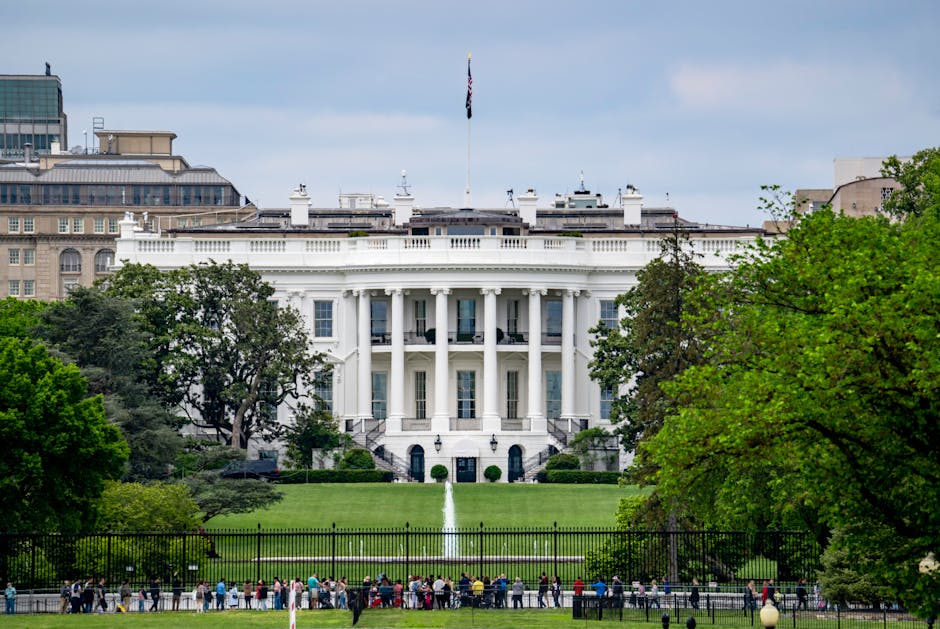
In a rapidly evolving geopolitical landscape, two significant and somewhat contradictory reports have captured global attention: a firm denial from the White House regarding a purported ceasefire request from Iran, quickly followed by strong indications that direct talks between the United States and Iran in Pakistan are “very likely.” These developments underscore the intricate and often volatile nature of US-Iran relations, with potential implications for regional stability, energy markets, and global diplomacy, factors keenly observed from New Delhi.
White House Dispels Ceasefire Claims Amidst Tensions
Recent reports suggested that Iran had conveyed a request for a ceasefire in the ongoing regional proxy conflicts to the United States through an unnamed intermediary. However, these claims were swiftly and unequivocally shot down by the White House. A spokesperson stated that the assertions were “not true,” clarifying that no such request had been received or was under consideration. This direct refutation comes at a time of heightened tensions across the Middle East, a region where both powers exert significant influence, often through proxies and allies.
The denial serves as a stark reminder of the deep mistrust and strategic maneuvering that define the relationship between Washington and Tehran. While international calls for de-escalation have grown louder, particularly concerning conflicts in Yemen, Syria, and Iraq, the White House’s stance suggests a continued firm approach. For India, a nation deeply invested in the stability of the Gulf region due to its energy needs and large diaspora, any escalation or miscommunication between the US and Iran is a cause for concern. The stability of shipping lanes, the free flow of oil, and the safety of Indian citizens abroad are directly impacted by the regional security environment.
Pakistan Emerges as Potential Host for Crucial US-Iran Dialogue
Strikingly, almost immediately after the White House’s rejection of a ceasefire request, news emerged from diplomatic circles suggesting that direct talks between the United States and Iran are “very likely” to take place in Pakistan. This revelation, reportedly stemming from high-level Pakistani diplomatic sources, introduces a new, albeit familiar, dimension to the long-standing geopolitical standoff.
Pakistan has historically attempted to play the role of an intermediary between the two nations, leveraging its complex relationships with both Washington and Tehran. For Islamabad, facilitating such high-stakes discussions could be a significant diplomatic achievement, potentially enhancing its standing on the international stage. The talks, if they materialize, would likely focus on a range of pressing issues, including the nuclear deal (JCPOA), regional proxy conflicts, maritime security in the Strait of Hormuz, and broader de-escalation strategies. The venue itself is noteworthy; Pakistan’s proximity and deep engagement with both parties could offer a unique platform for candid exchanges.
From an Indian perspective, the prospect of US-Iran talks in Pakistan carries multiple layers of interest. While dialogue is generally seen as a positive step towards de-escalation, India remains cautious. Stability in its neighbourhood, particularly involving Pakistan, is paramount. Any outcome that contributes to a more stable and predictable Middle East would be beneficial for India’s economic and strategic interests, including its investments in Iran like the Chabahar Port, which serves as a vital gateway to Central Asia. However, the nature and agenda of these talks, and Pakistan’s specific role, will be closely scrutinized.
“The Middle East is a crucible of competing interests, and while a direct ceasefire might be off the table, the very possibility of US-Iran talks, especially in a nation like Pakistan, indicates a pragmatic, albeit cautious, push for engagement,” observed Dr. Rohan Sharma, a Delhi-based geopolitical analyst. “Both sides understand the costs of unchecked escalation, and this could be a preliminary step towards re-establishing some channels of communication, even if trust remains low.”
India’s Stake in Regional Stability and Dialogue
India’s foreign policy towards the Middle East has always been characterized by maintaining strong bilateral ties with all regional players, avoiding alignment with any single bloc. This nuanced approach allows India to safeguard its energy security, protect its extensive diaspora, and ensure the uninterrupted flow of trade. The potential US-Iran talks, regardless of the venue, hold significant weight for India’s strategic calculations. A de-escalation of tensions could lead to more stable oil prices, fewer disruptions to maritime trade, and a more predictable security environment – all crucial for India’s continued economic growth and regional influence.
While the White House’s rejection of a ceasefire request underscores the formidable challenges in US-Iran relations, the concurrent possibility of direct talks in Pakistan signals a complex, evolving diplomatic landscape. The world will be watching keenly to see if these prospective talks can indeed pave the way for a much-needed thaw between Washington and Tehran, potentially recalibrating the geopolitical equilibrium in a region of immense global significance. For India, ensuring regional stability and fostering diplomatic solutions remains a high priority, making these developments particularly relevant to New Delhi’s strategic outlook.

