


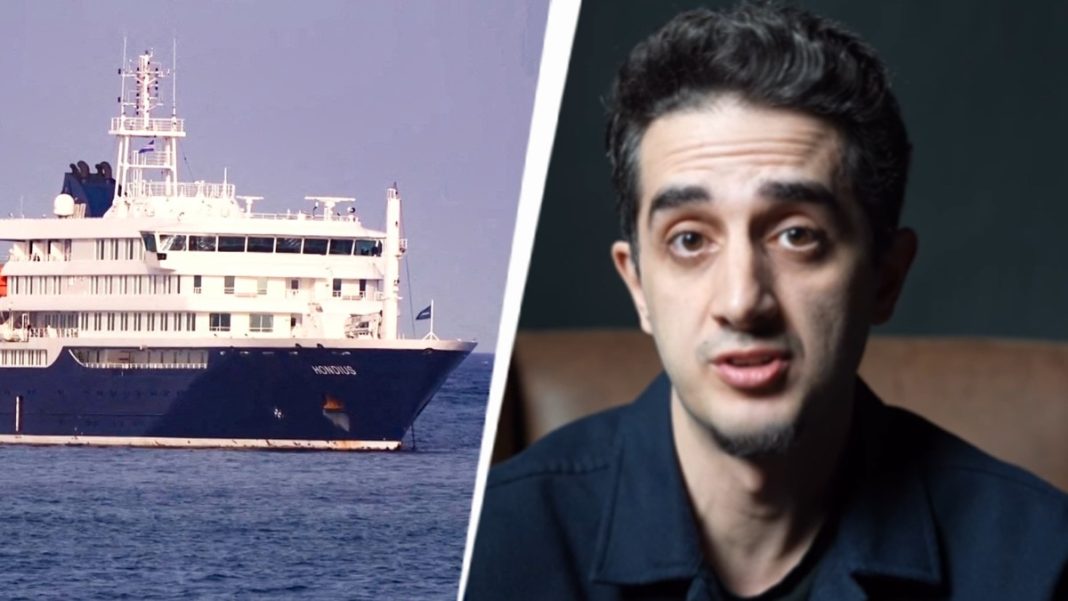
The allure of a cruise ship — boundless horizons, exquisite dining, and unparalleled luxury — often represents the epitome of a dream vacation. But what happens when this dream transforms into a living nightmare, fraught with uncertainty and the looming threat of an invisible enemy? This was the harrowing reality for passengers aboard the Oceanic Grand, a cruise ship that became an unwitting battleground against a hantavirus scare, as vividly recounted by Indian travel vlogger Rohan Sharma of ‘VoyageVibes’. His raw, unfiltered account offers a chilling glimpse into a voyage that was anything but grand.
The Dream Voyage Takes a Dire Turn
Rohan Sharma had embarked on what he anticipated would be a picturesque journey across the Pacific, a vibrant chronicle he intended to share with his burgeoning audience on ‘VoyageVibes’. Initially, his vlogs painted a picture of idyllic days filled with sunsets, gourmet meals, and cheerful fellow travelers, many of whom were Indian families on holiday. However, the veneer of luxury began to crack barely a week into the voyage. Whispers of an unknown illness spreading among some crew members and passengers quickly escalated into a full-blown alert.
The official announcement came unceremoniously, plunging the ship into chaos. The captain, via the public address system, confirmed several cases of a severe respiratory illness and the suspicion of hantavirus infection. Panic, swift and palpable, swept through the decks. For most passengers, including many from India, the term ‘hantavirus’ was a frightening unknown. Informative sessions followed, explaining that hantavirus, primarily spread through contact with infected rodent excretions, could cause severe, sometimes fatal, respiratory and kidney diseases. While not typically known for human-to-human transmission, the confined environment of a cruise ship amplified fears of secondary contamination or an as-yet-unknown mode of spread, especially given the rapid onset of symptoms in affected individuals. The ship, once a symbol of freedom, now felt like a sealed petri dish.
Life Adrift: Confinement and Mounting Anxiety
The subsequent days devolved into a surreal existence under strict quarantine. Passengers were confined to their cabins, their movements restricted, and social interactions ceased. Rohan’s vlogs from this period, filmed mostly within the claustrophobic confines of his cabin, captured the escalating anxiety. Meals were delivered by masked crew members, and daily temperature checks became the only routine connecting passengers to the outside world. “The initial fear gave way to a profound sense of helplessness,” Rohan described in one of his log entries. “We were adrift, not just on the ocean, but in a sea of uncertainty, with no land in sight, figuratively and literally.”
The mental toll was immense. For Indian families, many of whom were traveling with elderly relatives or young children, the isolation was particularly challenging. Communication with loved ones back home in India became a lifeline, albeit a fragile one due to inconsistent internet access. Rohan documented the emotional swings: moments of quiet despair, punctuated by attempts to maintain morale through impromptu virtual sing-alongs or sharing comforting words with fellow passengers through cabin walls. The ship’s medical team, stretched thin, worked tirelessly, battling the unknown while trying to reassure hundreds of anxious individuals.
The lack of definitive information regarding the source of the outbreak — whether it originated on board through contaminated supplies or if infected individuals had boarded the vessel — fueled speculation and fear. Each passing day without a clear resolution intensified the feeling of being trapped in a viral waiting game.
Disembarkation and Lingering Shadows
After what felt like an eternity, and following rigorous testing and disinfection protocols, the Oceanic Grand was finally permitted to dock at a remote port, weeks behind schedule. Disembarkation was a meticulously choreographed process, with health officials in full protective gear scrutinizing every passenger. The relief was palpable, yet it was intertwined with a sense of profound trauma. Rohan’s final vlogs from the ship captured gaunt faces, weary smiles, and the quiet dignity of survivors.
Upon his return, Rohan’s ‘VoyageVibes’ took on a new dimension. Beyond travel tips, he shared the psychological aftermath of the incident, speaking candidly about the lingering anxieties and the unexpected lessons learned. His experience resonated deeply with viewers, many of whom acknowledged the vulnerability that modern travel, even luxury cruises, can expose us to. “It felt like the walls were closing in, not just physically, but on our very spirits. The ocean, which was meant to be freedom, became our prison.” he recounted in a particularly poignant video, echoing the sentiments of many who shared his ordeal.
The ‘hantavirus-hit cruise ship’ incident serves as a stark reminder of humanity’s delicate balance with nature and the ever-present threat of infectious diseases. Rohan Sharma’s courageous sharing of his “horror voyage” through ‘VoyageVibes’ not only provided a vital first-hand account but also underscored the resilience of the human spirit in the face of unforeseen adversity. It remains a sobering chapter in the annals of travel, urging us to reconsider preparedness and empathy in an interconnected world.

