


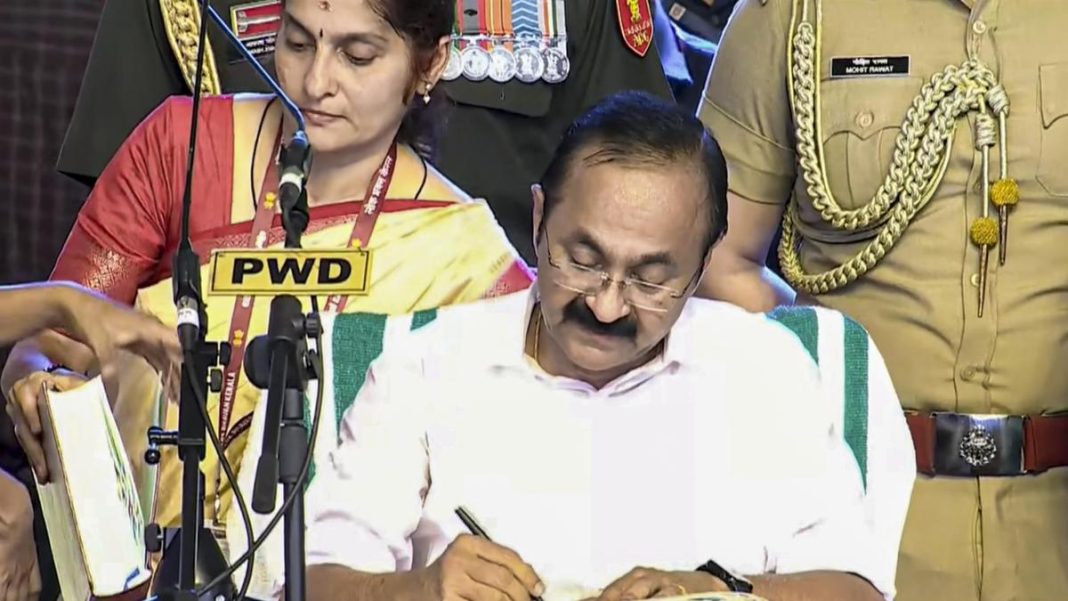
Kerala, a state renowned for its unique socio-political fabric, witnessed a significant political transition today as V.D. Satheesan was sworn in as its new Chief Minister. The veteran Congress leader took the oath of office amidst a ceremony steeped in democratic tradition, marking a new chapter in the state’s governance. This pivotal moment follows a keenly contested election, reflecting the vibrant and often unpredictable nature of Kerala’s electoral landscape. Satheesan’s ascension to the top executive post ushers in an era of heightened anticipation and considerable challenges for the southern state.
The Formal Transition: Oath and Cabinet Formation
The solemn swearing-in ceremony took place at the Raj Bhavan in Thiruvananthapuram, where Governor Arif Mohammed Khan administered the oath of office and secrecy to V.D. Satheesan. Dressed in a traditional white attire, Satheesan pledged to uphold the Constitution, amidst a gathering of senior party leaders, newly elected MLAs, judicial dignitaries, and bureaucrats. The atmosphere was one of measured optimism, with the change of guard signifying the democratic process at its finest.
Following the Chief Minister, a contingent of ministers from the newly formed cabinet also took their oaths, promising a balanced representation across various regions and communities of Kerala. The selection of ministers reportedly reflects a blend of experience and fresh talent, with crucial portfolios being allocated to address the immediate needs and long-term vision for the state. This strategic allocation aims to foster effective governance and streamline the administrative machinery from day one. The formation of the new council of ministers underscores the coalition’s commitment to providing a stable and progressive government, prioritizing welfare and development across all sectors.
Navigating Kerala’s Future: Priorities and Vision
As V.D. Satheesan assumes the mantle of Chief Minister, his government faces a complex array of issues demanding immediate attention and astute long-term planning. High on the agenda are economic revival post-pandemic challenges, managing public debt, and boosting employment opportunities for the state’s youth. Kerala, with its high human development indices, also grapples with maintaining its social welfare model while fostering industrial growth and environmental sustainability. Satheesan, known for his articulate debating skills and parliamentary experience, is expected to bring a pragmatic approach to governance.
During his inaugural address following the ceremony, the Chief Minister emphasized a commitment to inclusive development. “Our government is committed to inclusive growth, sustainable development, and ensuring that the benefits of progress reach every section of society,” Satheesan stated, projecting a clear vision for his tenure. “We will work tirelessly to uphold the trust placed in us by the people of Kerala and strive for a transparent, accountable, and responsive administration.” His administration is also anticipated to focus on strengthening the public health infrastructure, enhancing educational standards, and addressing the nuanced issues related to agricultural sustainability and coastal management. The political landscape within the state, marked by its vibrant opposition, will further necessitate consensus-building and effective communication from the new government.
The swearing-in of V.D. Satheesan as Kerala’s new Chief Minister marks a pivotal moment, not just for the state but for India’s federal democratic structure. His leadership comes with the immense responsibility of steering Kerala through contemporary challenges while preserving its progressive ethos. As the new government embarks on its journey, all eyes will be on its ability to translate promises into tangible progress, fulfilling the aspirations of the millions who call Kerala home. The coming months will undoubtedly test the mettle of this new administration, but the commitment articulated by its leader signals a determined step forward.

