


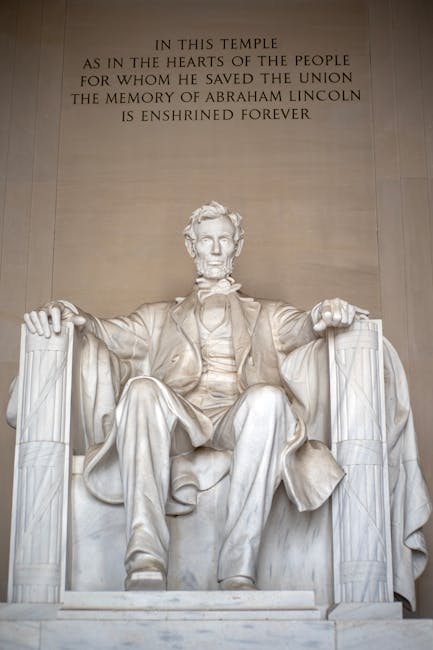
In the whirlwind of American politics, where every statement from a prominent figure is dissected and debated, former US President Donald Trump continues to command global attention. A recent exchange, following yet another indictment, saw Trump deliver a characteristically audacious response that evoked one of America’s most revered historical figures: Abraham Lincoln. This particular moment, laden with historical comparison and political strategy, offers a fascinating study for observers worldwide, including those in India keenly following the twists and turns of international democratic processes.
The Question, The Indictment, and The Unforeseen Reply
The incident unfolded amidst a flurry of legal challenges plaguing the former president. With multiple indictments spanning various states and issues – from alleged efforts to overturn the 2020 election results to the handling of classified documents – the question “Why does this keep happening to you?” has become a common refrain from reporters. It’s a query that encapsulates the unprecedented legal scrutiny faced by a former American head of state. Trump’s reply, however, veered sharply from the expected defensive or defiant stance, instead opting for a historical parallel.
Responding to the direct question, Trump linked his current predicament to the trials faced by past leaders, specifically Abraham Lincoln. His assertion was not merely a deflection but an attempt to reframe his legal battles as a struggle against powerful forces, akin to the intense opposition and criticism faced by a president during a pivotal moment in American history. By drawing this comparison, Trump sought to elevate his personal legal challenges to a matter of national destiny, portraying himself as a persecuted figure fighting for a cause greater than himself. This strategy, while controversial, is characteristic of his political playbook.
Abraham Lincoln and Donald Trump: A Juxtaposition of Eras
The comparison between Donald Trump and Abraham Lincoln immediately invites a deep dive into historical context. Lincoln, the 16th U.S. President, led the nation through its most trying period, the Civil War, ultimately preserving the Union and abolishing slavery. His presidency was marked by immense political division, military struggle, and profound moral leadership. He faced relentless criticism, personal attacks, and the ultimate sacrifice of assassination. However, Lincoln’s challenges were fundamentally about the existential threat to the nation and its founding principles, not personal legal indictments or allegations of criminal wrongdoing in the modern sense.
Donald Trump, on the other hand, faces a litany of charges primarily related to his conduct in office, his business practices, and his efforts following the 2020 election. These include accusations of election interference, mishandling of classified documents, and other financial and ethical concerns. While he claims to be battling a “Deep State” or political opponents, the nature of the accusations is distinct from the national crisis Lincoln confronted. Trump’s strategy in invoking Lincoln appears to be an attempt to imbue his current legal predicaments with a similar gravitas and historical significance, positioning himself as a victim of political persecution rather than a subject of legal accountability. As Trump himself put it, attempting to frame his plight: “Abraham Lincoln was probably treated worse. I mean, they said he was a pig, they called him ugly names… But I’ve been treated very badly.” This quote highlights his narrative of being unjustly targeted, drawing a parallel to a time when political rhetoric was equally harsh, even if the underlying circumstances were vastly different.
An Indian Lens on American Political Drama
For an Indian audience, accustomed to a vibrant, often turbulent, democratic landscape, such political theatre resonates deeply. India, the world’s largest democracy, has its own history of political leaders facing intense scrutiny, legal challenges, and accusations of politically motivated cases. The concept of “political vendetta” is not alien to Indian discourse, where opposition parties frequently allege misuse of government agencies against their leaders. Therefore, Trump’s narrative of being unfairly targeted by the “system” finds echoes in domestic political debates, even if the specific contexts differ significantly.
Moreover, India’s strong democratic traditions and a robust, albeit often debated, judicial system mean that the principles of accountability and the rule of law are keenly observed. The way a leader, even a former one, navigates a complex web of legal challenges while maintaining public support offers valuable insights. The global implications of American political stability and leadership also ensure that such high-profile events are not just viewed as distant spectacles but as developments that can potentially impact international relations, trade, and even the geopolitical balance – areas of significant interest to India.
Conclusion: A Strategy of Historical Recontextualization
Donald Trump’s invocation of Abraham Lincoln in response to questions about his legal troubles is more than just a soundbite; it’s a strategic move to recontextualize his current battles within a larger historical narrative of presidential struggle. While historians and political analysts widely dispute the validity and appropriateness of the comparison, it effectively serves Trump’s ongoing narrative of being a persecuted outsider fighting entrenched interests. For global observers, especially those in dynamic democracies like India, this episode highlights the enduring power of historical analogy in political rhetoric, and the complex interplay between legal processes, public perception, and a leader’s cultivated image. The debate over accountability versus persecution continues, shaping not just American politics but also providing a global case study in leadership under fire.

