


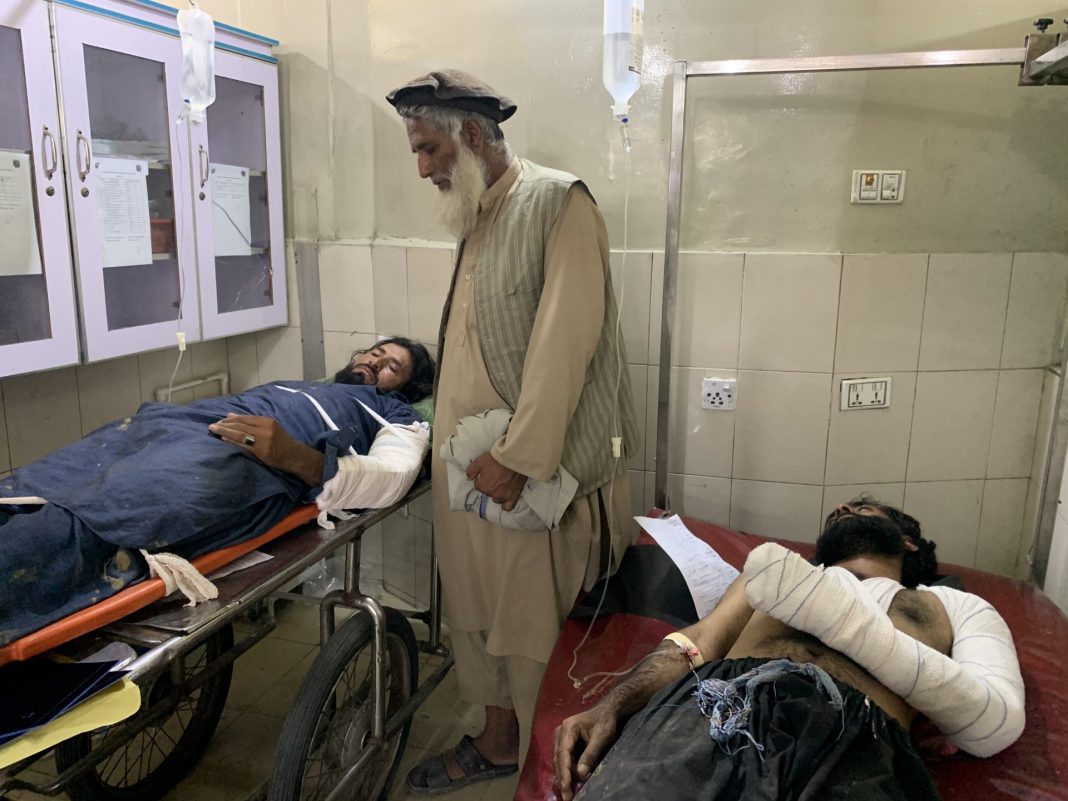
A tragic incident has cast a somber shadow over the ongoing humanitarian crisis involving Afghan nationals returning from Pakistan. Early this morning, a truck carrying dozens of Afghan returnees overturned on a busy highway in Pakistan’s Khyber Pakhtunkhwa province, claiming the lives of at least 18 individuals and leaving many more injured. The accident underscores the perilous journeys undertaken by thousands of Afghans as they navigate complex geopolitical currents and dire personal circumstances, seeking to return to their homeland amidst an already fragile humanitarian situation.
The Fateful Journey and Its Devastating Outcome
The accident occurred around 4:00 AM local time on the Peshawar-Islamabad Motorway (M-1) near Swabi, a district in Khyber Pakhtunkhwa. According to preliminary reports from local police and rescue officials, the overloaded truck was reportedly travelling at high speed when the driver lost control, causing the vehicle to flip multiple times before coming to rest on its side. The impact was severe, trapping many passengers beneath the wreckage.
Rescue teams, comprising local police, emergency services, and volunteers, rushed to the scene. The immediate aftermath was chaotic, with cries for help mingling with the wail of sirens. Eyewitnesses described a harrowing scene of broken glass, twisted metal, and scattered personal belongings. Eighteen individuals, including women and children, were confirmed dead at the site or shortly after being transported to local hospitals. More than two dozen others sustained injuries, ranging from severe fractures to minor abrasions. They are currently receiving treatment at various medical facilities in Swabi and Peshawar, with some in critical condition.
Authorities have initiated an investigation into the exact cause of the accident. While initial findings point towards driver negligence and overloading as primary factors, the overall context of the journey highlights a systemic issue. These returnees often rely on informal and unsafe transportation methods due to a lack of resources and regulated options, making them acutely vulnerable to such catastrophic events. The truck, designed for cargo, was packed with individuals and their meager possessions, a common sight on routes used by returning Afghans.
The Plight of Afghan Returnees: A Broader Crisis
This tragic incident is not an isolated event but a stark symptom of a larger, unfolding humanitarian crisis. Pakistan recently implemented a directive for all undocumented foreign nationals, a vast majority of whom are Afghans, to leave the country voluntarily by November 1st, 2023, or face deportation. This policy has led to an accelerated exodus, with hundreds of thousands of Afghans crossing the border into Afghanistan in recent weeks.
Many of these individuals have lived in Pakistan for decades, often fleeing conflict and instability in Afghanistan, and have established lives and livelihoods there. The sudden directive has left them with little choice but to uproot themselves, often with minimal possessions and financial resources. The journey back to Afghanistan is fraught with challenges. They often face difficulties securing safe and affordable transportation, leading them to board crowded, ill-maintained vehicles like the one involved in this tragedy. Women, children, and the elderly are particularly at risk during these arduous journeys.
The humanitarian organizations, including UNHCR and IOM, have expressed deep concern over the situation, highlighting the immense pressure on Afghanistan, which is already grappling with severe economic hardship, food insecurity, and a lack of essential services. The sudden influx of a large population, many of whom are returning to areas they haven’t seen in years or even decades, exacerbates existing vulnerabilities and strains limited resources.
“This accident is a stark reminder of the immense risks these vulnerable individuals undertake as they are forced to return to a country already struggling with immense challenges,” stated a local humanitarian worker on condition of anonymity. “Our immediate focus must be on ensuring safe passage and providing urgent humanitarian assistance to prevent further loss of life and mitigate suffering.”
Regional Implications and Humanitarian Imperatives
The incident on the highway serves as a poignant reminder of the human cost of regional geopolitical policies and the urgent need for a humanitarian approach. While Pakistan asserts its sovereign right to regulate its borders, the manner and scale of the expulsions have drawn international attention to the welfare of these vulnerable populations. From an Indian perspective, observing events unfold in its immediate western neighborhood, the humanitarian dimension is paramount. The stability and well-being of Afghanistan and its people have significant regional implications, influencing migration patterns, security dynamics, and humanitarian efforts across South Asia.
The global community, including India, continues to advocate for adherence to international human rights principles and the provision of assistance to Afghanistan to absorb the returning population gracefully. The incident underscores the critical importance of ensuring dignified and safe repatriation processes, with proper coordination among regional stakeholders and international bodies. As investigations continue and the injured recover, the tragedy on the highway calls for renewed attention to the plight of Afghan returnees and a collaborative effort to address one of the most pressing humanitarian challenges in the region today.
*

