


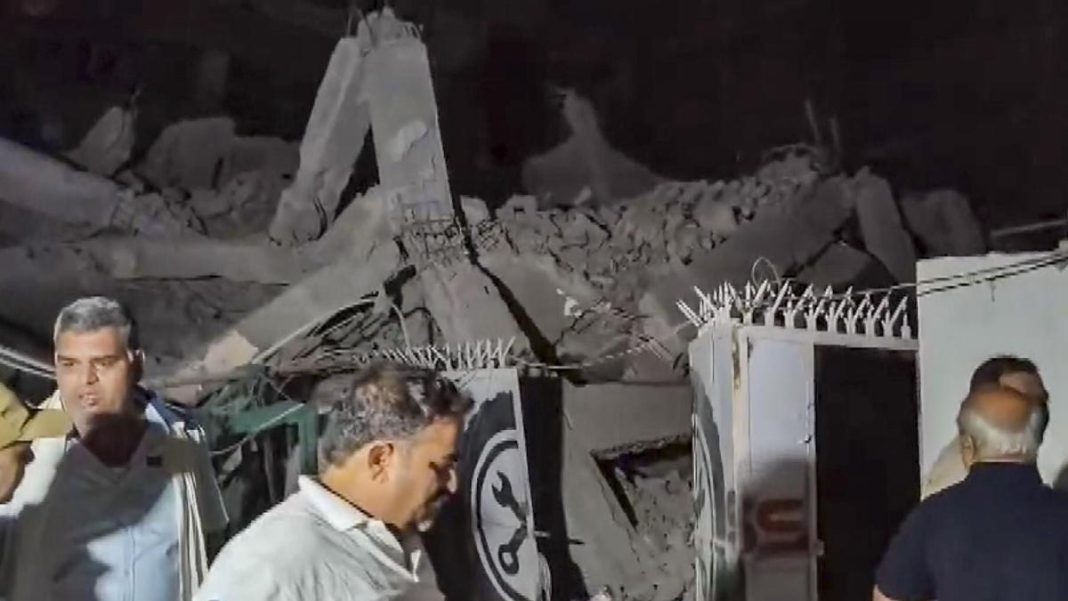
A pall of grief and apprehension descended upon Delhi’s upscale Saket locality early this morning, as a multi-storey residential building suddenly collapsed, trapping an unknown number of residents beneath its rubble. The devastating incident, occurring in a densely populated area, has prompted a massive, multi-agency rescue operation, with local authorities and emergency services racing against time to locate and extract survivors.
The collapse, reported around 4:30 AM, left a four-storey structure reduced to a heap of twisted metal and concrete, sending shockwaves through the community. Eyewitnesses described a loud roar followed by a cloud of dust, as the building gave way without prior warning. Initial reports suggest that several families were residing in the building, and fears are mounting for the safety of those believed to be still trapped inside.
The Morning After: A Race Against Time
The scene at the collapse site in Saket is one of controlled chaos, reflecting the urgency of the situation. Within minutes of the incident being reported, teams from the Delhi Police, Delhi Fire Services, and the National Disaster Response Force (NDRF) were mobilised and rushed to the spot. Local residents, many jolted awake by the thunderous noise, immediately joined preliminary rescue efforts, attempting to move debris by hand before specialized equipment arrived.
As daylight broke, the full scale of the disaster became painfully clear. Cranes, excavators, and dumpers are now working relentlessly to clear the heavy debris, piece by agonizing piece. Sniffer dogs have been deployed, carefully navigating the unstable wreckage in hopes of detecting signs of life. Medical teams, ambulances, and paramedical staff are on standby, ready to provide immediate assistance to anyone pulled out from the rubble. So far, at least five individuals have been rescued with varying degrees of injuries and immediately shifted to nearby hospitals. Their conditions are being monitored, with authorities yet to release comprehensive details on their identities or health status.
The narrow lanes characteristic of many Delhi neighbourhoods pose a significant challenge for heavy machinery, slowing down the pace of operations. Despite this, the resolve of the rescue personnel remains undeterred. “Every minute is crucial here. Our teams are employing every possible method, from manual digging to advanced sensors, to locate those trapped,” stated an NDRF official on site, underscoring the delicate balance between speed and ensuring the safety of both victims and rescuers. “The structure is highly unstable, making it a challenging environment, but we are committed to finding everyone.”
Unravelling the Cause: A Recurring Urban Challenge
While the immediate focus remains squarely on rescue, questions are inevitably being raised about the cause of the collapse. Delhi, like many rapidly urbanizing Indian cities, has grappled with incidents of building collapses, often attributed to factors such as illegal construction, poor quality materials, lack of adherence to building codes, or structural weakness in older buildings. The Saket tragedy rekindles concerns about urban planning and the enforcement of safety regulations.
Authorities have indicated that a thorough investigation will be launched once the immediate rescue operation concludes. Initial speculation among locals points towards the building being an older structure, possibly undergoing unauthorised modifications or suffering from general neglect. The Delhi government has announced a high-level committee to probe the incident, promising stringent action against anyone found responsible for negligence or malpractices that might have contributed to the disaster. The findings of such an investigation will be crucial in preventing similar tragedies in the future and holding accountable those who compromise public safety for personal gain.
Community Response and Future Vigilance
The Saket community has rallied together in the face of adversity, with residents offering water, food, and support to rescue workers and affected families. Local NGOs are also stepping in to provide aid and assistance. This collective spirit, while heartwarming, cannot overshadow the somber reality of the situation and the immediate need for a robust policy framework to ensure the structural integrity of buildings across the city.
As the painstaking rescue efforts continue into the day and potentially through the night, the hope for more survivors diminishes with each passing hour, yet the determination of the teams remains unwavering. The Saket collapse serves as a stark reminder of the critical need for urban vigilance, strict enforcement of building codes, and regular structural audits to prevent such devastating incidents from claiming innocent lives in India’s burgeoning cities.
*

