


As the political temperature soars in West Bengal ahead of the ongoing Lok Sabha elections, the campaign trail has become a battleground not just for policies and promises, but also for sharp, often metaphorical, rhetoric. In a recent high-profile exchange that grabbed national headlines, Prime Minister Narendra Modi delivered a fiery response to the Trinamool Congress’s (TMC) “jhalmuri” dig, using the metaphor of “chillies” to convey a powerful message of political retribution and impact.
The verbal sparring has illuminated the intense rivalry between the Bharatiya Janata Party (BJP) and the ruling TMC, with each side leveraging local culture and common experiences to connect with voters and land decisive blows in the narrative war. This particular exchange has become a prime example of the colourful and deeply entrenched nature of Indian political discourse.
The ‘Jhalmuri’ Provocation
The genesis of this exchange lies in an apparent remark made by TMC leaders, reportedly including party general secretary Abhishek Banerjee, who likened the BJP’s alleged offers or political manoeuvres in West Bengal to jhalmuri—a popular, spicy puffed rice snack easily found on street corners across India. The implication behind this analogy was clear: the BJP’s efforts or promises were trivial, insubstantial, and easily dismissed, offering momentary gratification but no lasting value. It was a bid to trivialize the BJP’s presence and impact in the state, suggesting their political capital or any perceived gains were as fleeting and inconsequential as a packet of street-side snacks.
This “jhalmuri” dig, while seemingly innocuous, was a strategic attempt to undermine the BJP’s narrative of growth and influence in a state where they have been striving to establish a stronger foothold. It aimed to portray the BJP’s outreach as superficial and their support base as easily swayed by minor inducements, rather than genuine political conviction or substantial policy initiatives. For the TMC, a party deeply rooted in Bengali identity, using a local culinary reference was also a way to communicate directly and culturally with its electorate.
Modi’s Fiery Retort: The ‘Chillies’ Barb
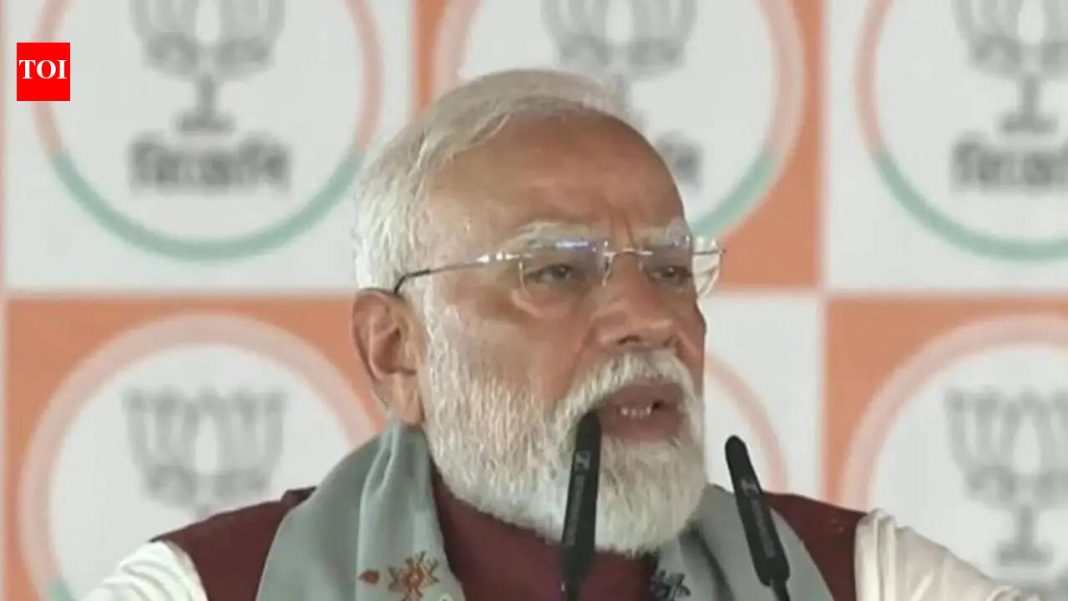
Prime Minister Narendra Modi, known for his ability to turn criticism on its head and use evocative language, seized upon the “jhalmuri” jibe during a rally in West Bengal. He retorted sharply, asserting that while his opponents might see his actions or the support his party garners as insignificant like jhalmuri, the underlying “chillies” in that snack were potent and would deliver a “thunderous jolt” to those who underestimated them. The Prime Minister’s speech was delivered with characteristic vigour, aiming to project strength and resolve.
The use of “chillies” as a counter-metaphor was particularly impactful. Chillies, an integral part of Indian cuisine, symbolize pungency, heat, and a strong, often surprising, kick. Modi’s message was unequivocal: what the TMC dismissed as trivial would, in fact, have a profound and painful effect. It was a direct warning that the BJP’s political strategies and growing support base in Bengal were anything but insubstantial, and would instead prove to be a source of significant discomfort and electoral shock for the opposition. This was not just a playful retort; it was a carefully calibrated political statement, transforming a perceived weakness into a strength.
“They are calling our efforts jhalmuri. But they will soon realise that the chillies in this jhalmuri are so potent that they will give a thunderous jolt to the TMC,” Prime Minister Modi declared, eliciting strong reactions from the crowd and across the political spectrum.
Political Undercurrents and Public Perception
This metaphoric duel is more than just rhetorical flourish; it underscores the high stakes of the electoral battle in West Bengal. The state, with its significant number of Lok Sabha seats, is crucial for both the BJP’s national ambitions and the TMC’s regional dominance. The exchange reflects the aggressive communication strategies employed by both parties to shape public perception and rally their respective bases.
For the BJP, Modi’s “chillies” barb serves to reassert the party’s strength and resolve, challenging the narrative that their presence in Bengal is superficial. It aims to energize their cadres and reassure voters that the party is a formidable force. For the TMC, their “jhalmuri” dig was an attempt to paint the BJP as an external entity trying to gain ground with temporary, unimpactful measures. Such local metaphors resonate deeply with the electorate, who can easily relate to the imagery, making the political message more accessible and memorable.
As the election progresses, such sharp, culturally nuanced exchanges are likely to continue, each party striving to dominate the narrative. This “jhalmuri” versus “chillies” battle epitomizes the vibrant, often personal, and always high-stakes nature of Indian electoral politics, where even a common snack can become a powerful political weapon, capable of delivering a metaphorical “thunderous jolt.”

