


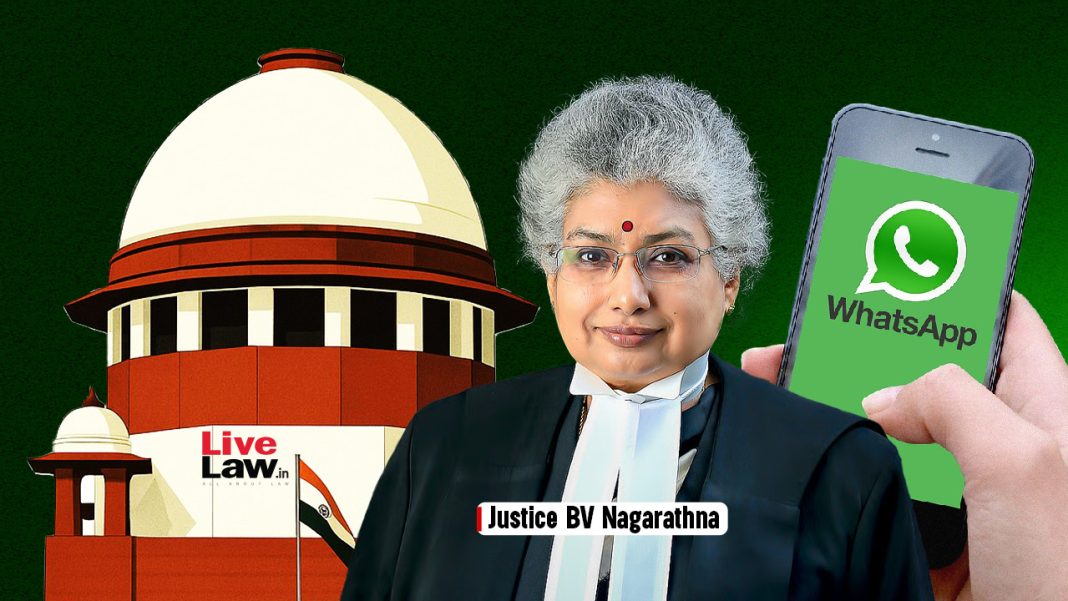
In an age dominated by instant messaging and viral forwards, the veracity of information often takes a backseat to its speed of dissemination. Social media platforms, particularly WhatsApp, have become primary news sources for millions, leading to a phenomenon colloquially termed the ‘WhatsApp University’ – a vast, often unverified repository of data ranging from anecdotal wisdom to outright misinformation. Against this backdrop, a recent statement from Supreme Court Justice B.V. Nagarathna has resonated profoundly, urging caution against the uncritical acceptance of information from such platforms. Her firm declaration, a stark reminder of the perils of unchecked data, underscores a growing concern within India’s legal and social fabric about digital literacy and factual integrity.
The Perilous Curriculum of ‘WhatsApp University’
The term ‘WhatsApp University’ has entered common Indian parlance to describe the pervasive culture of relying on unverified forwards, sensational headlines, and politically motivated content shared through instant messaging applications. While these platforms facilitate communication and community building, they have also become fertile ground for the rapid spread of fake news, communal propaganda, and distorted facts. For a nation as diverse and populous as India, where smartphone penetration is high and critical media literacy is still developing, the consequences of this digital deluge can be severe, impacting everything from public opinion and electoral processes to social harmony and individual well-being.
The challenge posed by this informal ‘university’ extends beyond mere inconvenience. It erodes trust in traditional media, fuels confirmation bias through echo chambers, and, critically, can sway public discourse with emotionally charged, baseless claims. In a society grappling with complex issues, the ability to discern credible information from deceptive content is paramount. Justice Nagarathna’s comment highlights not just a personal observation, but a collective societal vulnerability that demands immediate attention from various stakeholders.
Judicial Scrutiny and the Quest for Authenticity
Justice B.V. Nagarathna’s statement derives significant weight from its origin within the highest echelons of the Indian judiciary. The legal system, by its very nature, is built upon the pillars of evidence, facts, and verifiable truth. For a judge to comment on the unreliability of ‘WhatsApp University’ information signals a profound concern about how such unverified content might seep into legal narratives, public perception, or even influence decision-making processes, however indirectly. Her unequivocal stance, “You cannot take information from ‘WhatsApp University’,” serves as a critical reminder that credible sources and rigorous verification are non-negotiable, particularly when dealing with matters of justice and public policy.
This judicial assertion is not an isolated incident. Courts across India have, on various occasions, expressed dismay at the proliferation of fake news and its potential to obstruct justice or incite public unrest. The Supreme Court’s emphasis on verifiable facts and authoritative sources reaffirms the foundational principle that legal judgments must be based on solid evidence, not on circulating rumours or unsubstantiated claims found in digital forwards. It sets a precedent, urging legal practitioners, media, and the public alike to exercise extreme caution before attributing any credibility to information lacking a clear, trustworthy provenance.
Beyond the Courts: Fostering Digital Literacy
While Justice Nagarathna’s remark emerges from a judicial context, its implications stretch far beyond the courtroom. It serves as a powerful call to action for enhancing digital literacy across Indian society. The battle against misinformation is not solely the responsibility of the judiciary or law enforcement; it requires a collective effort involving educational institutions, media organizations, civil society groups, and individual citizens.
Promoting critical thinking skills, teaching source verification, and encouraging healthy skepticism towards online content are vital steps in inoculating the public against the insidious spread of fake news. Educational curricula need to integrate modules on media literacy from an early age, equipping students with the tools to navigate the complex digital landscape responsibly. Furthermore, platforms themselves bear a significant responsibility in curbing misinformation through improved content moderation and transparency. Ultimately, combating the ‘WhatsApp University’ phenomenon requires a cultural shift towards valuing accuracy and authenticated information over sensationalism and speed.
Justice Nagarathna’s pointed observation is more than a casual remark; it is a critical warning about the erosion of factual integrity in the digital age. It underscores the urgent need for individuals to cultivate discernment and for institutions to uphold the standards of truth. In an increasingly interconnected world, where information is power, ensuring that this power is derived from credible sources is paramount for the health of democracy, justice, and informed public discourse.

