


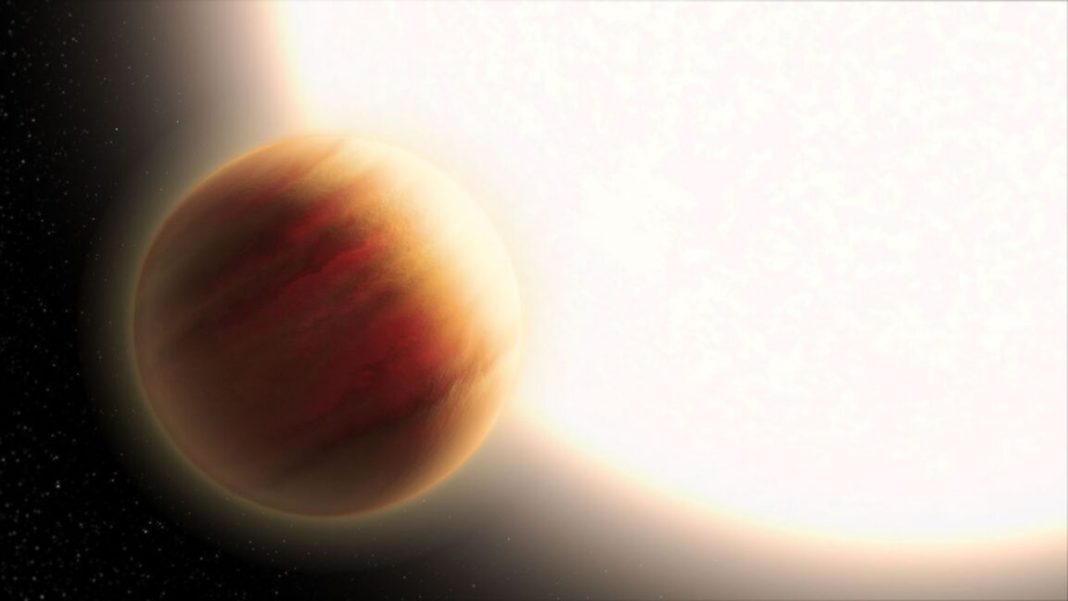
Imagine, for a moment, standing on a beach, watching storm clouds gather on the horizon. Now, stretch that horizon a little. Make it 700 light-years away. That’s not a poetic exaggeration; it’s the incredible reality the James Webb Space Telescope is delivering. We’re not just detecting exoplanets anymore; we’re discerning the very weather patterns on a colossal, scorching gas giant orbiting a star impossibly distant. It’s a feat of engineering and observation that truly expands our definition of what’s knowable.
Peering Through the Cosmic Veil
The Webb Telescope isn’t just another set of eyes in the sky; it’s an infrared marvel designed to see what visible light can’t. Its colossal mirror and cryogenic instruments allow it to detect the faint heat signatures and subtle chemical fingerprints of atmospheres thousands of trillions of miles away. When a planet passes in front of its host star from our perspective, Webb can analyze the starlight filtered through the planet’s atmosphere, revealing its composition. But beyond just composition, the telescope’s exquisite sensitivity allows scientists to track variations in brightness and temperature across the planet’s face as it orbits.
This isn’t about snapping a picture of swirling clouds like we do with Earth. Instead, it’s about collecting data points that, when stitched together, paint a dynamic portrait of an alien world’s climate. Scientists are mapping temperature gradients, identifying the presence of specific molecules like water or methane, and even inferring wind speeds based on how quickly these atmospheric features shift. It’s a bit like watching a faraway firework show and, by analyzing the light and sound, deducing the size, shape, and even the chemical composition of the exploding charge. Only, in space, the show is happening on a planet larger than Jupiter, perpetually bathed in the fierce glow of its star.
A Stormy World, Seven Decades of Light Away
The target of these groundbreaking observations is a hot gas giant, a kind of planet we don’t have in our own solar system. These worlds orbit incredibly close to their stars, often completing a “year” in just a few Earth days. The surface, if you could even call it that on a gas giant, is a maelstrom of superheated gases, with temperatures soaring well past what we experience on Earth. Imagine perpetual hurricanes, but instead of water vapor, they’re fueled by exotic compounds vaporized by extreme heat.
What Webb has shown us are hints of these chaotic atmospheric conditions. Variations in the thermal emission from the planet suggest vast temperature differences between its day and night sides, driven by extreme winds trying to redistribute the star’s ferocious heat. There are even signs of cloud formations, not the fluffy white kind we know, but likely silicate clouds – essentially, clouds made of vaporized rock or other heavy elements, condensing and evaporating in the brutal heat. “It’s like looking out of your window, but that window is 700 light-years across,” mused Dr. Lena Sharma, a theoretical astrophysicist. “We’re not just seeing a distant star; we’re witnessing a dynamic, churning world. It’s truly humbling.” This isn’t just theory anymore; it’s empirical evidence of meteorological phenomena happening light-years away.
The Cosmic Ripple Effect
Why does peering at the weather on a distant, uninhabitable gas giant matter to us? The insights gained from these extreme environments are invaluable. By understanding the atmospheric dynamics of hot Jupiters, we gain a broader understanding of planetary formation and evolution across the universe. These extreme cases help us build more accurate models for predicting what we might find on other, potentially more Earth-like worlds. Every piece of data about an exoplanet’s atmosphere brings us closer to answering one of humanity’s oldest questions: Are we alone?
The Webb telescope isn’t just showing us distant worlds; it’s showing us the sheer diversity and complexity of the cosmos. It’s a testament to human ingenuity, pushing the boundaries of what’s observable and expanding our cosmic perspective, one distant weather forecast at a time. The universe, it seems, is far more dynamic and varied than we ever dared to imagine.

