


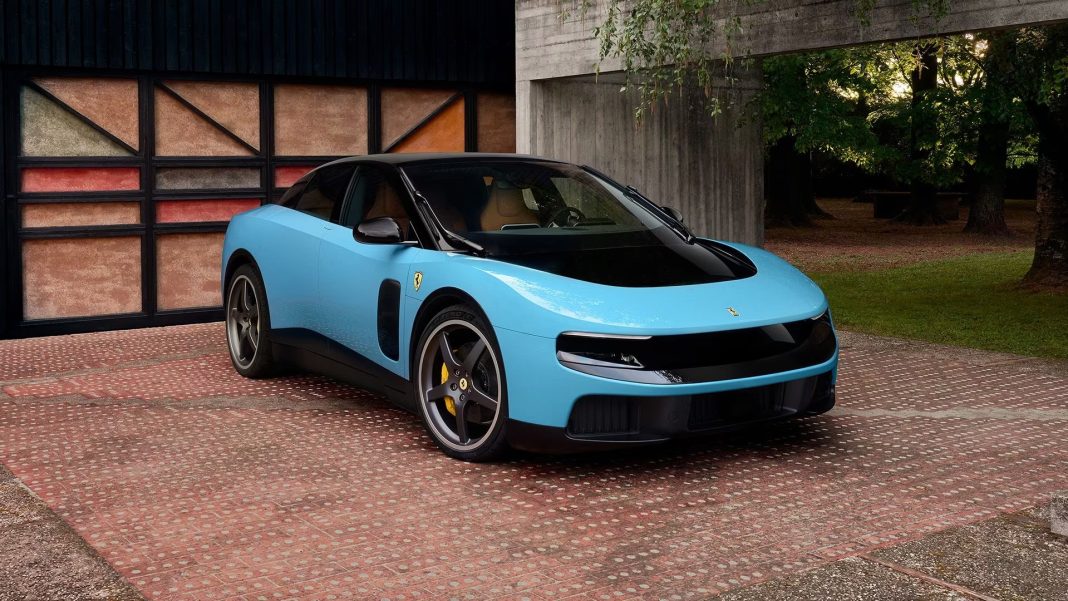
The roar of a Ferrari engine is synonymous with passion and performance, but what if the true innovation lay not just under the hood, but subtly woven into every interior surface? Maranello’s latest design marvel, the Ferrari Luce concept, does exactly that, harnessing cutting-edge display technology from an unexpected source: Samsung’s smartphone division. This isn’t about a bigger screen; it’s a radical reimagining of the automotive cabin, transforming static surfaces into dynamic, interactive canvases in a truly wild new way.
The Luce’s Luminous Leap: Beyond Traditional Displays
The Ferrari Luce, meaning “light,” is more than a concept car; it’s a philosophical statement, a vision of future luxury and human-machine interaction. At its core is a profound departure from conventional automotive interior design. Instead of rigid instrument clusters and isolated infotainment screens, the Luce employs flexible, ultra-thin OLED panels developed by Samsung Display. These aren’t just for displaying information; they are integrated seamlessly into the car’s interior architecture, curving around contours, flowing across door panels, and subtly lighting the cabin.
Imagine a dashboard that transforms its appearance based on driving mode, or door panels that display ambient art when parked, only to reveal intuitive controls upon a touch. This is the Luce’s promise. The technology allows surfaces to be virtually invisible until needed, creating a minimalist aesthetic that can erupt into a vibrant display of information or atmospheric lighting on demand. It’s a leap towards an immersive, personalized driving environment where the interior itself becomes a dynamic interface, adapting to the driver’s needs and mood.
From Smartphone Screen to Supercar Surface: The Samsung Connection
The brilliance of the Luce’s approach stems directly from Samsung Display’s prowess in flexible OLED technology, refined over years of developing screens for premium smartphones like the Galaxy Fold and Flip series. However, adapting this tech for a supercar environment presented unique challenges. Automotive applications demand extreme durability, resilience to temperature fluctuations, vibration resistance, and stringent safety standards – far beyond what a typical smartphone screen endures.
Samsung’s panels bring several key advantages: their extreme thinness allows integration into tight spaces and complex curves; their self-emissive pixels offer infinite contrast and vibrant colours for both aesthetics and clarity; and their energy efficiency is a bonus. The “wild new way” manifests in how these displays move beyond mere information delivery. They become part of the car’s very fabric, dissolving into the design when not active, then springing to life to provide haptic feedback, projected augmented reality elements, or dynamic patterns that enhance the cabin’s sense of space and luxury.
“Our collaboration with Ferrari on the Luce concept showcases the incredible versatility and transformative potential of our flexible OLED technology beyond traditional consumer electronics,” states Dr. Seon-woo Kim, VP of Samsung Display’s Automotive Solutions division. “It’s about creating an intuitive, seamless, and emotionally resonant experience for the user, integrating technology so deeply that it feels like magic.” This vision hints at a future where car interiors are not merely assembled, but organically grown around display technology.
Driving India’s Digital Future: Implications for the Automotive Landscape
While the Ferrari Luce exists at the pinnacle of automotive innovation, its underlying technology and design philosophy carry significant implications for the Indian market. India, with its rapidly growing economy and tech-savvy populace, is witnessing an unprecedented demand for advanced features and luxury experiences in vehicles. The luxury car segment in India is expanding, and discerning buyers increasingly seek out vehicles offering cutting-edge technology alongside performance and prestige.
This convergence of digital and physical, pioneered by concepts like the Luce, resonates strongly with India’s digital transformation. While a Ferrari Luce might be a distant dream, the trickle-down effect of such innovations is inevitable. Flexible displays, advanced haptic feedback, and dynamic interior lighting could well become staples in more mainstream Indian vehicles in the future, enhancing safety, convenience, and the overall user experience. Indian automotive manufacturers and suppliers keenly observe global trends, understanding that future consumers, raised on smartphones, will expect similar sophistication and seamless integration within their cars. The Luce showcases how technology can create a truly premium, personalized, and intuitive environment, setting a new benchmark for what Indian consumers will come to expect.
The Ferrari Luce concept, through its audacious integration of Samsung’s flexible OLED technology, offers a compelling glimpse into the future of automotive interiors. It’s a powerful demonstration of how cross-industry collaboration can redefine luxury, interaction, and aesthetics within a car. As technology blurs the lines between device and environment, the Luce stands as a beacon, illuminating a path where the car’s interior is not just a space to travel, but an active, intelligent, and emotionally engaging partner in the journey. This wild new way of thinking about displays is poised to inspire a generation of vehicles, ultimately enriching the driving experience for consumers worldwide, including an increasingly sophisticated Indian market.

