


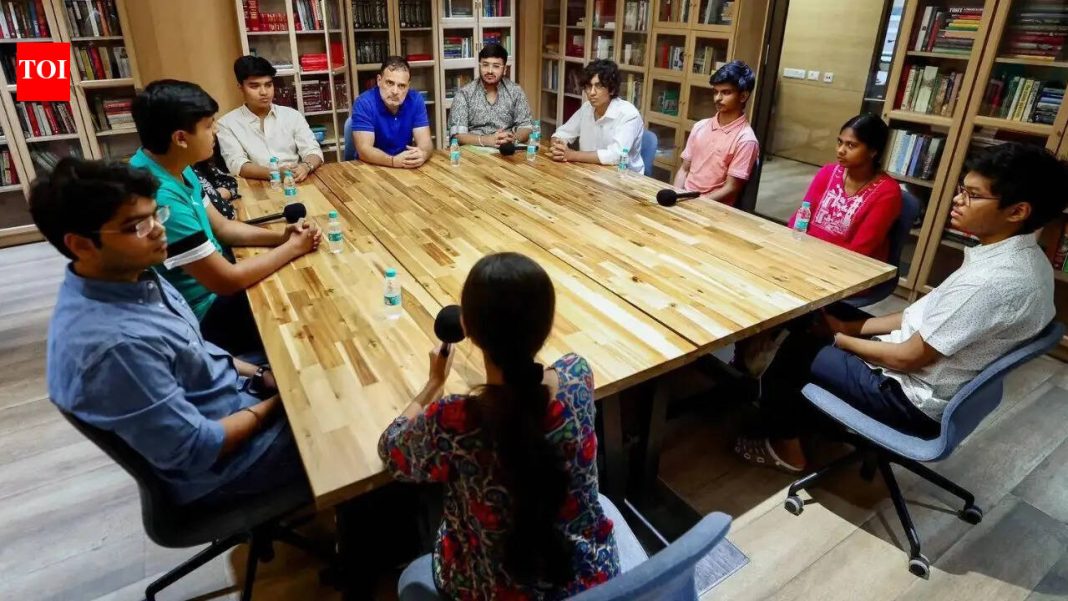
The highly anticipated results of the Central Board of Secondary Education (CBSE) Class 10 and 12 examinations are often a moment of mixed emotions for students and parents across India. However, the recent declaration of results has been overshadowed by a wave of grievances, ranging from alleged errors in mark sheets to the contentious process of re-evaluation. Amidst this backdrop, senior Congress leader Rahul Gandhi has sharply criticised the board, issuing a stark “beware of pickpockets” warning and highlighting the financial burden imposed by re-evaluation fees.
Rahul Gandhi’s Sharp Allegation: “Beware of Pickpockets”
Rahul Gandhi’s recent remarks have injected a fresh wave of debate into the ongoing controversies surrounding CBSE results. Taking to social media, Gandhi delivered a pointed message to students and parents grappling with post-result anxieties. He cautioned them about what he perceives as a systemic issue, stating, “There are pickpockets sitting inside CBSE, so beware.” This striking analogy was aimed at drawing attention to the perceived exploitation of students who are forced to pay significant fees for processes like re-evaluation, verification, and obtaining photocopies of their answer sheets, even when initial discrepancies might stem from the board’s side.
Gandhi’s intervention comes at a time when many students have reported receiving mark sheets with errors or discrepancies, leading to immense stress and uncertainty about their academic futures. The “Original Marksheet (OSM) row,” a separate but related issue concerning the delayed or missing issuance of original mark sheets for some students, has further compounded the frustration. While the “pickpockets” warning specifically targeted the financial aspects of re-evaluation, it resonated with the broader sentiment of distrust and dissatisfaction among a segment of the student community.
The Burden of Re-evaluation Fees
At the heart of Rahul Gandhi’s “pickpockets” warning lies the contentious issue of re-evaluation fees. For students who believe their scores do not accurately reflect their performance, the only recourse is to apply for verification of marks, obtaining photocopies of answer sheets, and then, if necessary, re-evaluation. Each step in this process incurs a separate fee. While the board justifies these charges as administrative costs, critics argue that they become an undue financial burden, especially when errors are discovered, implying students are paying to correct the board’s mistakes.
The cost of verification can range from ₹500 per subject, with photocopies of answer sheets costing an additional ₹500. A full re-evaluation, where marks are reassessed, can cost upwards of ₹100 per question, potentially running into thousands of rupees for a single subject. This cumulative financial strain is a significant concern for many middle and lower-income families. Rahul Gandhi underscored this sentiment, remarking, “Students are forced to pay hefty fees for re-evaluation, even when the initial errors are often found on the board’s part. It’s an unfair tax on their anxiety and a form of institutional pickpocketing.” This statement highlights a widely held perception that the board’s processes, rather than offering genuine redressal, add to the students’ woes both emotionally and financially.
Beyond Fees: A Call for Systemic Transparency
Rahul Gandhi’s strong critique transcends the mere issue of fees; it is a call for greater transparency and accountability within national examination bodies like CBSE. The recurring controversies surrounding results, whether it’s the OSM row, allegations of marking discrepancies, or the re-evaluation process, erode public trust in the integrity of the system. Students and parents often feel helpless against an opaque bureaucracy, making the process of seeking redressal daunting and costly.
The demand for a more student-centric approach includes proposals for reducing or waiving re-evaluation fees if errors are proven, streamlining the grievance redressal mechanism, and ensuring quicker, more transparent communication regarding result-related issues. The high stakes involved in board examinations in India, which often dictate future academic and career paths, necessitate a flawless and fair system. Gandhi’s warning serves as a potent reminder that the functioning of such critical institutions must be beyond reproach, ensuring that no student feels victimised or financially exploited in their pursuit of justice.
The ongoing debate underscores the urgent need for CBSE and other examination boards to review their policies, particularly concerning post-result services. Addressing the concerns raised by students, parents, and political leaders like Rahul Gandhi will be crucial in restoring confidence and ensuring that the pursuit of education remains equitable and free from undue financial burdens.

