


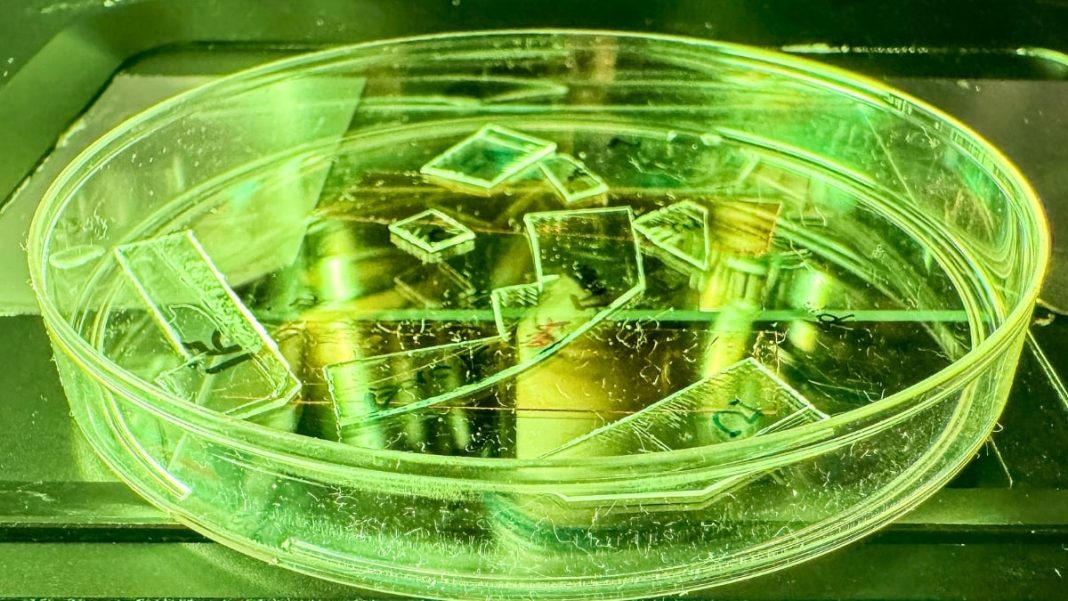
Imagine a world where the surfaces we touch every day actively fought back against microscopic threats, tearing viruses apart on contact. Sounds like something out of a futuristic movie, right? Well, scientists have just taken a monumental leap towards making that a tangible reality. A new, innovative plastic film has been developed that doesn’t just trap or neutralize viruses; it physically rips them to shreds.
This isn’t merely another antibacterial spray or a passive filter. This is a game-changing material designed to be an active, physical deterrent to viral pathogens. For years, we’ve relied on chemical disinfectants and the hope that people wash their hands, but what if the very materials around us could join the fight? This breakthrough could revolutionize how we think about cleanliness and infection control in public and private spaces alike.
The Genius Behind the Shredding
So, how exactly does a piece of plastic achieve such a dramatic feat? The magic lies in its ingenious design, specifically its surface architecture. Researchers have engineered this film with a unique topography at the nanoscale – think of it as a microscopic landscape of sharp, molecular blades or spikes. When a virus particle lands on this surface, its delicate outer membrane (the envelope) is stretched and pulled by these nano-structures until it simply ruptures, spilling its genetic contents and rendering it inert.
What makes this approach particularly fascinating is that it’s a purely mechanical process. Unlike chemical disinfectants that can lose efficacy over time or lead to resistance, this physical shredding mechanism is far more robust. Viruses can’t evolve resistance to being physically torn apart. It’s like trying to teach a balloon to resist a pin. This non-chemical strategy also means the film itself is likely safer for human contact, avoiding the potential for skin irritation or respiratory issues that some chemical agents might cause.
As one observer aptly put it, “It’s like having a microscopic battlefield on every surface. This isn’t just killing viruses; it’s physically dismantling them, which is incredibly elegant and hard for them to evolve against. It’s a completely different paradigm for antiviral protection.”
A Future of Antiviral Surfaces
The implications of such a technology are vast and incredibly exciting. Think about the high-traffic, high-touch surfaces that are breeding grounds for viruses: doorknobs, light switches, public transit railings, hospital beds, school desks, and even our own smartphone screens. Imagine these surfaces being coated or manufactured with this virus-ripping film. The potential to significantly reduce viral transmission in communal environments is staggering.
Beyond public health, this material could also find its way into everyday products. Packaging for food and medical supplies could become inherently safer. Personal protective equipment, like masks and gloves, could offer an unprecedented layer of active defense. The versatility of a plastic film means it can be applied to, or integrated into, a wide array of products and environments without drastically changing their form or function.
Beyond the Lab: The Road Ahead
While the initial findings are incredibly promising, the journey from lab breakthrough to widespread application involves further testing, scalability challenges, and regulatory approvals. However, the foundational science is sound, and the need for such innovation is clear. Developing durable, cost-effective methods for mass production will be crucial, but the scientific community is clearly enthusiastic about the potential impact.
This virus-shredding plastic film isn’t just a novel invention; it represents a paradigm shift in our fight against infectious diseases. By empowering surfaces themselves to act as proactive defenders, we move closer to a future where our environments are inherently safer, more resilient, and better equipped to protect public health. The thought of inanimate objects actively protecting us is no longer science fiction – it’s quickly becoming our reality.

