


The echoes of conflict often reverberate far beyond the immediate blast, leaving indelible marks on those who bear witness. In a poignant account that has gripped global attention, a Lebanese journalist has shared the heart-wrenching words of a colleague after an Israeli strike in southern Lebanon: “Don’t leave me.” This desperate plea, uttered amidst the chaos and devastation, offers a stark, human-centric glimpse into the perils faced by reporters striving to bring truth from the frontlines of one of the world’s most volatile regions.
The Tragic Aftermath of a Cross-Border Strike
The incident unfolded in early November in the border town of Yaroun, southern Lebanon, a region frequently witnessing exchanges of fire between Israeli forces and Hezbollah. Issam Abdallah, a photojournalist for Reuters, was among a group of journalists covering the escalating tensions. According to his colleague, Carmen Joukhadar, another reporter from Al Jazeera, their team was positioned at a safe distance, clearly identifiable as press, when a shell struck their location. Joukhadar’s recollection details Abdallah’s final moments, his plea a desperate cry for life and solidarity as he lay fatally wounded.
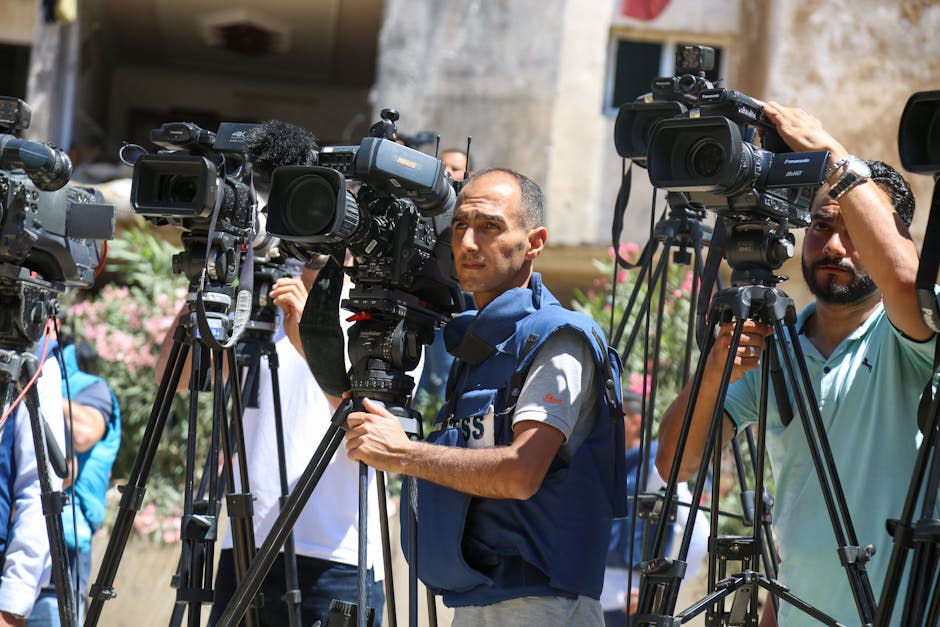
The strike resulted in the immediate death of Issam Abdallah and left several other journalists injured, some severely. Among the wounded were Christina Assi, a photojournalist for Agence France-Presse (AFP), and Dylan Collins, a video journalist also with AFP, alongside others from Al Jazeera. Their harrowing testimonies paint a picture of sudden violence and unimaginable loss, underscoring the extreme hazards inherent in reporting from active war zones. The journalists were equipped with protective gear clearly marked “PRESS,” a universal sign meant to ensure their safety under international law.
The immediate aftermath saw frantic efforts to provide aid to the wounded, amidst continued fear of further strikes. The accounts of survivors describe a scene of profound shock and grief, as colleagues grappled with the loss of Abdallah and the severe injuries sustained by others. This single incident serves as a grim reminder of the profound personal sacrifices made by those dedicated to informing the world about conflicts that often remain distant to many.
Journalism Under Fire: A Global Concern
The tragic events in southern Lebanon are not isolated; they are part of a deeply concerning pattern of journalists being targeted or caught in the crossfire in conflict zones worldwide. For nations like India, with its own vibrant and often challenging media landscape, such incidents resonate deeply. Indian journalists, who often report from sensitive areas domestically and internationally, understand the universal risks associated with truth-telling, and there is a shared global solidarity for the protection of press freedom.
Press freedom organizations globally have consistently highlighted the disproportionate risks faced by journalists covering conflicts, particularly in the Middle East. They stress that reporters, as non-combatants, must be protected under international humanitarian law. “Journalists are not a target. Their work is essential for transparency and holding power accountable, especially during times of conflict,” stated a spokesperson for a global press freedom watchdog, echoing calls for accountability and respect for journalistic immunity.
The incident involving Issam Abdallah further intensifies the debate around the responsibility of warring parties to ensure the safety of media personnel. Many argue that adequate measures are often not taken to distinguish between combatants and civilians, including journalists, leading to tragic and avoidable deaths. This creates a chilling effect, potentially stifling the flow of independent information from critical areas, leaving the public uninformed about the true human cost of conflict.
Calls for Accountability and Protection
Following the strike that killed Abdallah and wounded others, there has been a significant international outcry. Both Reuters and AFP, the news agencies employing the affected journalists, have called for thorough and transparent investigations into the incident. These calls are supported by numerous press freedom advocacy groups, human rights organizations, and international bodies, all demanding accountability for acts that endanger media workers.
The United Nations has reiterated the importance of protecting journalists and has urged all parties to the conflict to respect international humanitarian law. The incident underscores the urgent need for clearer protocols and stricter adherence to rules of engagement that explicitly safeguard journalists operating in conflict zones. Without such protections, the pursuit of truth becomes an increasingly perilous endeavor, diminishing the world’s ability to understand and respond to humanitarian crises.
The haunting words, “‘Don’t leave me’,” uttered in a moment of extreme vulnerability, stand as a powerful testament to the human cost of conflict and the immense courage of journalists. It’s a stark reminder that behind every news report from a war zone lies a person risking everything to tell the story. Ensuring their safety is not just about protecting individuals; it’s about safeguarding the public’s right to know and the very foundations of transparent global discourse.

