


Every year on May 9th, Russia commemorates
A Subdued Display of Might
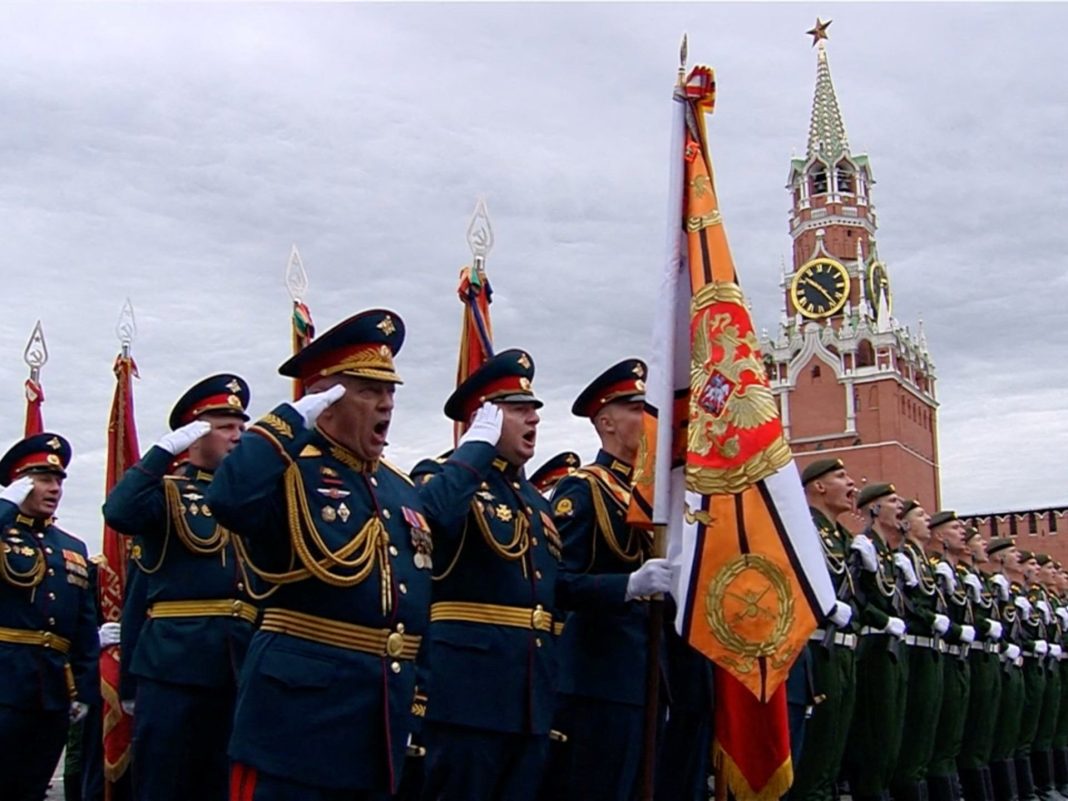
The 2024 Victory Day parade, while retaining its ceremonial essence, was notably pared back compared to the extravagant displays of previous years. Observers noted a considerably smaller contingent of troops marching across the cobblestones of Red Square. The parade featured fewer modern military vehicles and, conspicuously, lacked the traditional aerial flypast by military aircraft, a segment that has historically been a crowd favourite and a powerful demonstration of air superiority. Instead, the ground procession was led, as always, by the venerable T-34 tank, a symbol of Soviet resilience and wartime heroism, followed by a limited selection of contemporary armored vehicles.
President Vladimir Putin presided over the event, delivering a speech that underscored themes of patriotism, historical memory, and the defence of the motherland. He drew parallels between the challenges faced by Russia today and the existential struggle of World War II, reiterating the narrative of a nation defending its sovereignty and historical truth against perceived external threats. Despite the reduced scale of the parade, the symbolic weight of Victory Day remained undiminished for many Russians, serving as a powerful reminder of national sacrifice and collective identity.
The downscaling extended beyond Moscow, with numerous regional Victory Day parades across Russia either significantly curtailed or cancelled outright. This widespread reduction hinted at a coordinated decision driven by factors beyond mere logistics, painting a picture of a nation grappling with the practical implications of its current geopolitical standing.
Shadows of Conflict and Security Concerns
The primary reasons behind the downsized parade are multifaceted, directly linked to Russia’s ongoing military campaign in Ukraine and an escalating domestic security environment. One evident factor is the diversion of military resources and personnel to the front lines. With significant portions of Russia’s armed forces engaged in active combat, deploying large numbers of troops and state-of-the-art equipment for ceremonial purposes might have been deemed imprudent or impractical.
Equally critical are the heightened security concerns gripping the nation. Recent months have seen an increase in drone attacks and sabotage attempts deep within Russian territory, including incidents targeting sensitive locations. The risk of such events disrupting a high-profile public gathering like the Victory Day parade, especially with President Putin in attendance, would have been a significant consideration. Cancelling the aerial display, for instance, could be a direct response to airspace security worries, preventing potential targets or mitigating risks associated with complex aerial manoeuvres over a densely populated area.
This pragmatic approach to security and resource allocation offers a stark contrast to previous parades, which often served as powerful demonstrations of Russia’s growing military prowess. The subdued nature of this year’s event thus communicates a different message: one of a nation prioritizing operational readiness and internal security over outward displays of grand military might.
“We reject the claims of any country or bloc to exceptionalism, we know that any ideology of superiority is criminal,” President Putin stated during his Victory Day address, emphasizing the historical lessons and contemporary relevance for Russia’s global posture. This quote underscores the nation’s historical narrative and its current defence of what it perceives as its sovereign interests against hegemonic claims.
Global Gaze and Implications
From an Indian perspective, the developments surrounding Russia’s Victory Day parade are observed through a lens of historical friendship and contemporary strategic alignment. India, maintaining a nuanced foreign policy, watches such events closely, understanding their implications for global stability and power dynamics. The downsized parade, while primarily an internal Russian affair, sends subtle signals about the nation’s strategic focus and its allocation of resources. It reflects a nation under significant international scrutiny and engaged in a protracted conflict, adapting its traditions to suit current realities.
For the wider international community, the subdued parade could be interpreted in various ways: as a sign of the strains imposed by the Ukraine conflict, a pragmatic response to security threats, or a strategic recalibration of Russia’s public image. Regardless of interpretation, it offers valuable insight into Russia’s current priorities and the evolving landscape of its national defence and foreign policy.
In conclusion, Russia’s downsized Victory Day parade serves as a poignant illustration of tradition meeting contemporary challenges. While the spirit of remembrance and national pride remains central, the practicalities of an ongoing conflict and enhanced security requirements have reshaped one of Russia’s most significant national holidays. It highlights a nation adapting its ceremonial displays to reflect its current geopolitical realities, watched closely by a world seeking to understand the trajectory of a major global power.

