


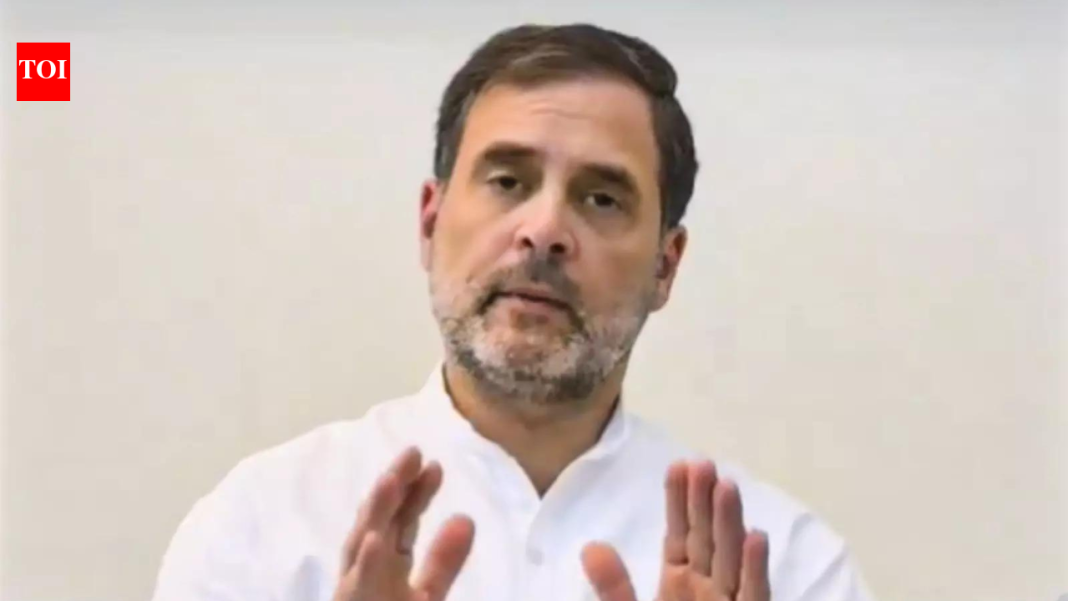
In a significant escalation of political rhetoric surrounding India’s foreign policy and economic diplomacy, Congress leader Rahul Gandhi has launched a fresh, stinging critique against Prime Minister Narendra Modi. Gandhi’s latest broadside directly links the perceived stagnation in the much-anticipated India-US trade deal to what he terms a “compromised Prime Minister,” igniting a fresh debate on the transparency and effectiveness of the government’s international negotiations.
The “Compromised PM” Allegation and Stalled Trade Talks
Rahul Gandhi’s recent comments have reopened a sensitive chapter in India-US relations and domestic politics. Addressing a gathering, Gandhi reportedly alleged that the Prime Minister’s personal integrity or past actions might be hindering India’s ability to secure a favourable trade agreement with the United States. This assertion is not merely a critique of negotiation tactics but a direct challenge to the Prime Minister’s stature on the global stage. Gandhi was quoted stating, “The Prime Minister is compromised. He cannot stand up to the US because of certain issues… that is why the India-US trade deal is stalled.” This powerful accusation suggests a deeper, underlying reason for the prolonged impasse beyond conventional trade disagreements.
The India-US trade deal has been a subject of intense discussion and anticipation for several years. Both nations, strategic partners with growing bilateral ties, have expressed a desire to boost trade beyond current levels, which stood at over $191 billion in goods and services in 2022-23. However, negotiations have frequently encountered roadblocks over issues such as market access for agricultural products, tariffs on industrial goods, intellectual property rights, and data localisation policies. Despite multiple high-level visits and numerous rounds of talks, a comprehensive free trade agreement or a significant mini-deal has remained elusive.
Gandhi’s intervention injects a new, more personal dimension into this ongoing diplomatic challenge. By asserting that the Prime Minister is “compromised,” the opposition leader aims to shift the narrative from mere policy differences to a perceived moral or ethical vulnerability at the highest level of government. This not only puts pressure on the government to clarify its stance on the trade deal but also demands a response to the serious personal insinuation.
Balancing National Interests Amidst Geopolitical Dynamics
The government, led by Prime Minister Modi, has consistently maintained that its foreign policy and economic negotiations are guided solely by India’s national interest. In the context of trade, this often translates into protecting domestic industries, ensuring fair market access for Indian goods, and safeguarding the livelihoods of farmers and small businesses. Securing a trade deal with a major economic power like the US involves complex deliberations, where both sides strive to maximise their gains while minimising concessions.
While the government has not directly responded to Gandhi’s specific “compromised PM” accusation in detail regarding the trade deal, officials have often underscored the intricate nature of international trade negotiations. The Ministry of Commerce and Industry has frequently reiterated India’s commitment to robust and mutually beneficial trade relations globally, including with the US, but always with an emphasis on terms that serve India’s developmental goals. The broader India-US relationship extends far beyond trade, encompassing crucial strategic, defence, and technological cooperation, making the stakes for a balanced relationship incredibly high.
From the government’s perspective, delays in reaching a comprehensive trade agreement often stem from the inherent complexities of reconciling the divergent interests of two large, diverse economies, rather than any individual’s alleged compromise. Addressing concerns of various domestic sectors, from pharmaceuticals to agriculture, while navigating the demands of a global economic superpower like the US, requires meticulous negotiation and a steadfast commitment to national priorities. Political observers suggest that such a direct personal attack from the opposition could be an attempt to cast shadows on the government’s overall foreign policy credibility, particularly as national elections draw closer.
Conclusion
Rahul Gandhi’s latest “compromised PM” jab over the India-US trade deal underscores the intensifying political battle lines in India. It elevates the discussion from policy disagreements to a direct challenge to the Prime Minister’s integrity and effectiveness on the global stage. As the government continues its diplomatic efforts to navigate complex international relations, it now faces the added pressure of countering a pointed narrative questioning its foundational principles. The outcome of the India-US trade negotiations, whenever it materialises, will undoubtedly be scrutinised not just for its economic benefits, but also through the lens of this potent political accusation.
—

