


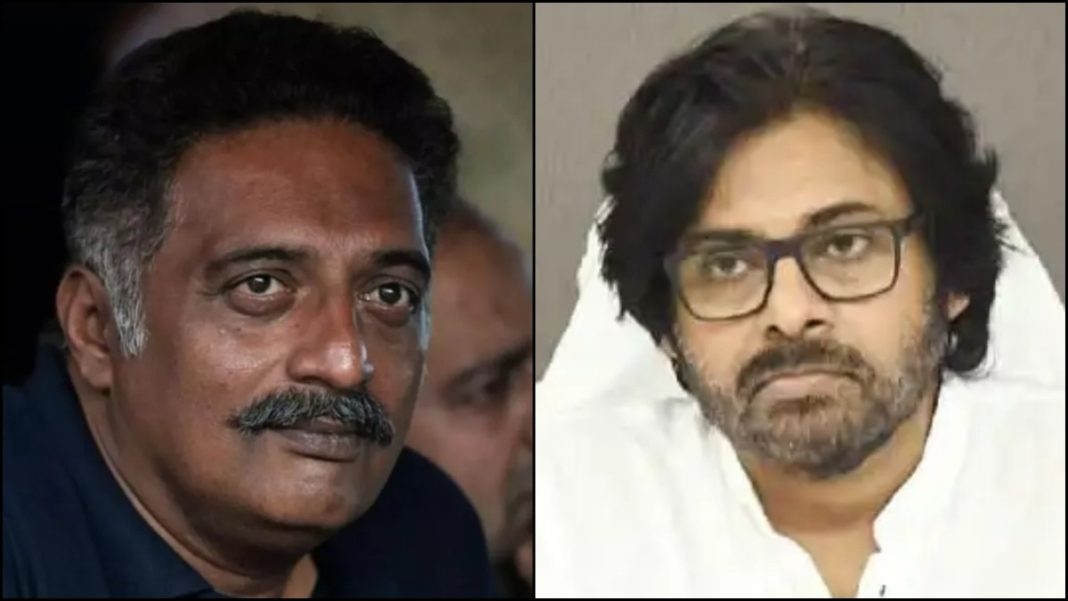
Recent political discourse in India has seen a sharp exchange between prominent actor-politicians Prakash Raj and Pawan Kalyan, stemming from Kalyan’s remarks on the Women’s Reservation Bill. The controversy intensified when Prakash Raj directly challenged Kalyan to a public debate, inviting scrutiny into differing perspectives on women’s political representation and the responsibilities of public figures in shaping societal dialogue. This spat highlights the heated intersection of celebrity, politics, and social legislation.
The Nari Shakti Vandan Adhiniyam and Pawan Kalyan’s Stance
The Indian Parliament recently passed the Nari Shakti Vandan Adhiniyam, popularly known as the Women’s Reservation Bill, a landmark legislation aiming to reserve one-third of seats for women in the Lok Sabha and state legislative assemblies. While the bill largely received widespread support, Jana Sena Party chief and actor Pawan Kalyan’s comments on its implications sparked considerable debate. During a public address, Kalyan reportedly expressed concerns that empowering women politically without adequate social guidance could lead them “astray” or cause them to “lose their way.”
These remarks, interpreted by many as patriarchal and dismissive of women’s agency, drew immediate criticism. Critics argued such statements undermined the spirit of the bill, which seeks to provide women with greater autonomy and a stronger voice in governance. The controversy underscored persistent challenges in achieving true gender parity in Indian politics, setting the stage for a strong rebuttal.
Prakash Raj’s Fiery Rebuttal and Debate Challenge
Veteran actor and vocal critic of right-wing politics, Prakash Raj, was quick to respond to Pawan Kalyan’s controversial remarks. Known for his often-unfiltered political commentary, Raj condemned Kalyan’s statements, describing them as regressive and disrespectful to women. He argued such an outlook perpetuated harmful stereotypes and undermined women’s capability to lead and make independent decisions in politics. Raj emphasized women are perfectly capable of navigating political landscapes without paternalistic oversight. Escalating his criticism, Prakash Raj issued a direct challenge to Pawan Kalyan for a public debate on the matter.
“Pawan Kalyan, your comments on women’s political empowerment and the Nari Shakti Vandan Adhiniyam are deeply disturbing and reflect a regressive mindset. I challenge you to a public debate, anywhere, anytime, on any platform – television, social media, or a public forum. Let’s discuss your concerns about women ‘going astray’ and my belief in their strength and autonomy. This isn’t about personal attacks, but about the future of women in our democracy. Are you ready to face the truth?”
Raj’s challenge instantly gained traction across media. His demand for an open discussion aimed to highlight broader philosophical differences concerning women’s roles and rights in contemporary Indian society.
Broader Implications and the Political Theatre
This public feud between Prakash Raj and Pawan Kalyan reflects deeper ideological rifts within India’s political landscape, especially where both actors hold considerable influence. Prakash Raj, often seen as a secular-progressive voice, consistently critiques what he perceives as divisive or patriarchal politics. Pawan Kalyan, on the other hand, leads a regional party, attempting to carve a distinct political identity, sometimes straddling conservative and reformist positions.
The debate around the Women’s Reservation Bill, and Kalyan’s comments, taps into fundamental questions about gender equality, autonomy, and representation. Such exchanges between high-profile individuals often galvanize public opinion and force closer examination of political rhetoric. As India moves towards greater inclusivity, this challenge underscores the ongoing struggle to dismantle traditional biases and foster an equitable political environment. The public awaits to see if Pawan Kalyan will accept Prakash Raj’s challenge.
The verbal confrontation between Prakash Raj and Pawan Kalyan over Women’s Reservation Bill comments has brought critical discussions about gender, power, and political discourse to the forefront. Prakash Raj’s direct challenge for a debate has intensified the spotlight on Pawan Kalyan’s statements, framing the exchange as a battle of ideologies concerning women’s roles in democracy. Regardless of a debate, this incident highlights the significant role public figures play in shaping narratives around crucial legislative reforms and societal values in India. The unfolding situation continues to be closely watched, underscoring the dynamic and often contentious nature of Indian politics.

