


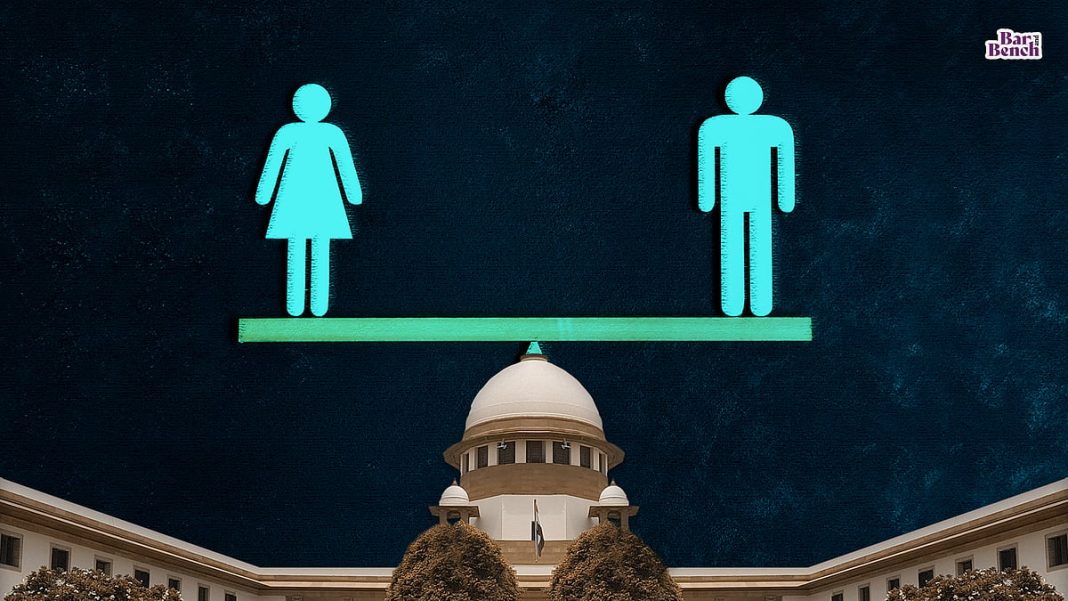
In a significant move towards redefining familial ties and promoting gender equality within the Indian context, the Supreme Court has unequivocally affirmed that a daughter does not sever her connection with her parental family upon marriage. This landmark judgment holds profound implications, particularly for cases involving compassionate appointments, challenging long-standing patriarchal norms that often excluded married daughters from such benefits. The ruling underscores the constitutional mandate for non-discrimination, ensuring that familial responsibilities and rights are not extinguished by marital status.
The Traditional Stance Challenged by Legal Precedent
For decades, the eligibility of married daughters for compassionate appointments after the demise of a government employee parent has been a contentious issue. Many state government policies and High Court judgments previously denied such benefits, operating under the premise that a married daughter becomes part of her husband’s family, thereby losing her dependency on or connection to her paternal household. Compassionate appointments are designed to provide immediate relief and succour to the family of a deceased employee who dies in harness, mitigating the financial hardship caused by the sudden loss of income. However, the traditional interpretation often created an artificial distinction, excluding married daughters while allowing married sons to be eligible.
This exclusionary practice frequently led to legal battles, with aggrieved daughters seeking justice against rules perceived as discriminatory. While some High Courts had begun to lean towards more inclusive interpretations, a uniform stance was often lacking, leaving room for varied applications across different states and departments. The core of these challenges revolved around the fundamental question: does marriage truly negate a daughter’s inherent bond and potential dependency on her birth family, especially in times of crisis?
Reaffirming Familial Bonds: The Supreme Court’s Rationale
The Supreme Court, addressing this critical legal lacuna, delivered a judgment that firmly rejected the notion of a married daughter being a ‘stranger’ to her parental home. The Court emphasised that the purpose of compassionate appointment is to tide over immediate financial distress experienced by the family, and a daughter, irrespective of her marital status, remains an integral part of that family. To exclude her solely based on marriage would be a violation of constitutional principles of equality and non-discrimination.
The bench highlighted that a daughter’s marriage does not diminish her moral or emotional ties, nor does it necessarily negate her financial dependency or the reciprocal duty to support her parents in their old age or after their demise. The Court observed that family relationships extend beyond mere legal definitions and are rooted in social and emotional bonds. “The Court unequivocally stated, ‘a daughter, after marriage, does not cease to be a part of the family of her father or mother. Compassionate appointment is not a vested right but a concession to provide succour to the family which loses its breadwinner’,” signifying a paradigm shift in legal interpretation.
This ruling reinforces the idea that an artificial distinction between married and unmarried daughters, or between sons and daughters, in the context of compassionate appointment is discriminatory and arbitrary. It aligns with the progressive interpretations of gender equality enshrined in the Indian Constitution, moving away from archaic societal norms that once dictated women’s roles and family affiliations primarily through their marital status.
Broader Implications for Indian Society
The Supreme Court’s decision is far more than just a directive on compassionate appointments; it is a powerful statement on gender equality and the evolving definition of family in modern India. It challenges deeply entrenched patriarchal perspectives that traditionally viewed a daughter as “paraya dhan” (another’s property) who leaves her paternal home permanently after marriage. This ruling affirms her enduring connection, responsibilities, and rights within her birth family.
Beyond government jobs, this judgment sets a crucial precedent that could influence various other legal and social aspects where a married daughter’s ties to her paternal family might be questioned, such as inheritance, property rights, or even caregiving responsibilities. It encourages a societal shift towards recognising daughters as permanent members of their families, capable of both receiving and providing support, regardless of their marital status. This progressive step by the highest court reflects a growing national consciousness towards dismantling gender-based discrimination and fostering a more equitable society where every individual’s familial bonds are respected and legally protected.
In essence, the Supreme Court has sent a clear message: the bond between a daughter and her family is indissoluble, cemented not just by blood but by love, duty, and shared history, a bond that marriage only expands, never breaks.

