


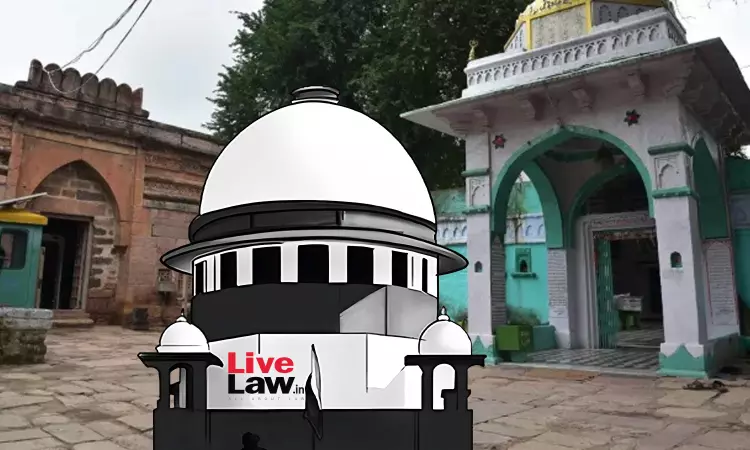
In a significant development echoing long-standing historical and legal debates across India, a prominent Muslim party has formally approached the Supreme Court, challenging a High Court order that declared a disputed religious site a temple. The High Court’s verdict, which had been celebrated by one community and viewed with apprehension by another, now faces its ultimate test before the apex judicial body of the nation.
The appeal marks a crucial juncture in a case that has captivated national attention, underscoring the complexities inherent in adjudicating matters deeply intertwined with faith, history, and communal harmony. The Supreme Court’s decision to admit or hear this plea could set important precedents for similar disputes dotting India’s diverse religious landscape.
High Court’s Landmark Ruling and its Basis
The High Court’s recent judgment had largely sided with the petitioners asserting the site’s identity as an ancient temple. Its comprehensive ruling was reportedly based on an extensive examination of historical records, archaeological findings, and interpretations of religious practices. Sources close to the proceedings indicated that the High Court considered evidence from expert commissions, including reports potentially outlining architectural features consistent with temple structures found beneath or within the existing edifice.
This ruling had generated a strong reaction, with proponents of the temple claim hailing it as a vindication of their long-held beliefs and historical narratives. They argued that the verdict corrected a historical wrong, affirming the continuous spiritual significance of the site for Hindu worshippers. However, the Muslim party contesting the site’s character immediately expressed profound disappointment, vowing to pursue all available legal avenues to challenge what they described as a misinterpretation of historical facts and legal provisions.
Challenging the Verdict: Arguments Before the Supreme Court
The Muslim party’s petition to the Supreme Court reportedly outlines several key grounds for appeal. Central to their argument is the assertion that the High Court’s interpretation of historical and archaeological evidence was flawed. They contend that the evidence presented does not definitively establish the site as a pre-existing temple, or that the present structure has always retained its character as a mosque.
Furthermore, the petitioners are expected to invoke the Places of Worship (Special Provisions) Act, 1991, which mandates that the religious character of a place of worship existing on August 15, 1947, shall remain as it was on that day. They argue that the High Court’s ruling potentially contravenes the spirit and letter of this Act, which was enacted to prevent future disputes over historical religious sites and maintain communal peace.
A spokesperson for the petitioner, speaking on condition of anonymity, stated, “Our appeal is not merely about a piece of land; it is about upholding constitutional principles, legal precedents, and ensuring that history is interpreted fairly, without prejudice. We have faith in the Supreme Court’s ability to carefully examine the High Court’s judgment and deliver justice.” This sentiment underscores the profound implications of the case, extending beyond the immediate dispute to broader questions of legal interpretation and historical reconciliation.
Legal Precedents and the Path Forward
The Supreme Court’s engagement with this appeal carries immense weight, given the deeply sensitive nature of religious site disputes in India. While the Ayodhya verdict provided a unique resolution to a decades-long conflict, it also highlighted the complexities involved in such cases. The current appeal is expected to draw scrutiny not only on the specific evidence presented but also on the legal frameworks governing religious property disputes, particularly the 1991 Act.
Should the Supreme Court admit the plea, it will likely constitute a special bench to hear the arguments. The proceedings could involve detailed examinations of archaeological reports, historical documents, and testimonies. The outcome will be watched closely by legal scholars, religious communities, and the public alike, as it could shape how similar contentious sites are viewed and adjudicated in the future. The judiciary’s role in navigating these emotionally charged issues is critical for maintaining social harmony and upholding the rule of law in a diverse nation.
As the legal battle moves to its highest forum, the focus remains on the Supreme Court’s meticulous examination of facts and law. The decision will not only determine the fate of a disputed site but also reinforce the judiciary’s pivotal role in safeguarding constitutional values amidst deeply held beliefs and historical narratives.

