


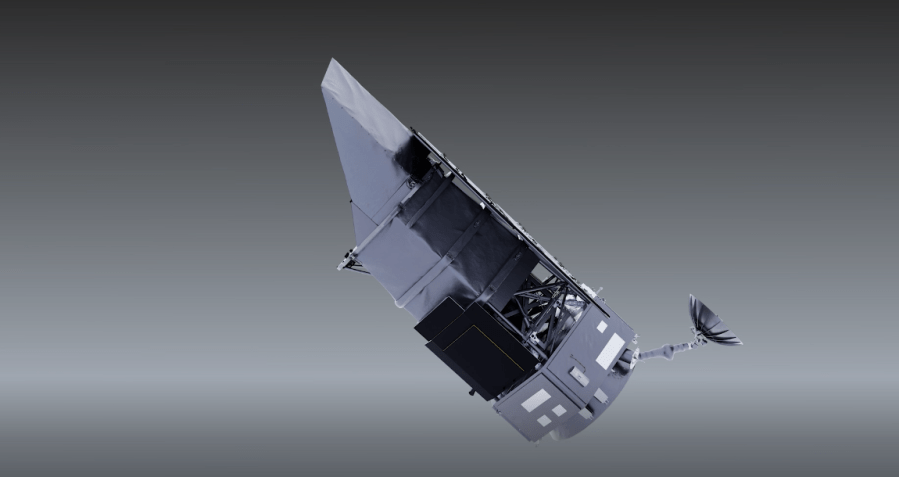
The cosmos has always held an irresistible allure, a vast tapestry of stars, nebulae, and galaxies that continuously challenges our understanding of existence. Humanity’s relentless quest to peer deeper into this grand expanse is on the cusp of a revolutionary leap. NASA, the venerable American space agency, has offered a tantalising sneak peek at its upcoming space telescope, an observatory poised to redefine our cosmic perspective. With a September launch on the horizon, the scientific community, including a vibrant network of Indian researchers, is buzzing with anticipation over an instrument capable of truly unprecedented observations.
This new eye on the universe promises not just sharper images but an astonishing breadth of vision. As one NASA official enthusiastically put it during the preview, “‘We are capturing millions of galaxies in a single image.’” This statement encapsulates the profound capability of the telescope, moving beyond the deep, narrow fields of its predecessors to embrace a wide-angle view of the universe, promising a deluge of data that will likely fuel discovery for decades.
A Grand New Perspective: Millions of Galaxies Unveiled
For decades, instruments like the Hubble Space Telescope have delivered iconic images, revealing the intricate beauty of distant galaxies and the birth of stars. More recently, the James Webb Space Telescope has pushed the boundaries of infrared astronomy, peering through cosmic dust to capture the earliest light from the universe. NASA’s latest venture, however, carves out its unique niche with a focus on expansive, wide-field imaging, combining high resolution with an extraordinary field of view.
Unlike telescopes designed to zoom into a single, specific patch of sky, this new observatory is engineered to survey vast swathes of the cosmos with remarkable efficiency. Imagine an instrument that can simultaneously observe an area of sky significantly larger than that captured by previous telescopes, all while maintaining exquisite detail. This capability is critical for unlocking some of the universe’s most profound mysteries. Scientists aim to map the distribution of galaxies across cosmic time, trace the expansion of the universe more accurately, and probe the enigmatic nature of dark energy and dark matter – the invisible components that make up the vast majority of our universe. Furthermore, its wide gaze will be instrumental in discovering thousands of exoplanets through gravitational microlensing, offering statistical insights into planetary systems beyond our own.
The sheer volume of data expected from this mission is staggering, presenting both a challenge and an immense opportunity for astronomers globally. It is a testament to advanced optics, sensor technology, and cutting-edge data processing that such an ambitious project is becoming a reality.
India’s Growing Stake in Cosmic Exploration
The excitement surrounding NASA’s new telescope resonates strongly within India’s burgeoning space and astronomy communities. India itself has made significant strides in space exploration, with ISRO (Indian Space Research Organisation) establishing itself as a global player through missions like Chandrayaan and Mangalyaan. India’s multi-wavelength space observatory, AstroSat, launched in 2015, continues to contribute valuable data to global astronomical research, demonstrating the nation’s growing scientific prowess.
The data from NASA’s upcoming wide-field telescope will be a goldmine for Indian astrophysicists and researchers. Access to such high-fidelity, large-scale astronomical datasets fosters international collaboration, allowing Indian scientists to contribute to groundbreaking discoveries. Researchers at institutions like the Indian Institute of Astrophysics (IIA) and the Inter-University Centre for Astronomy and Astrophysics (IUCAA) will undoubtedly leverage this influx of information for their studies on galaxy formation, cosmology, and exoplanetary science. The potential for joint research papers, shared expertise, and participation in global scientific consortia is immense, further elevating India’s position in the global scientific landscape.
Moreover, missions of this calibre inspire the next generation. For young minds in India, witnessing such advancements in space technology and discovery can ignite a passion for science, technology, engineering, and mathematics (STEM). It underscores the universal nature of scientific inquiry and how curiosity knows no geographical bounds, inviting students to dream big and potentially contribute to future space missions, whether through ISRO or international collaborations.
Charting the Unseen: A Future of Discovery
As the September launch date draws closer, the anticipation for NASA’s new space telescope builds. Its promise to capture millions of galaxies in a single image is not merely a technical feat; it represents a profound expansion of our cosmic vision. This mission is poised to deliver a panoramic view of the universe, uncovering details about its structure, evolution, and the fundamental forces that govern it.
The discoveries emanating from this observatory will not only reshape our scientific models but also deeply influence humanity’s collective understanding of its place in the vast, expanding universe. For India, a nation with a rich heritage of astronomy and a rapidly advancing space programme, this new window into the cosmos offers unparalleled opportunities for scientific contribution, collaboration, and inspiration, cementing its role in the global pursuit of knowledge.

