


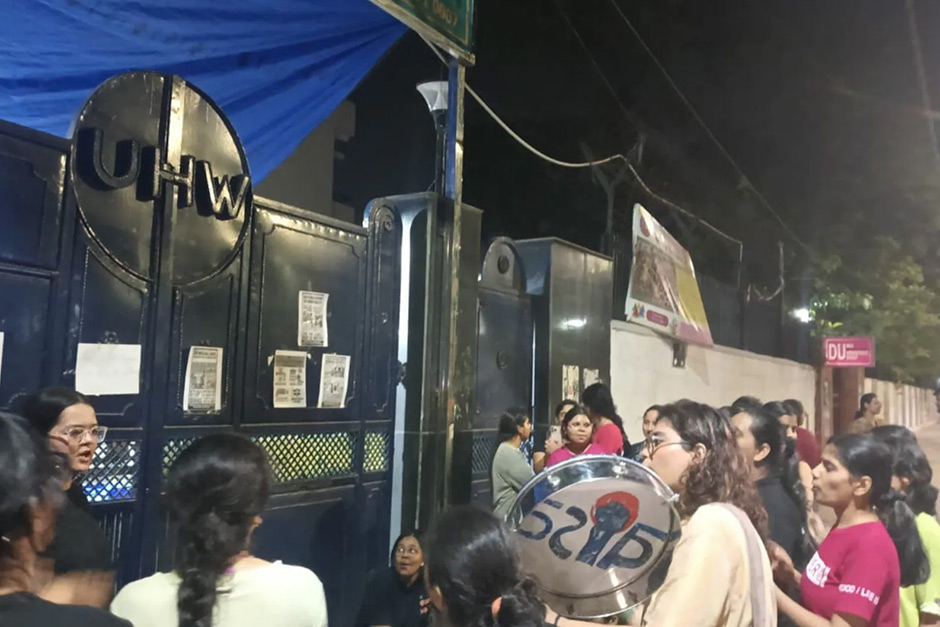
The quietude of a Delhi University (DU) night was recently shattered not by academic pursuits, but by the determined chants of women hostel residents. In an incident that has drawn significant attention, students from a private women’s hostel located near the university’s North Campus staged a midnight protest, alleging “forced eviction” and “extortion” by the hostel management. The spontaneous demonstration, unfolding under the cover of darkness, highlighted the often-precarious situation faced by students relying on private accommodations in the bustling metropolis.
The protest, which began late at night and continued into the early hours, saw dozens of female students gather outside their hostel premises, holding placards and raising slogans against what they described as arbitrary and unfair practices. Their collective voice, resonating through the usually quiet residential lanes, painted a grim picture of uncertainty and financial pressure. The incident has not only put the spotlight on the immediate grievances of these students but also sparked a broader conversation about the regulation and oversight of private student housing in the national capital.
The Midnight Uprising and Allegations of Forced Eviction
The catalyst for the midnight protest was an alleged sudden demand by the hostel management for residents to vacate their rooms, coupled with claims of refusal to refund security deposits and demands for additional, unexplained charges. According to several students, they were given little to no prior notice to leave, creating an environment of panic and distress, especially for those who hail from different cities and states.
“We woke up to notices and verbal threats of being thrown out if we didn’t comply,” stated one protesting resident, requesting anonymity due to fear of repercussions. “Many of us have exams approaching, and suddenly being told to find new accommodation with no refund of our deposits is completely unethical and puts immense mental pressure on us.” The students allege that the management’s actions constituted a clear breach of their tenancy agreements, which typically outline a notice period for vacating the premises. The lack of transparency regarding the reasons for this abrupt directive further fueled their frustration, leading them to take to the streets in search of immediate redressal.
The protest involved continuous chanting of slogans like “We want justice!” and “No eviction without notice!”, capturing the urgency and desperation of their situation. Posters hand-written with grievances such as ‘Stop Forced Eviction’ and ‘Return Our Deposits’ adorned the hostel gates, making their demands unequivocally clear to passers-by and local authorities.
Allegations of Extortion and Unfair Financial Demands
Beyond the immediate threat of eviction, a significant part of the students’ protest centered on allegations of financial impropriety. Residents claimed that the hostel management was demanding additional “maintenance charges” or “upgradation fees” that were not part of their initial contractual agreements. Furthermore, many expressed concerns that their substantial security deposits, often amounting to tens of thousands of rupees, would not be returned if they vacated the premises under duress.
The issue of refundable security deposits is a recurring point of contention in private rental accommodations across Indian cities. Students often rely on these deposits for their next accommodation or other essential expenses, making their non-refund a significant financial blow. The protesting students highlighted that these alleged demands for extra payments, combined with the threat of withholding deposits, amounted to a form of extortion, exploiting their vulnerable position as out-of-station students dependent on private housing near the university.
One student, who has been staying at the hostel for over a year, remarked, “When we questioned the new charges, we were simply told to pay up or leave. There’s no written explanation, no clarity. It feels like we are being extorted because we have nowhere else to go quickly.” This statement underscores the power imbalance often present between private hostel managements and their student residents, many of whom lack adequate legal knowledge or resources to challenge such demands effectively.
The Broader Picture: Student Welfare and Regulatory Gaps
The incident at the DU women’s hostel is not an isolated one. Complaints regarding the quality, safety, and financial practices of private student accommodations have surfaced frequently in Delhi and other major Indian cities. The surge in students seeking higher education often outstrips the capacity of university-provided hostels, pushing a large number into the unregulated private sector.
This situation often leaves students susceptible to unfair practices, arbitrary rule changes, and inadequate grievance redressal mechanisms. The absence of a robust regulatory framework specifically for private student hostels allows some establishments to operate with minimal oversight, sometimes at the expense of student welfare. While Delhi University does have guidelines for affiliated colleges and their hostels, the reach of these guidelines often does not extend effectively to independent private accommodations that cater to DU students.
The midnight protest serves as a stark reminder of the urgent need for greater transparency, stronger contractual protections, and an accessible, efficient grievance redressal system for students in private housing. As students continue to flock to educational hubs, ensuring their safety, fair treatment, and mental well-being in their accommodations must become a priority for local administrations and educational institutions alike. A thorough investigation into the allegations made by the DU women’s hostel residents is imperative to provide justice to the students and prevent similar incidents in the future.
Conclusion: The midnight protest by DU women’s hostel residents over alleged forced eviction and extortion is a serious matter that calls for immediate attention. It highlights the systemic issues faced by students in private accommodations, emphasizing the critical need for clearer regulations, fair practices, and robust oversight mechanisms. As the university and city authorities assess the situation, the demands of these students for justice and respectful treatment underscore a broader imperative to safeguard the welfare of all students pursuing their education away from home.

