


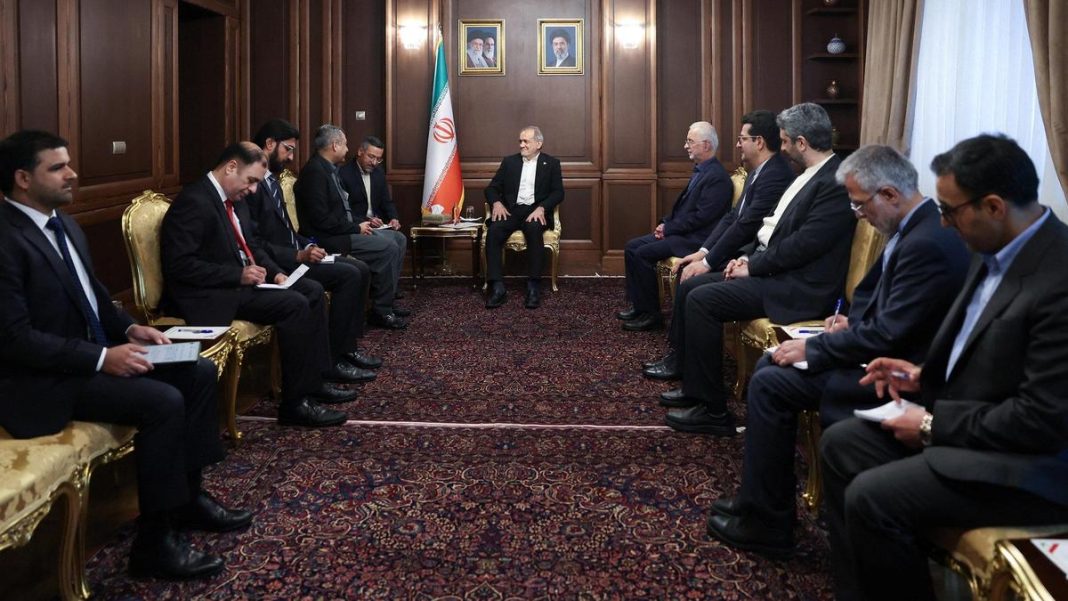
The intricate dance around the revival of the 2015 Iran nuclear deal, formally known as the Joint Comprehensive Plan of Action (JCPOA), has seen a renewed flicker of hope. In a significant diplomatic development, Iran has reportedly submitted a fresh proposal to the European Union, the primary coordinator in these protracted negotiations. Concurrently, reports indicate that the United States is open to the prospect of sanctions relief, provided Tehran demonstrates a genuine willingness to roll back its advanced nuclear activities and adhere to the original terms of the agreement. For a nation like India, deeply invested in regional stability and global energy dynamics, these developments carry substantial weight, potentially reshaping geopolitical equations and economic pathways.
Renewed Diplomacy Amidst Lingering Distrust
The current diplomatic overture follows a period of intense deadlock and mutual distrust that has plagued efforts to restore the JCPOA. The original deal, which offered Iran sanctions relief in exchange for curbs on its nuclear program, effectively collapsed after the U.S. unilaterally withdrew in 2018 under the Trump administration and reimposed crippling sanctions. In response, Tehran progressively scaled back its commitments, enriching uranium to higher purities and installing advanced centrifuges, drawing alarm from Western powers and the IAEA.
Iran’s “new proposal,” though specifics remain largely undisclosed to the public, is understood to be an attempt to bridge the remaining gaps that have stalled previous rounds of indirect talks in Vienna and other locations. These gaps primarily revolve around the sequencing of sanctions relief versus nuclear concessions, the scope of guarantees that future U.S. administrations will not abandon the deal again, and the resolution of inspections-related issues with the International Atomic Energy Agency (IAEA). The European Union, particularly its foreign policy chief, Josep Borrell, has been instrumental in facilitating these communications, acting as a crucial intermediary between Washington and Tehran, who do not directly negotiate.
This latest move suggests a potential softening of stances, indicating that both sides might be feeling the pressure to find a resolution. For Iran, prolonged sanctions continue to cripple its economy, despite efforts to diversify and find new markets. For the U.S. and its allies, the escalating pace of Iran’s nuclear program presents a grave non-proliferation concern, making a diplomatic solution preferable to other, more confrontational options.
The Contours of Sanctions Relief and U.S. Conditions
The U.S. administration’s stated openness to sanctions relief is a critical component of any potential breakthrough. However, this is far from an unconditional offer. Washington has consistently maintained that any relief would be directly tied to Iran’s verifiable return to full compliance with the JCPOA. This would entail dismantling or removing advanced centrifuges, reducing its uranium stockpile and enrichment levels, and allowing greater IAEA oversight and monitoring.
The sanctions in question are multifaceted, targeting Iran’s oil exports, banking sector, and various industries. Easing these would significantly impact Iran’s ability to trade on the international market, access global financial systems, and revive its energy sector. However, the U.S. administration is also under immense domestic political pressure, with strong bipartisan skepticism about the nuclear deal and Iran’s intentions. Any perceived weakness in negotiations or concessions without concrete, verifiable actions from Tehran would likely face stiff opposition in Washington.
“The ball is firmly in both Tehran and Washington’s court,” notes Dr. Alok Kumar, a geopolitical analyst based in New Delhi. “While the ‘new proposal’ signifies a willingness from Iran, the devil will be in the details of the concessions offered and the U.S.’s reciprocal steps on sanctions relief. This is a fragile but critical moment for the JCPOA, demanding genuine flexibility from all parties.” The intricate legal and technical aspects of unwinding sanctions and verifying nuclear compliance mean that even if political will exists, the implementation phase would be complex and time-consuming.
India’s Strategic Stake and Economic Implications
For India, the potential revival of the JCPOA and the easing of sanctions on Iran carry profound strategic and economic implications. Historically, Iran has been a significant oil supplier to India, and sanctions forced India to drastically reduce or halt these imports, seeking alternative sources and impacting its energy security. A restoration of Iranian oil to global markets could lead to increased supply, potentially stabilizing or even lowering crude oil prices, a welcome prospect for India, which imports over 80% of its oil needs.
Beyond energy, India has significant geopolitical interests in Iran, particularly concerning the Chabahar Port. This port, developed by India on Iran’s southeastern coast, is a vital component of India’s vision for an alternative trade route to Afghanistan and Central Asia, bypassing Pakistan. U.S. sanctions have often complicated the full operationalization and expansion of Chabahar, despite specific waivers for the port’s humanitarian aspects. Easing sanctions would unlock the port’s full potential, bolstering regional connectivity and trade, and strengthening India’s strategic footprint.
Moreover, a de-escalation of tensions in the Middle East, fueled by the nuclear issue, is always beneficial for India. The region is home to millions of Indian expatriates whose remittances are crucial for the Indian economy. Regional stability ensures their safety and continued contribution, while also safeguarding critical shipping lanes through which a substantial portion of India’s trade passes. As negotiations proceed, India will be watching closely, hoping for an outcome that promotes peace, stability, and economic opportunity in a critical neighborhood.
The path to fully reinstating the JCPOA remains fraught with challenges, trust deficits, and complex technical issues. However, the latest diplomatic exchanges signal a renewed, albeit cautious, commitment from both Iran and the U.S. to find a resolution. For the global community, and especially for nations like India, the stakes are high, with the potential for either a significant step towards regional peace and economic stability or a return to heightened tensions and uncertainty.

