


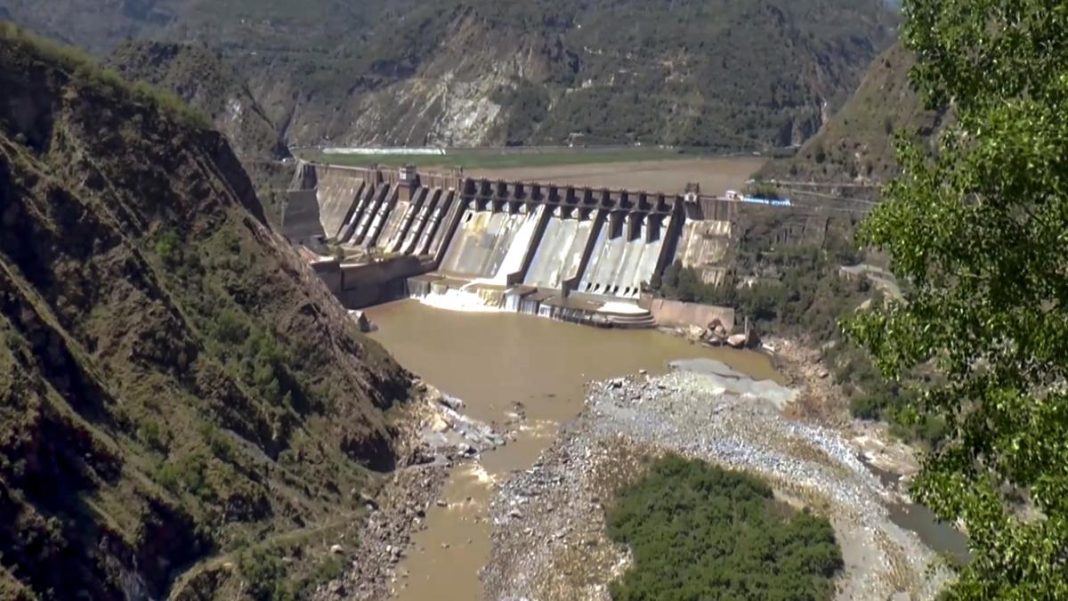
The Indus Waters Treaty (IWT), a historic agreement brokered by the World Bank in 1960, stands as a rare beacon of cooperation between India and Pakistan, governing the sharing of six transboundary rivers. For over six decades, it has largely endured various political and military upheavals. However, its resilience is once again being tested by a significant development: India’s recent rejection of a pondage award issued by the Court of Arbitration (CoA) concerning the Kishenganga and Ratle hydropower projects. This decision underscores India’s firm stance on its sovereign rights within the treaty’s framework and highlights the intricate challenges of water diplomacy in the region.
The Heart of the Dispute: Pondage and Hydropower
At the core of the current disagreement lies pondage, a crucial element in the design and operation of run-of-the-river (RoR) hydropower projects. Under the IWT, India can construct RoR projects on the Western Rivers (Indus, Jhelum, Chenab), provided they do not store water beyond permissible limits or impede natural flows. Pondage refers to limited storage capacity at an RoR project’s diversion structure, primarily for operational flexibility, like regulating daily power generation. Pakistan objects to design features of several Indian projects, including the 330 MW Kishenganga Hydro Electric Project on the Jhelum tributary and the 850 MW Ratle Hydro Electric Project on the Chenab, alleging their pondage capacities and other aspects violate treaty provisions by creating undue storage.
India maintains its projects comply with the IWT, asserting pondage levels are within treaty allowances for operational requirements. The dispute escalated when Pakistan, in 2016, requested the World Bank constitute a Court of Arbitration (CoA). Simultaneously, India sought a Neutral Expert (NE) to resolve technical differences. This parallel processing for the same issues has been a major contention for India, raising concerns about jurisdictional overlap and conflicting awards.
India’s Stance and Jurisdictional Concerns
India’s rejection of the CoA’s pondage award stems primarily from perceived CoA overreach and a fundamental disagreement on the resolution process. New Delhi consistently argues the IWT’s dispute resolution mechanism mandates a clear hierarchy: technical differences should first be resolved by a Neutral Expert. Only if an NE fails or involves treaty interpretation, should a Court of Arbitration be constituted. By allowing parallel proceedings for substantially similar disputes, India contends the World Bank, as treaty guarantor, created an unprecedented, unsound situation, undermining the established framework.
The Ministry of External Affairs spokesperson, Arindam Bagchi, articulated India’s position:
“India has always been committed to upholding the provisions of the Indus Waters Treaty. However, the initiation of two parallel processes for the same set of issues is legally untenable and contrary to the spirit of the Treaty. We have consistently urged for a unified approach through the Neutral Expert process, which is designed for such technical differences.”
This quote highlights India’s dedication to the treaty while emphasizing its procedural objections.
India’s refusal to recognize the CoA’s award, particularly concerning pondage limits, is thus not a repudiation of the Indus Waters Treaty. Instead, it is a firm assertion of its preferred dispute resolution pathway and its sovereign right to construct legitimate RoR projects. India underscores its right to utilise its share of waters for power generation, crucial for its energy security and development, strictly adhering to the treaty’s parameters.
The Path Forward: Sustaining a Vital Treaty
India’s rejection of the CoA’s pondage award introduces new complexity to the India-Pakistan relationship. While New Delhi clarifies its action is not a repudiation of the Indus Waters Treaty, but a protest against procedural irregularities and an attempt to safeguard legitimate interests, the development puts pressure on the treaty’s enforcement mechanisms. The IWT has been a cornerstone of stability, proving resilient over decades. Its continued efficacy hinges on mutual respect for its provisions and, crucially, its established dispute resolution architecture.
The onus now lies on all parties, including the World Bank, to facilitate a resolution upholding the treaty’s letter and spirit, without compromising sovereign development rights. India has consistently advocated for bilateral engagement and adherence to the NE process for resolving technical issues. Clarity on the jurisdictional boundaries of the NE and CoA will be paramount to prevent future deadlocks. The future of the Kishenganga and Ratle projects, and indeed the stability of water sharing under the IWT, will depend on pragmatic diplomacy and a commitment to established legal frameworks, ensuring this vital lifeline continues to flow unimpeded.

